Beginning Our 100th Year

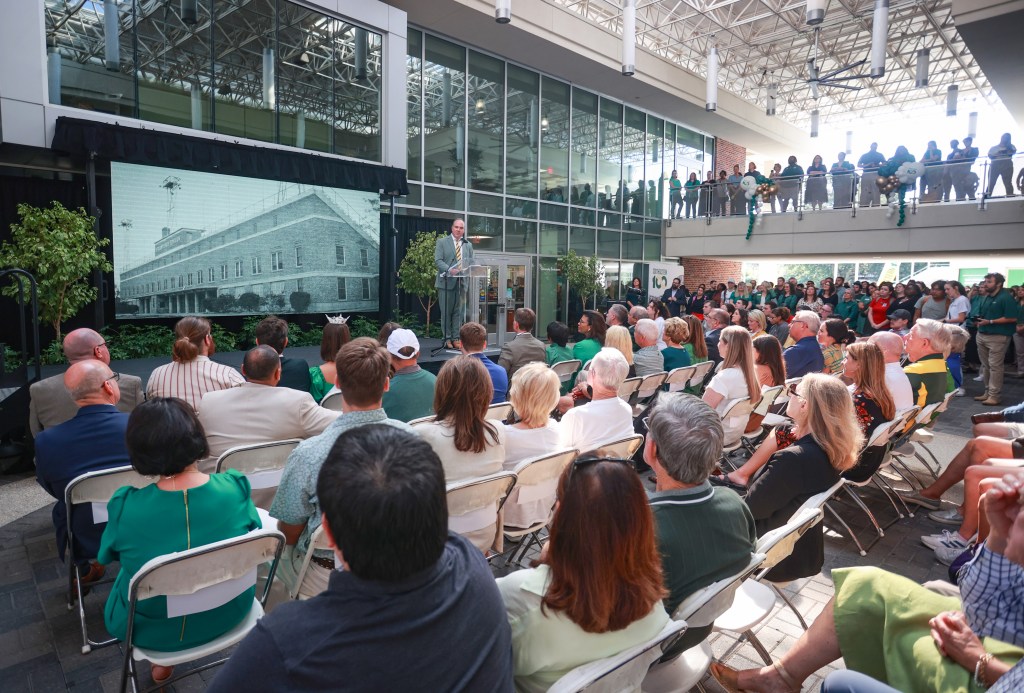
Southeastern is now in its 100th year! To commemorate this auspicious occasion, the university kicked off the year-long Centennial celebration on October 1.

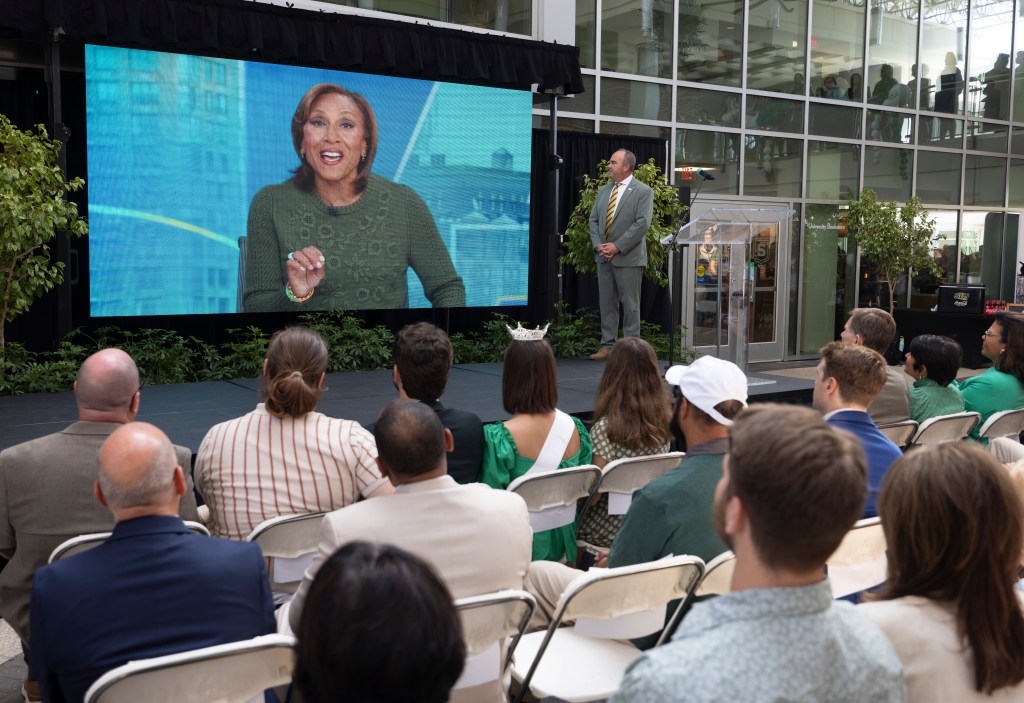
Guest speakers, including Louisiana’s Commissioner of Higher Education Kim Hunter Reed and Parish President Robbie Miller, reflected on the importance of Southeastern and this monumental milestone, and alumna Robin Roberts made a surprise video appearance to announce Southeastern’s $100 million fundraising campaign. During the presentation, Southeastern’s Centennial painting by artist Becky Fos was also unveiled, as was the first installment of a new video series on Southeastern’s history and a trailer for the Centennial. Attendees additionally enjoyed exclusive giveaway items, birthday cake, and an opportunity to be the first to sign Southeastern’s Centennial Signature Book.

“Opening its doors on Sept. 14, 1925, Southeastern Louisiana University celebrates a century of impact! Awarding over 95,000 degrees since its inception, our beloved university has strengthened communities, built economies, and advanced generational prosperity for families throughout Southeast Louisiana, our nation, and across the globe,” said Southeastern President William S. Wainwright. 

Through 2025, Southeastern will offer a wide array of opportunities to get involved with the celebration. Everyone is encouraged to log their volunteer hours to reach 100 collective weeks of volunteerism, area restaurant partners will offer signature 100th anniversary dishes or drinks, special lectures and performances will be held during the fall 2025 Centennial Fanfare, and so much more. At most events, attendees will have the opportunity to sign their name in the Centennial Signature Book, which will be archived for future generations to cherish.

For more information about current and upcoming Centennial programs and events, visit southeastern.edu/100. To learn more about the fundraising campaign, visit southeastern.edu/get-there-together.

Enrollment Continues to Grow

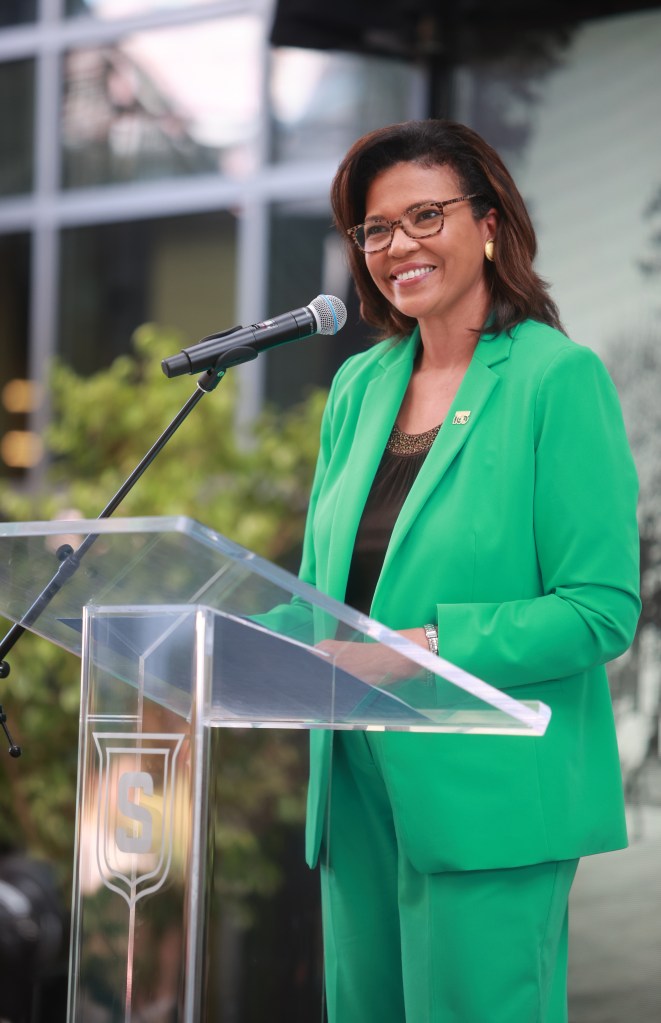
Southeastern’s fall semester has once again shown enrollment growth, achieving its strongest overall enrollment since COVID-19-19 and superseding its pre-COVID enrollment. With an overall enrollment increase of four percent at 14,440 students, Southeastern experienced growth in several categories.

  • Undergraduate enrollment rose by 3.9 percent.
  • Graduate enrollment rose by 4.7 percent, reaching the highest graduate student population in over a decade.
  • New first-time freshmen increased by 2.3 percent.
  • New incoming transfer students rose by 3.3 percent.

“Students and families understand the value in a Southeastern education,” said Southeastern President William S. Wainwright. “As we enter our 100th year, we are confident in our ability to prepare the next generation of entrepreneurs, nurses, teachers, leaders, and citizens of Louisianacontinued strategic enrollment growth honors our commitment and validates our mission.”

“A strategic initiative of our state is to better prepare high school students for college by earning college credit while still in high school,” Wainwright explained. “Southeastern continues to lead in this area in alignment with the Board of Regents’ Master Plan for Louisiana.”

With over a $1 billion economic impact on the region, Southeastern currently offers over 150 programs of study, including many that are regionally and nationally ranked. To apply, visit southeastern.edu.

Named a Governor’s Military and Veteran Friendly Campus

Southeastern has received the Silver designation for the 2024-2025 Governor’s Military and Veteran Friendly Campus. The achievement reflects the university’s commitment to supporting military-affiliated students through various initiatives.

Southeastern enrolls 492 veterans, dependents and military service members. The university maintains a Veterans Upward Bound program; provides academic and other counseling services; offers scholarships specifically for military students and veterans; and maintains a wide range of online and distance learning programs that provide students with flexibility in scheduling.

“We are proud of this recognition, as it illustrates Southeastern’s continued commitment to serve active military, veterans and their families,” said President William S. Wainwright. “Most importantly, we know the designation means we are doing our best to serve those who have made many sacrifices in service to our nation.”

This fall Southeastern designated a special housing unit specifically for military students, veterans, or those whose parents are veterans. The first of its kind in the state, the housing unit allows military-affiliated students to get to know one another and support each other while enrolled.

Another addition to campus is the Southeastern Student Veterans Association, a group open to veterans, reservists, spouses, dependents, and ROTC participants attending both Southeastern and Northshore Technical Community College. The association was founded to provide opportunities for veterans to meet one another and build a community, help the university administration better understand and meet the needs of veterans and their families, and help civilians better understand the military experience.

The university’s ROTC program, which returned to campus in 2016 with 10 cadets, has seen significant growth and success. The program now enrolls over 50 cadets and is expected to continue to grow.

Southeastern also serves as a resource center for thousands of Louisiana veterans in an effort to help active-duty military service men and women successfully transition to college through a new program called LaVetCorps, and has a specific office dedicated to serving veterans and their family members. The Office of Military and Veteran Success processes all education benefits sponsored by the VA and DOD, conducts VA benefits counseling, offers priority registration for classes and on-campus housing, and more.

Director of Military and Veteran Success Emily Anthony, who is currently serving as a Captain in the Louisiana Army National Guard, said Southeastern recently became designated as a Purple Heart University by the Military Order of the Purple Heart, signifying an unwavering commitment to continuously improve services to combat-wounded veterans.

“The Southeastern community is passionately committed to serving our veteran community, and it truly shows through our customer service across campus,” said Anthony. “Each office works collaboratively to ensure a seamless experience for our students, and we continue to improve every day. We have created a network of resources involving countless local businesses and organizations that provide services to veterans. As a veteran myself, I am extremely proud to work here because of what we represent.”

Senator Bill Cassidy recently visited campus to meet with a distinguished group of student veterans, hear their stories, and gain insight on their experiences navigating the VA system, utilizing benefits, and juggling school with military service, Anthony explained. She said the university plans to host another student veterans roundtable in the near future.

Southeastern has also been named a Military Friendly® School for 12 consecutive years.

Advancing Teacher Preparation

The undergraduate teacher preparation program at Southeastern has been recognized by the National Council on Teacher Quality for its pioneering efforts in supporting aspiring teachers as they complete their clinical practice experiences, also known as student teaching.

The Southeastern case study, featured in NCTQ’s new Clinical Practice Action Guide, details how Southeastern built strong partnerships with local school districts to improve the clinical practice experience for aspiring teachers. It also illustrates how Southeastern incorporated high-quality instructional materials and data throughout the program to enhance aspiring teachers’ instructional impact.

“Southeastern Louisiana University is an excellent example of a teacher prep program getting clinical practice right,” said NCTQ President Heather Peske. “As a national leader on this front, Southeastern is helping to strengthen the teacher pipeline in Louisiana and improve teacher preparation.”

Critical to their successful partnerships, Southeastern relies on data from its clinical practice program to drive changes, such as identifying additional professional learning for program faculty supervising student teachers. This effective communication, coupled with robust data collection, supercharges Southeastern’s ability to make meaningful improvements at the program level.

Southeastern’s College of Education Dean Paula Summers Calderon said the work is important because across the country too many new teachers are unprepared for the realities of the classroom since they haven’t had enough high-quality “hands-on” practice, and their students lose out on learning because of it.

“Stronger clinical practice partnerships between school districts and teacher prep programs can address the hiring challenges many districts face by creating a pipeline of teachers who have experience in the types of districts where they will eventually teach, which increases their efficacy and likelihood of staying in the classroom,” Calderon explained. “Without quality student teaching experiences, new teachers are often left to learn on the job. Research shows that providing aspiring teachers with clinical experiences under an effective mentor can give a first-year teacher the boost they need to be as effective as a teacher in their second or third year, which is a huge win for students.”

NCTQ used a variety of sources to identify the prep programs, districts, and states to feature in the case studies included in the action guide. Sources included past NCTQ Teacher Prep Review ratings of prep programs on the Clinical Practice standard; a scan of state policies related to clinical practice; a scan of large district policies related to clinical practice; surveys of districts, prep programs, and states; and input from an expert advisory panel and qualitative feedback from the field and interviewees. They conducted semi-structured interviews with stakeholders and invited them to review the draft about their entity prior to publication to check for accuracy.