Southeastern’s Department of Kinesiology and Health Studies is now offering a graduate certificate in sport management, the first graduate certificate to be offered by the university. In order to engage underserved populations, working adults, and those who face barriers to access, the certificate program mode of delivery is 100% online and courses will rotate semesters enabling students to finish the certificate in as little as three semesters.
Department Head Charity Bryan said the purpose of the certificate is to prepare students with the knowledge and skills to become versatile, independent, and creative professionals who are equipped to successfully lead and manage sport related programs.
“Students will have the opportunity to engage in a variety of instructional strategies and endeavors to develop their critical thinking and problem-solving skills requisite for the global sport industry,” Bryan said. “As a 100% online program, this will also provide flexibility and cater toward working adults who are already employed in the sport industry or wish to become employed in the sport industry.”
Kinesiology and Health Studies Assistant Professor Joseph Sabin said the program also prepares students both for graduate studies and employment in a variety of sport and recreational settings, playing a role in economic, sport, leisure, and fitness of the region. Jobs associated with the degree include event manager, sales manager in a sports setting, general operations manager, public relations, college/university athletic departments, state agencies, professional sports teams/leagues, administrative services/facility managers, financial management, and parks and recreation/camp facilities.
Two Southeastern alumni have followed their joy to create a thriving business, while also bringing a love for reading to those around them.
BY BROCK SANDERS
In the heart of old Denham Springs resides a bookstore named after a couple who graduated from Southeastern and chose the community above everything—even books.
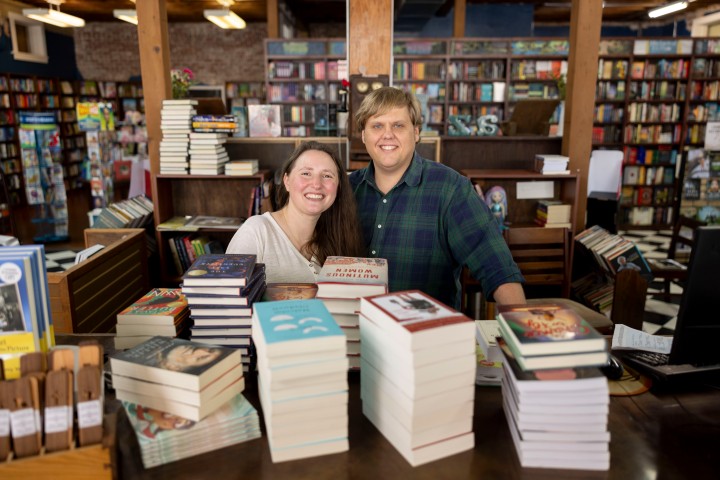
John and Michelle Cavalier met through a mutual friend at a local bookstore before embarking on their daily commutes to Southeastern. After spending countless hours in Sims Memorial Library, drafting ideas, business plans and friendship, Cavalier House Books was created by the pair in 2005.
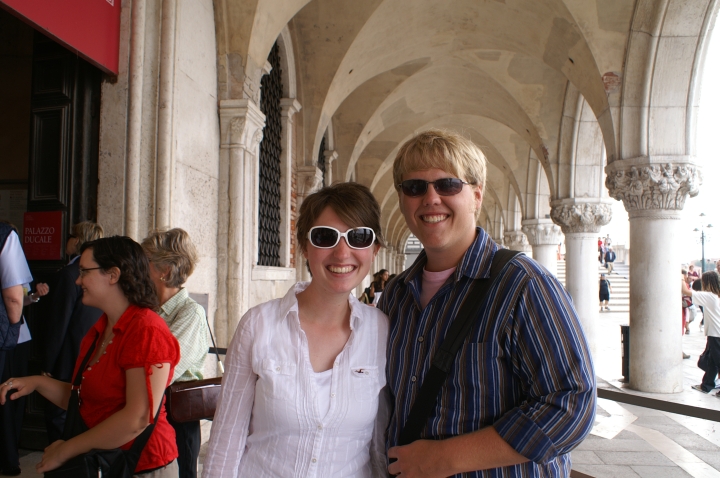
John and Michelle attend study abroad together while at Southeastern.
“We used the heck out of the computer labs,” John said about starting his business while enrolled at Southeastern. “In between classes I was always in the computer lab doing schoolwork, but then, also, starting our business.”
John and Michelle (maiden name Badeaux) both graduated in 2009 and married that same year. John chose a degree in political science and Michelle a liberal arts degree. Both picked their degrees for their versatility and the University for its modest class size options. Southeastern provided the two with a more engaging experience and homey atmosphere compared to other larger institutions, according to John and Michelle.
Michelle originally chose to study English when she arrived on campus, but eventually transitioned to liberal arts after developing an attraction to Southeastern’s Italian courses. To make room for more courses in that field, Michelle opted to switch majors and provide herself with opportunities to “go where her curiosity takes her.”
“Being able to dig into whatever my intellectual curiosity was at any given point was what the [liberal arts degree] afforded me and let my life continue in that direction,” Michelle said.
Michelle credits Dr. Lucia Harrison for her passion in Italian culture. That passion took her on a study abroad trip to Italy through Southeastern. Dr. Harrison initially stimulated her mind to explore different experiences and a different language as Michelle traveled to central Italy and Rome, while writing essays and gaining credit hours for her new degree back home in Hammond.
John also was in a different degree before settling on political science, wanting to first acquire a history degree. After taking a course taught by Dr. Pete Petrakis in the Department of History and Political Science, John became hooked and switched to a degree he says he uses daily at his business.
Through their years at Southeastern, John and Michelle spent countless hours in the private study rooms at the library and at the Contemporary Art Gallery. Opening a business is a difficult task as it is. Opening one while still enrolled in school? Daunting to say the least.
“Throw your hand over the wall and do it,” John advises those on the fence about taking on the endeavor he and his wife undertook years ago.
Michelle’s curiosity and John’s passion led the two toward operating a business together. From best friends to mister and missus, Cavalier House Books was born. The two initially operated their business without a physical store and eventually acquired institutional records from their previous boss at Book Warehouse of Baton Rouge, where John and Michelle worked.
The Cavaliers opened their store’s original location in Denham Springs in 2009, staying at the building for the next 13 years. The two have now operated as a business for close to two decades and in 2022 moved to a building nearly double in size to accommodate an ever-increasing clientele.
Beginning in 2011, the Cavaliers started traveling to various schools ranging from elementary to university to provide book fairs to the masses. The pair have totaled close to 70 book fairs, averaging 15 to 20 per year depending on scheduling.
Other additions like various book clubs keep the Cavaliers on their toes all days of the week. An average day at Cavalier House Books, according to John and Michelle, is what makes their business unique. Every bookstore has a piece of uniqueness that stems directly from the community it is surrounded by, according to John.
“It’s focusing on place, focusing on the community that you serve, and really trying to be an asset to that,” John said.
Despite the amount of time spent at the store, John and Michelle still find time to post what books they are reading on the business’ website. Michelle’s favorite book is 100 Years of Solitude by Gabriel Garcia Marquez. John recommends Burmese Days by George Orwell, his favorite book to date. However, countless other options could have easily gained the same title of “best,” according to the couple.
After enduring the 2016 flood, countless hurricanes, and other natural disasters, John and Michelle took their business next door. The couple moved to a larger facility and expanded Cavalier House Books for “a dedicated event space and flexible space.”
“Every time that something bad happens, we’ve always managed to add something good to our repertoire. Do something differently; do something new,” John said. With a change in scenery and a building, John and Michelle now operate with more room and bigger possibilities for their brand. While John hopes to eventually create a pizza restaurant in the unused second story of the shop, both have visions of a more book-centered goal.
“One of the big things that we kind of have in front of [our] mind is opening a publishing company,” Michelle said about plans for Cavalier House Books. “It is another big, new scary thing, but it’s something that is very exciting.”
Through the success and struggles of Cavalier House Books, John and Michelle admit it was a culmination of many factors that got them to own their business. From their relationships with their professors at Southeastern to giving back to the community, the Cavaliers created a consistently growing business in Livingston Parish. However, the glue that has kept the two operational past the struggles and looking onward to bigger plans is the books themselves.
Southeastern’s College of Business recently hosted its first-ever business forum on the Northshore. Held at the Castine Center in Mandeville, the Executive Business Forum was established to bring critical information to the Northshore in the areas of talent, technology, and the economy.
The event featured several speakers, such as Secretary of Louisiana Economic Development Susan Bonnett Bourgeois; Louisiana Insurance Commissioner Tim Temple; Ted Abernathy, managing partner of Economic Leadership, LLC; Kristy Davis, global director of innovation and artificial intelligence strategic consulting at The Channel Company; William Sims of Lightcast; and General Informatics CEO and President Donald Monistere.
Attendees at the forum had the opportunity to network with top executives and emerging leaders in the region. Proceeds from the forum will support programs and scholarships for students in Southeastern’s College of Business and programs for the regional community.
First Guaranty Bank and Argent Trust Company were this year’s catalyst sponsors of the forum. Based on the sold-out attendance, the forum will return next year. Stay tuned for upcoming announcements.
Southeastern students, faculty, staff and alumni put in a day of community service in the City of Hammond and nearby communities on Saturday (April 20) as part of the university’s The Big Event.
Sponsored by the Student Government Association, The Big Event is intended to give students and other volunteers the opportunity to help the communities and organizations that support Southeastern in many ways. This is the 14th year the SGA has sponsored The Big Event.
Sending the group out with a “Lion Up” sign of encouragement, Southeastern President William S. Wainwright told the students that their efforts send a tremendous message that Southeastern cares and seeks to make the neighboring communities a better place for all to live.
The students included individual volunteers and representatives of several student organizations, fraternities and sororities. They worked at sites such as Our Daily Bread Food Bank, Natalbany Elementary, Hammond Recreation Center, African American Heritage Museum, Richard Murphy Hospice House, and the Hammond Downtown Development District.
Jobs included beautification and landscaping projects, clean-up efforts in downtown Hammond, sorting materials and conducting inventory for non-profit organizations.
Through bravery and determination, alumna Patricia Campbell was able to create a successful future for herself and her child.
BY SHERI GIBSON
During Hurricane Katrina, alumna Patricia Campbell’s house was engulfed in water, and her cherished Southeastern yearbooks were lost. Earlier this year she was presented with these pieces of memorabilia. As she carefully pored over the pages, taking them in, her recollections of life at Southeastern in the 1970s came bubbling to the surface, and a stirring story of determination began to unfold.
Patricia, who always excelled in school, was originally from New Orleans. At 13, she and her family relocated.
“My mom moved us to Springfield, and we lived in a little shack back in the woods. She was gone most of the time, and I had three younger siblings. I had one older sister, but she married and moved out after we got there. So, I was basically taking care of my three other siblings from the time I was 13. Through all of that, I just didn’t see that life for the kids I might have one day. For me, that was my focus, and I knew that my only way out was education. So, I did what I had to do.”
Patricia knew she wanted more, for both herself and her future children, and to guarantee that she would need to rely on herself. Driven by this realization and determination, she continued to shine academically, even through being part of the first integrated class in Springfield in 1970. She took the ACT test, applied to Southeastern, and was accepted to begin that fall.
During her freshman year, Patricia commuted daily via bus from Springfield to Hammond.
“I would get up, do what I could to help my siblings prepare for the day before I left, and then catch that bus,” she said. “The bus would stop in the middle of Hammond, where the bus station was by the railroad tracks, and I would walk the rest of the way to Southeastern. I did that for an entire year. And at the end of the year, my mom decided to move the kids back to New Orleans. I made the decision that I wasn’t going.”
When her family left, Patricia applied for student loans then packed up her own belongings and moved onto Southeastern’s campus, first in Livingston Hall then eventually Hammond Hall. She also changed her major from education to business accounting.
“I just knew I had to go to school. So whatever challenges I faced, I took them on. Because I knew I had to do this, and whatever needed to be done I had to deal with it and stick it out,” Patricia said.
And her dedication indeed paid off. Upon graduation in 1974, she began her first job as an accounting clerk, and only a couple of years later she accepted a position as an accountant for the Superdome. Upon her retirement, she held the position of assistant director of accounting services for Tulane University, where she worked for 34 years.
But perhaps even more importantly, she was able to fulfill the wish she had when still only a teenager. When she did have a child, she was able to give him a warm life and a bright future. Her son is Paul Matthews, the current CEO of the Port of South Louisiana.
This bond she has with her child is so great that it seems impermeable even to the torrential waters of Hurricane Katrina. “Everything in my house was totally underwater, except one thing,” she reflected. “When I finally got to go to my house, his baby picture was on the wall. I couldn’t believe it. Everything else was on the floor—but that picture was on the wall, and it gave me hope.”
Today Patricia is able to enjoy a well-earned retirement, volunteering her accounting services for her church, indulging in mystery novels and shows, and, especially, watching her son enjoy an amazing life of his own.
Alumna Patricia Campbell reminisces over Southeastern yearbooks with her son Paul Matthews.
The U.S. Department of Agriculture Rural Development recently announced that it is awarding Southeastern a sizable grant to help support medical professionals. The organization awarded $651,207 to the university through the Distance Learning and Telemedicine Grant Program to fund Southeastern’s telehealth project.
USDA Rural Development Louisiana State Director Deirdre Deculus Robert said the funds will enable Southeastern to provide telehealth carts, peripherals, and portable telehealth kits to equip three hub sites and several end-users throughout Tangipahoa, St. Tammany, St. Helena, Washington, and Livingston parishes.
“This project is a ‘win-win’ for all involved. Not only will rural community citizens receive much-needed health care monitoring, but our students will also obtain real-world training as well,” said Southeastern President William S. Wainwright. “We have had amazing success with projects to improve health care in our area communities from two previous USDA grants, and I know this project will be just as successful and have significant, positive impacts on our rural communities.”
Ann Carruth, dean of the College of Nursing and Health Sciences and principal investigator for the grant, said all of the parishes in the service area have been designated as Medically Underserved Areas, as well as Primary and Mental Health Professional Shortage Areas.
According to the CDC’s National Center for Health Statistics (2017), Louisiana rates near the top in the nation with highest death rates from chronic diseases: first in septicemia, second in kidney disease, third in stroke, and fifth in heart disease and cancer. In its 2021 Community Needs Assessment, need was noted for access to continuity of care, mental and behavioral health, and education and health literacy.
Southeastern’s project will benefit 167,016 individuals through hub sites including Hood Memorial Hospital in Amite City and St. Tammany Parish Hospital in Covington. It will have a predominant focus on telehealth with a secondary use of distance learning for health careers, particularly those with a mental health focus. Each site will connect to specialty providers of their choice to bring specialty care with an emphasis on mental health, hospitalists, emergency care, and chronic disease.
The hub/end-user sites will pilot test Healthcare at Home, a project designed to retain patients in care, avoid unnecessary Emergency Department usage, and protect immune-compromised individuals from hospital and healthcare setting-acquired infections. As part of the project, loaner telehealth devices for patients to use at home will be provided, as well as portable telehealth devices for nurses, health coaches, and other care professionals to use during home visits.
Southeastern will use the project to provide healthcare career distance learning education to the classroom sites. They will also use it to provide tele-supervision and precepting to nursing students during clinical rotations at the sites, with a focus on psychiatric nurse practitioners.
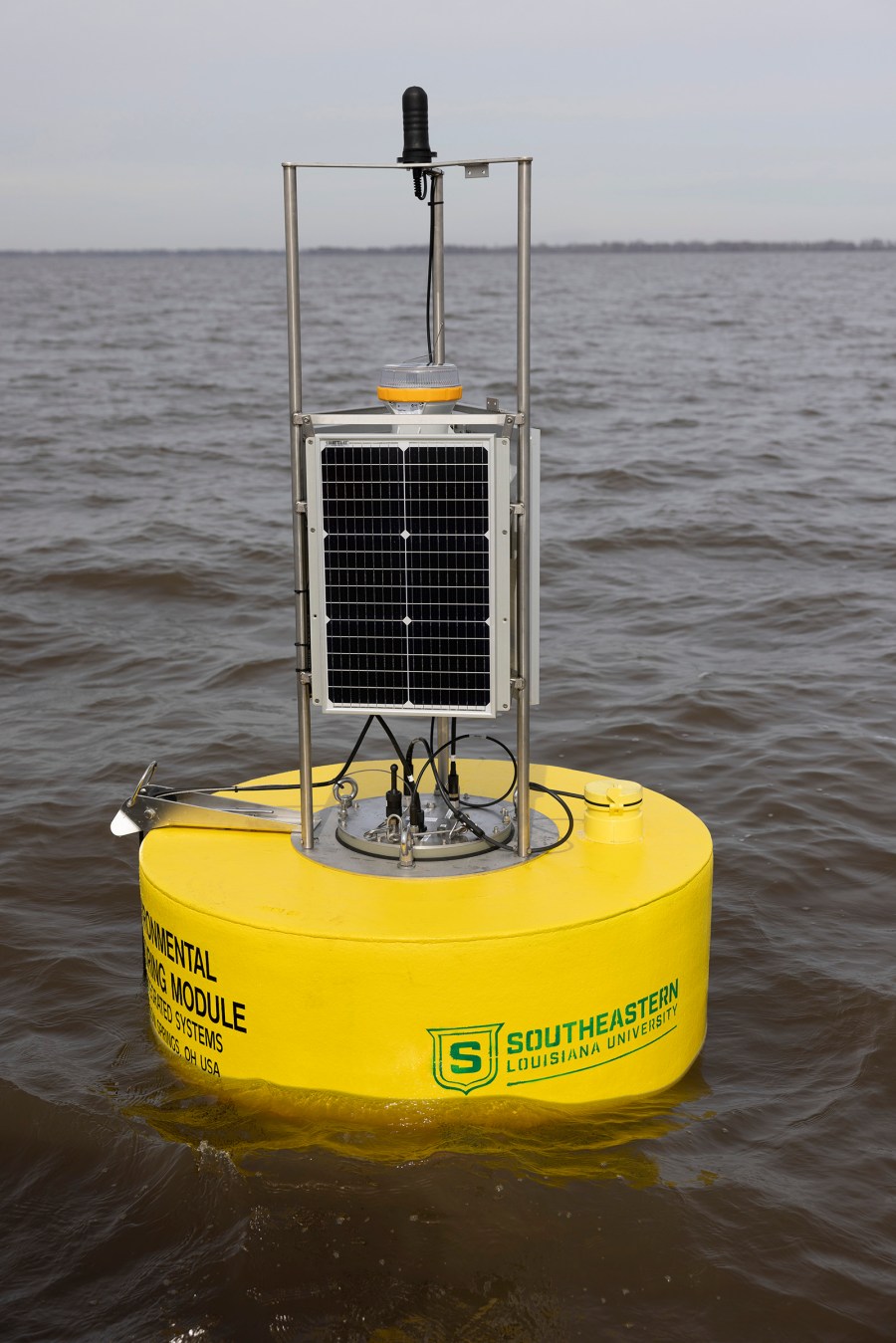
Southeastern recently deployed four buoys for independent, scientific monitoring of the Lake Maurepas ecosystem to monitor Air Products’ work on its Louisiana Clean Energy Complex. The data from those buoys is now posted on the university’s website and can be accessed at southeastern.edu/lakemaurepas.
The page contains the real-time water quality readings from four continuous monitoring buoys in Lake Maurepas: the Amite, Blind, Maurepas, and Tickfaw buoys. By providing real-time data, the aim is to enhance the community’s understanding of Lake Maurepas’ current status and to elevate their awareness regarding water quality and atmospheric conditions in the area. Individuals simply need to click on the buoys in the interactive map to learn more details about each one.
“We are excited to share with the public the buoy data that is collected in real time,” said Southeastern President William S. Wainwright. “All concerned parties can be assured that our scientists are consistently monitoring and analyzing the data from the buoys.”
Scientists from Southeastern are monitoring the marine life populations (fishes, crabs, shrimp), as well as the plant life in the surrounding wetlands, and also watching and studying any variations in water quality with data that is collected seven days a week.
The water quality parameters monitored by the buoys include CO2, temperature, turbidity, specific conductivity, salinity, dissolved oxygen concentration, percent dissolved oxygen and pH. The Blind buoy is also fitted with a weather station that monitors atmospheric conditions in addition to water quality. This includes air temperature, rain total, rain intensity, dew point, barometric pressure, relative humidity, wind speed, wind gust speed, and wind direction. All water quality and meteorological parameters are measured every 30 minutes, seven days a week.
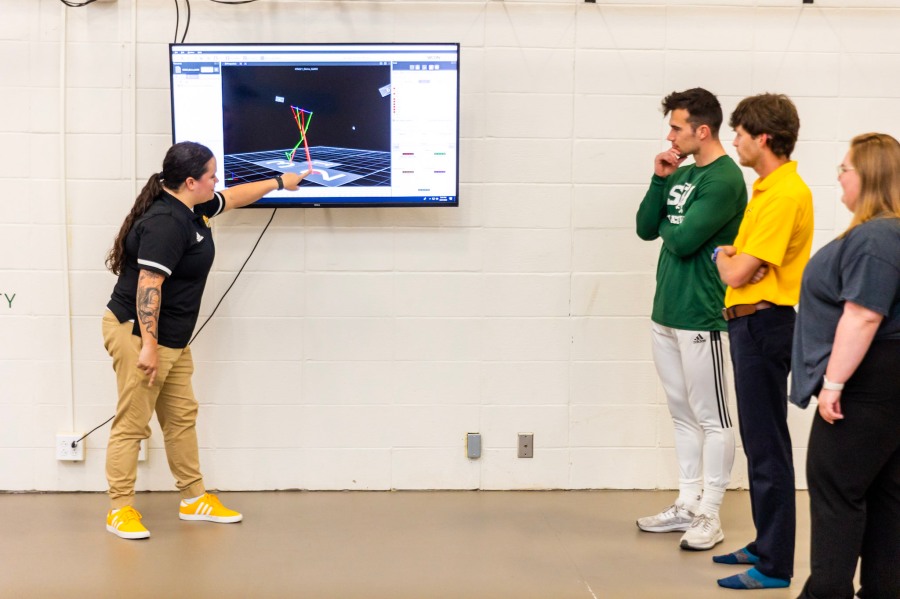
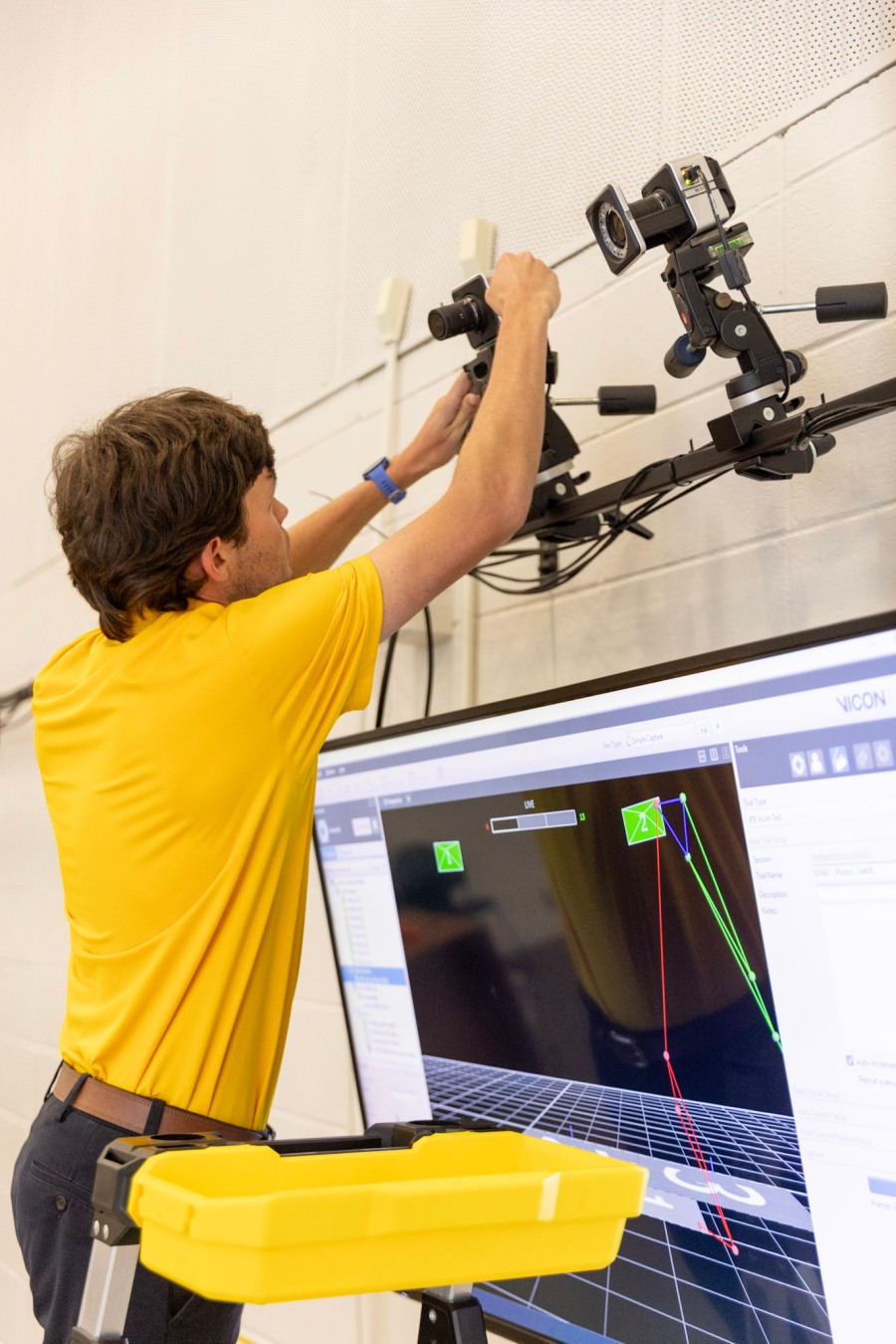
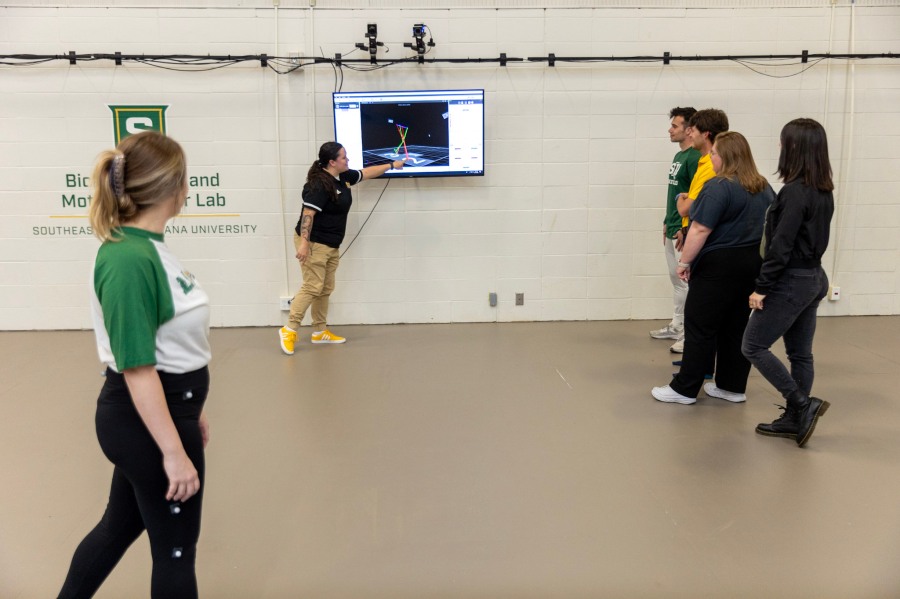
The Department of Kinesiology and Health Studies at Southeastern is proud to announce the opening of its state-of-the-art Biomechanics and Motor Behavior Lab.
Boasting two three-dimensional optical motion capture systems, three mounted force plates seamlessly embedded within a platform walkway, and a wireless electromyography system, the lab emerges as a hub of advanced technology and the best in the state. The motion capture systems allow for the tracking of major segments and joints of the body, providing for a thorough description of practically any movement performed. The force plates provide even more information regarding the forces acting on the body to cause its motion. Finally, the electromyography system measures the activity of select muscles during movement. Through the seamless integration of these state-of-the-art tools, the lab is capable of conducting detailed and comprehensive analyses of human movement to help our understanding of human motion across diverse fields—from enhancing sports performance to advancing clinical rehabilitation.
Much of the new lab equipment was funded through a Board of Regents grant and a Southeastern Student Technology Fee Matching Funds grant, which were obtained during the 2021-2022 academic year under the lead of Dr. Brandi Decoux and assisted by Dr. Ryan Green, Dr. Charity Bryan, Chad Dufrene, and Dr. Daniel Hollander. The equipment funded by these grants includes two large force plates and a virtually weatherproof optical motion capture system capable of being used outdoors, all of which provide a means of analyzing human movement in a variety of settings using technology that is consistent with what is used by clinicians, practitioners, and researchers in the students’ future careers fields. The Southeastern Student Technology fee also helped to fund the raised flooring platform in which the force plates are embedded, flush with the flooring surface, to create an over-ground walkway.
Much of the lab renovation came as a result of the devastation caused by Hurricane Ida during the Fall 2021 semester. The Kinesiology and Health Studies (KHS) Building was one of the facilities on campus that was most impacted by Hurricane Ida. A leak in the roof proved to be costly for Room 150 of the KHS Building, which was where all of the biomechanics equipment was housed. Due to rainwater that had collected on and below the then wooden floor, and the excessively high humidity that ensued in that room, very little equipment was salvageable. As a result, the motion capture and electromyography systems were unusable and needed to be replaced. Following all of the damage, though, came the rebirth of a high-value research and learning space for Kinesiology and Health Studies students and faculty to study and analyze how the body moves.
Prior to the acquisition of the new technology described above, lab experiences for students were limited. For example, Dr. Decoux’s past graduate Biomechanics class had to rely solely on video-based movement analysis software to carry out their projects. While this technology is still valuable as a lost-cost motion analysis option, the amount of precision and the level of accuracy afforded by video-based analyses is incomparable to what is offered by more advanced motion capture technologies like the systems now found in the BMB Lab. Dr. Decoux’s current graduate students were able to start the semester with a project using the video-based movement analysis software and then complete a project with the BMB Lab’s new motion capture technology. This enabled the students to spend more time learning how to analyze and interpret the data collected with the optical motion capture systems as opposed to devoting many hours to the rather slow process of extracting data from videos.
To celebrate the new Biomechanics and Motor Behavior Lab, the Department of Kinesiology and Health Studies is hosting a Grand Opening event at the lab (KHS Building, Room 150) on Wednesday, April 24, with a ribbon cutting ceremony taking place at 11:00 am. Dr. Decoux will be present before and after the ribbon cutting ceremony to speak to anyone with questions about the lab. Posters of students’ projects from Dr. Decoux’s graduate biomechanics class will be on display in the lab for visitors to see.
Southeastern’s Sims Memorial Library and the Friends of Sims Library will host the annual Friends of Sims Library Marjorie Morrison Memorial Members’ Tea on Saturday, April 20, at 2 p.m. Guests will enjoy a variety of teas and a selection of sandwiches and pastries. Bottomless mimosas will be available as well for $10.
Local playwright Donna Gay Anderson is the featured speaker, and the doors will open at 1:45 p.m.
Sims Memorial Library Director David Sesser said that Anderson’s newest play, The Way We Say Goodbye, premiered at Southeastern in November 2022 and has since been produced elsewhere. Her other works include High and Mighty, Unfolded, and Dead Reckoning. Her work has been included in The Louisville Review, Arkansas Review, and Dramatist’s Magazine.
Anderson is currently working on a new musical about the state of homelessness in America. She holds degrees from Southeastern, The National Shakespeare Conservatory, and Spalding University.
“The tea is free to Friends of Sims Library members. Those who renew their membership at the associate or patron level may reserve one additional complimentary seat for a guest. Friends at the Lifetime level may reserve a complimentary table for four,” Sesser said. “The cost for non-members is $35, which includes admission to the tea and an individual membership for 2024.”
Checks should be made payable to the Southeastern Foundation and mailed to Friends of Sims Library, SLU 10896, Hammond, LA 70402. If paying by check, download and complete the form available at southeastern.edu/library/about/friends/index.html.
The completed form must be mailed with payment. Payments can also be made securely online at southeastern.edu/librarytea. The deadline for online reservations is Wednesday, April 17.
Southeastern’s spring semester has shown growth in nearly all student categories.
The university realized solid increases in enrollment across both undergraduate and graduate students. Undergraduate enrollment rose by two percent, while graduate enrollment experienced an increase of 14 percent.
With an overall enrollment increase of three percent at 13,800 students, an enrollment number for spring not realized since before the pandemic, Southeastern experienced growth in several categories. New or incoming student increases included first-time freshmen at 14 percent, transfer students at 21 percent, graduate students at 17.3, and dual enrollment students with an increase of 6.5 percent. Southeastern also experienced a 22 percent increase in international students.
“Southeastern has been working diligently to strengthen purposeful enrollment with a strategic focus on mission and core values centered on student success,” said Southeastern President William S. Wainwright. “Seeing growth in multiple categories is a testament to a commitment of the students, faculty, and staff to a progressive Enrollment Management Plan, positioning our university for continued growth and most importantly, student success.”
Southeastern currently offers over 150 programs of study, including many that are regionally and nationally ranked. To apply, visit southeastern.edu.

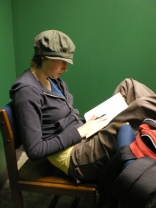 Michelle originally chose to study English when she arrived on campus, but eventually transitioned to liberal arts after developing an attraction to Southeastern’s Italian courses. To make room for more courses in that field, Michelle opted to switch majors and provide herself with opportunities to “go where her curiosity takes her.”
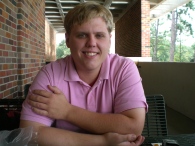 John also was in a different degree before settling on political science, wanting to first acquire a history degree. After taking a course taught by Dr. Pete Petrakis in the Department of History and Political Science, John became hooked and switched to a degree he says he uses daily at his business.
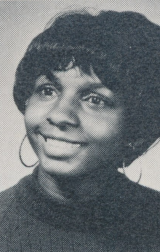 Patricia knew she wanted more, for both herself and her future children, and to guarantee that she would need to rely on herself. Driven by this realization and determination, she continued to shine academically, even through being part of the first integrated class in Springfield in 1970. She took the ACT test, applied to Southeastern, and was accepted to begin that fall.
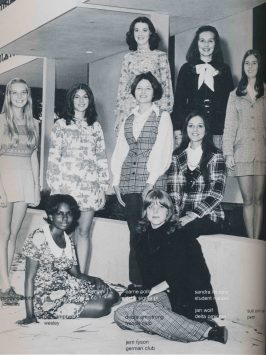 ngs and moved onto Southeastern’s campus, first in Livingston Hall then eventually Hammond Hall. She also changed her major from education to business accounting.
 southeasternmonthly.blog