Taking a Bite Out of Life: Jonetta Kaiser

Ever since Jonetta Kaiser was a small child, she knew she wanted to be a professional actress. But in addition to this resolute determination, she embodied something else that would help reach this goal and much more: a diversity of interests and an unstoppable entrepreneurial spirit.

BY SHERI GIBSON

By the time she was 13, Jonetta Kaiser was designing Myspace pages for clients, creating websites, and earning money through Google AdSense. While this alone could be considered a major accomplishment for someone so young, and was indeed an indication of the entrepreneurial drive that would remain a part of her life, for Jonetta it was also a way to help her reach her ultimate goal. She invested the small income she received in photo paper for printing and mailing headshots, taken by her sister in her grandma’s backyard, in hopes of landing roles as an actress.

After seeing the movie Salt starring Angelina Jolie, she knew for sure she had found her path.

“That’s when it kind of clicked: I could actually do this,” Jonetta said. “So, when I graduated high school, I did. I took a gap year and did extra work on sets in New Orleans. I did American Horror Story, the “Coven” season. I did a Miley Cyrus movie called So Under Cover, a Will Smith movie called Focus, and a CW TV show about aliens.”

Knowing how important STEM-related skills could benefit her throughout life, though, at the end of the gap year Jonetta, a Hammond native, enrolled at Southeastern to major in biochemistry and minor in computer science.

“I knew I needed to go to college; that was the way to do this,” she explained. “I knew I wanted to learn something in STEM, because that’s where jobs are going. That’s where the world is heading. Technology, and for example AI, is increasing at such a level that if you’re not paying attention, then you should be. I always knew that that’s where things would be 20 years from now. So, I decided that I’m going to study this, and then somewhere along the line I’ll figure out how to pivot. And I did. I really did.”

While gaining science skills is important in its own right, at first glance this field can seem quite disparate from acting. But to Jonetta, there are actually a lot of similarities, with both science and acting alike in process.

“I genuinely just love the process of figuring things out. I like challenges,” she said. “It’s the same reason I love acting so much, too, because it’s looking at something and figuring out the problem and solution. How can I get an end result? With coding, it’s starting a project and talking to a client and identifying how we can get from point A to point B. It’s the same thing with acting—you look at a script, you have a character, and then you have to figure out how can I get to the end of the script and create a journey for this part.”

Jonetta enjoyed her time at Southeastern, where she studied with her two best friends from childhood—who are great friends to this day. And while most of her time in college was spent hustling between two jobs, one at PJ’s Coffee and one at La Carreta, and being a fulltime biochemistry student, she noted that when she did have time to go to games and other events “it was always such fun. The school spirit at Southeastern was great.”

Jonetta also loved the quality of instruction at Southeastern, noting how the University had “the best teachers” and giving an anecdote about the calculus class she took. “My calculus teacher didn’t rely on calculators, and the way he explained calculus was next level; I still have those memories with me forever. And I grew to love calculus—which no one loves calculus. But it was because I really understood the why behind the course.”

After three years of acquiring a solid base of science and technology skills, in 2018 Jonetta suddenly woke up one day with an instinctual pull that it was time for her to make her pivot back to acting. With new professional headshots in hand, she boldly made the trip by herself to California in chase of her dream.

Because of how expensive Los Angeles is, she first lived on military base Camp Pendleton in Oceanside while commuting three hours to the city for acting classes and auditions. But she was soon able to start landing parts, and after only six months, she made the move to Los Angeles.

While she was able to start seeing her goals as an actress come true, Jonetta discussed how she couldn’t have done it without the technology skills she had earned as a student—with almost all working actors and actresses needing other revenue streams as they get started or to keep busy between jobs.

“Los Angeles is so expensive, and you really need to figure out how you’re going to get by,” she said. “The reality is that actors can make a lot of money, but if you have no other skills and you just come out [to Los Angeles] and want to be an actor, you’re going to have a tough time. You have to figure out how you’re going to make money and acquire some skills until you become the next Angelina Jolie.

“I’ve been fortunate to consistently work since I moved out here in 2018. I started working right away as an actress, but most of the time as an actor, you’re unemployed. So, it’s been incredibly helpful—the skills that I acquired when I went to Southeastern, to learn how to create websites because I took computer science classes as a biochemistry major.

“I’m so grateful for that time. Honestly, I wouldn’t have known what to do otherwise.”

While parts started rolling in remarkably quickly for Jonetta, her favorite one so far has been Sonya Sharp in the Peacock series Vampire Academy, based on the best-selling book series. Not only did Jonetta identify greatly with the character as a fellow bookworm, but the series was also both one of her favorites as a child and her gateway into the genre. “The reason I loved Twilight and The Vampire Diaries was because of Vampire Academy books,” she said.

Learning that she would get to play Sonya was a surreal realization for Jonetta—and the start of an amazing new experience. With the series filming in Spain for seven months in 2022, she was able to learn Spanish, a useful skill which she is grateful to now have for wherever she may go in the future—and more travel is a definite on her list. She was able to do greenscreen work and be on wires, which she loved. Since her character can communicate with birds, she was also excited to get to feed and interact with trained crows.
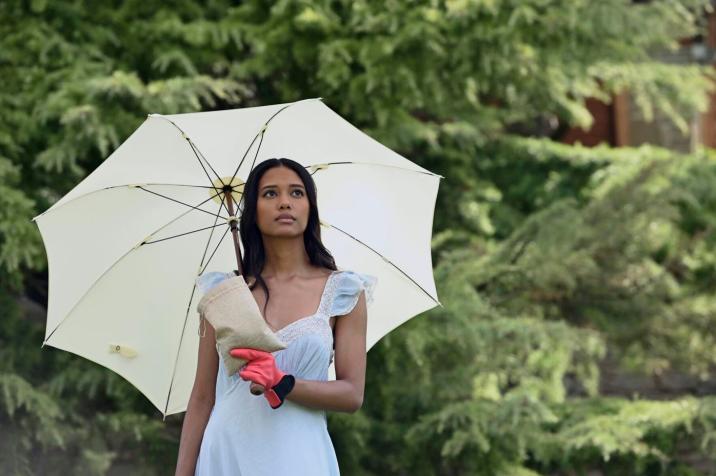
And as with all her roles, it was the work and process of finding the character that also really spoke to her. “The prep work is my favorite because that’s where you do the work. You’re finding the character and then it comes alive when they call ‘action,’” she said.

Since Vampire Academy, Jonetta also starred in the movie A Party to Die For before the SAG-AFTRA strike. And with this development, having other skills has become even more essential than ever for actors.

“Right now we’re seeing that if you have no skills, what are you going to do?”, Jonetta commented. “Hollywood is completely shut down right now. No one is working. If you’re not an A-list star to have made millions of dollars to support your home, you have to figure out how you’re going to survive. You have to have a skill. And going to school and learning how to survive in the real world first is probably your best bet.”

During this acting downtime, Jonetta has indeed kept busy with not only hobbies but also other work. In addition to some of her favorite activities, such as reading, making jewelry, and taking Pilates classes, she’s been working on a couple of AI-based startups with her boyfriend and also building websites for clients, doing coding. While she has been lucky enough to have worked on a popular show that helps pay the bills, it hasn’t put any damper on her drive to continue to achieve more.

And while her acting prospects are indeed bright, her potential for success in other fields is also limitless. Her positive attitude, down-to-earth and friendly personality, and energetic dedication to work, coupled with her belief in education, also serve to enhance this.

“I always knew if I were to pursue acting that the skills I acquired while I was at Southeastern, learning coding and other things, would come in handy and would be essential for me to know,” she said.

Giving Back: Jeanne Brooks

In the darkest of times, one member of the Southeastern community was able to create a new light through giving to others.

BY TONYA LOWENTRITT

For Southeastern alumna Jeanne Brooks, the spring and summer of 2014 forever changed her life. In May she lost her husband of 30 years after two major heart attacks. Just nine weeks later, her son Jordan was tragically killed in an ATV accident on the job as an interpretative ranger at Bogue Chitto State Park in Franklinton.

In 2014, Brooks had been working at Southeastern as the Library of Congress Coordinator and continued in that role for one more year.

“I was a mother and wife for 30 years, and overnight I wasn’t either one. Though she lived just a few doors from me, I was the primary caregiver of my mother, now in her 90s,” Brooks recalled. “I knew I couldn’t continue. I did all the things grief counselors say not to do. I quit my job, put my home on the market, and connected with a tour group as a counselor for students touring the United Kingdom.”

Brooks had worked at Southeastern as a “retired rehire,” having retired from both Louisiana and Mississippi schools. She worked with literally hundreds of people rebuilding schools, libraries, communities, and lives after Hurricane Katrina. This time, however, it was time to rebuild herself. Upon her return from the UK, Brooks contacted Southeastern because she felt she belonged there.

“I knew I needed to work with students, and I needed to make a difference in the lives of others,” she said. “The timing was perfect. An opening in the College of Education, Department of Teaching and Learning had become available just the day before my call. This time though, it was not with the Library of Congress program; it was as a full-time faculty member. I was exactly where I belonged!”

After a long and rewarding career, Brooks retired once again after having been a teacher for decades, reaching thousands of students. “Retirement” though did not mean sitting in a rocking chair and knitting—not for Brooks. With no children or grandchildren, she chose to establish the Jordan Brooks Smith Endowed Scholarship to give back to those who had given her so much. Established in honor of Jordan, himself a Southeastern graduate, the scholarship will go to a student who has been admitted to Southeastern and is majoring in one of the teacher preparation programs in the College of Education.

“Education enriched my life and Jordan’s life. Even on my darkest days, it was the medical staff at University Hospital who became my family. And yes, many of those were Southeastern graduates,” Brooks recalled. “I have
a deep love for Southeastern. Across campus, across departments, Southeastern gave me so much. It is only fitting that I give back.”

After the establishment of the endowment in memory of her son, Brooks still felt like she needed to do more. She began to ask herself what she could give as a visual reminder of Jordan and what his legacy entailed.

“We were both ‘teachers,’ but in different ways, so there must be something to continue to teach generations of children,” she thought.

Therefore, after nine years of talking, researching, volunteering, fundraising, and mountains of paperwork, the Interpretative Ranger Jordan Brooks Smith Kids Trail in Bogue Chitto State Park was born. The trail is an accessible children’s trail complete with animal sculptures created for inquisitive children’s minds. Its purpose, Brooks said, is to connect children and families to nature through environmental education and hands-on experiences with native flora and fauna. One of the animal sculptures, the fox, a central part of Jordan’s legacy, includes Brooks’ handprints and those of Jordan as a child.

“Southeastern has etched its handprint on my heart,” Jeanne said. “With the Jordan Brooks Smith Endowed Scholarship at Southeastern and the Interpretative Ranger Jordan Brooks Smith Kids’s Trail at Bogue Chitto State Park, Jordan and I have etched our handprints for generations to come.” 

Offering a New Online Master’s Degree in Computer Networking and Administration

Southeastern’s Department of Computer Science is now offering a master of science degree in computer networking and administration. Delivered exclusively online, the program is designed to address the widening skills shortage in enterprise-scale networking, including cybersecurity and system administration, and follows best practices needed for the workforce.

Computer Science Interim Department Head and Instructor Bonnie Achee said the degree prepares students for positions such as computer network administrator, network specialist, network design engineer, system software developer, and system administrator.

“We are proud to offer a 100% online master of science in computer and networking administration,” said Achee. “This cutting-edge program will serve both recent graduates and industry professionals who seek to advance or transition to a career in systems administration, high-performance computing, and systems security, to name a few.”

Coursework is offered every fall, spring, and summer, ensuring students can graduate in a timely manner, Achee explained. Hands-on labs are also provided through online services, giving students 24/7 access to state-of-the-art computer networking and administration labs.

For more information, email mcna@southeastern.edu or visit southeastern.edu/mscna.

Deploying Buoys for Monitoring Project

Southeastern deployed four buoys this week for the independent, scientific monitoring of the Lake Maurepas ecosystem as part of its Memorandum of Understanding (MOU) with the Federal Government and with Air Products’ work on its Louisiana Clean Energy Complex.

“These buoys will provide data that the public can trust about the Lake Maurepas ecosystem since that data is coming directly from the lake itself. Independent monitoring of the lake is critically important to the community and all those people who live and work there,” said Louisiana Clean Energy Complex Commercial Executive Director Danna LeBlanc. “We know Southeastern researchers are the leading experts on Lake Maurepas, and the Air Products team is proud that they are able to expand their independent biomonitoring research by using these buoys.”

Southeastern will gather baseline data within the aquatic and wetland realms prior to the initiation of any future carbon sequestration projects in Lake Maurepas. An essential component of the project will be extensive environmental monitoring of the Lake Maurepas region, so that any impacts of the project can be understood and data be made publicly available.

“This demonstrates the value of our university to the region and nation as leaders in environmental monitoring,” said Southeastern’s President William Wainwright. “As carbon capture projects become more frequent, through Southeastern’s leadership in research, it can demonstrate the environmental scientific needs surrounding those activities.”

Specifically, the scientists from Southeastern will be monitoring the marine life populations (fishes, crabs, shrimp), as well as the plant life in the surrounding wetlands, and also watching and studying any variations in water quality.

Called the Blind, Amite, Tickfaw, and Maurepas buoys, the YSI Bay Buoys were named based on their geographic positions in the lake.

“The buoys will gather a variety of parameters in real time with data regularly uploaded to the cloud,” said Director of the Lake Maurepas Monitoring Program Kyle Piller. “The data will be posted on our project website through the use of easy to interpret dashboards for each buoy. Each measured parameter has a ‘normal’ range, and the software has the ability to send alert messages if a particular measured parameter is out of the normal range. In essence the buoys will be functioning as an early warning system.”

The buoys are outfitted with sensors to monitor water parameters, including dissolved oxygen, pH, water temperature, and carbon dioxide, Piller explained. One buoy will be outfitted with a weather station to measure atmospheric parameters, including wind speed, air temperature, relative humidity, barometric pressure, and precipitation.

“Southeastern will be monitoring all facets of this project involving the lake to ensure up-to-date data and information are available. We are making all the data we record available to the public to ensure everyone’s right to know any findings,” said Dan McCarthy, dean of the College of Science and Technology.

The website to access project data is southeastern.edu/lakemaurepas.

Southeastern and NTCC Formalize DirectConnect to Southeastern Partnership

Southeastern and Northshore Technical Community College signed a memorandum of understanding on Thursday (Jan. 18) that formalized and enhanced the two institutions’ ongoing partnership.

Titled DirectConnect to Southeastern, the program is designed to enhance both the efficiency and effectiveness of students seeking post-secondary education in southeast Louisiana, particularly in Tangipahoa, St. Tammany, Washington, St. Helena, and Livingston parishes.

Officials said the partnership provides solutions to expanding college student access and preparation of students who will complete certificate and/or associate degrees through NTCC and transfer into a baccalaureate program at Southeastern.

“The DirectConnect to Southeastern program ensures that both institutions are proactive in addressing the ever-changing higher education landscape,” said Southeastern President William S. Wainwright. “The partnership further ensures that both Southeastern and NTCC are responsive to relevant actions of the Louisiana Legislature, leverages the Board of Regents’ ‘Master Plan for Higher Education,’ and encourages ease of transfer credits between post-secondary institutions and comprehensive community college services throughout the Northshore region.”

DirectConnect provides enrolled NTCC students with a systematic outline to successfully complete a baccalaureate degree, Wainwright explained. Under the agreement, NTCC students will take courses at Southeastern related to the following approved career pathways: biological sciences (microbiology/molecular, ecology/environmental biology, and integrative biology), business administration, nursing, psychology, and supply chain management.

“Northshore Technical Community College and Southeastern Louisiana University are committed to providing students successful paths to graduation and employment in high-demand careers,” NTCC Chancellor Jim Carlson said. “This collaboration strengthens our commitment and provides a seamless transition for students. The partnership will provide students with expanded access to college and university programming and engagement in relevant workforce preparation.”

Coursework for students enrolled in DirectConnect will be completed on Southeastern’s campus. The students will also have access to the university’s Student Union, food vendors, and campus dining meal plan opportunities.

Both officials agreed the partnership will work to enhance the workforce development of the region.

Top image: Southeastern President William Wainwright, left, and Northshore Technical Community College Chancellor Jim Carlson shake hands after signing a memorandum of understanding on Thursday (Jan. 18) that formalized and enhanced the two institutions’ ongoing partnership. The DirectConnect to Southeastern program provides solutions to expanding college student access and preparation of students who will complete certificate and/or associate degrees through NTCC and transfer into a baccalaureate program at Southeastern. 

Catching a Dream

A Southeastern alumnus with a love for football and a dream to make it in the big leagues takes an unforgettable journey from Strawberry Stadium to helping win the first NFL Monday Night Football game.

BY CALMER DIGHTON

On September 21, 1970, the Cleveland Browns played against the New York Jets, the champions of the previous year’s Super Bowl, in the first-ever televised Monday Night Football game. In the fourth quarter, the Browns led the game with a score of 24 to 21. With less than a minute on the clock Joe Namath threw a pass that was intercepted by Browns’ number 52 Billy Andrews, a Southeastern alumnus. Billy returned the interception for a touchdown, securing the Browns lead and earning them the first televised Monday Night Football win.

IMG_5302

Born and raised in Clinton, Louisiana, Billy Andrews knew from a young age that he wanted to play football. “When I was eight years old, our school hired a coach, Coach Russo, and he started a peewee football program. The minute I stepped on that field I fell in love with football. Maybe a bit too much.”

Billy was not particularly built to play football, but that didn’t dissuade him from his dream. “I was the skinny kid. Very slow, very small. I set my sights on playing in the NFL when I was probably nine years old.”

Billy would dedicate much of his young adult life to accomplishing this goal. At age 12, he began weight training. “My daddy drove me when I was 12 years old to Baton Rouge three times a week to train with Alvin Roy. He was one of the great athletic weight trainers in the NFL and the college ranks.”

He also credits this move as the impetus for his spiritual growth, which is today an important part of his life. “I see [Alvin Roy] being in Baton Rouge as providence of God to get me to the NFL, which ultimately is where I found the Lord.”

When it came time to decide on a school to attend for college, Billy’s high school coach from Silliman Institute, Coach H. L. Polk Jr., encouraged him to attend Southeastern. “Coach Polk was a Southeastern Hall of Famer,” Billy explained. “He helped the head coach Stanley Galloway recruit me.”

Billy attended Southeastern from 1963 through 1967. During his time in Hammond, he worked towards graduating with a bachelor of science degree focused on veterinary medicine, acquiring knowledge which he would later apply when working for his family’s dairy farm. But playing football at Southeastern is what prepared him for the first steps in his future and that legendary televised win in 1970.

resize“Playing football at Southeastern prepared me very well to go to the NFL because of the quality of football there,” Billy said. “Coach Galloway had a great impact on me and he was tough on us, but that’s what we needed. I came to Southeastern weighing 162 pounds and grew from the training to 215. The entire coaching staff at that time helped me get to where I needed to be.”
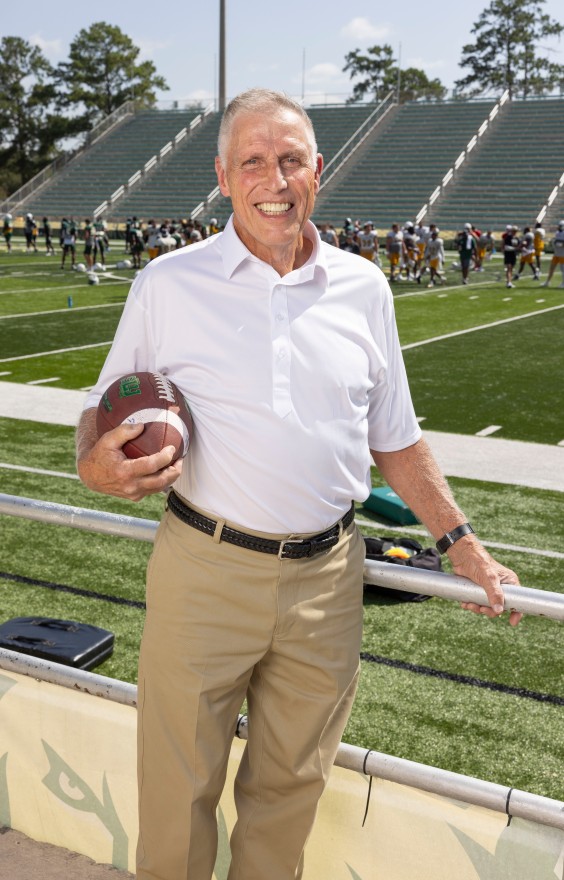
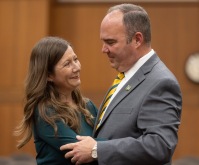
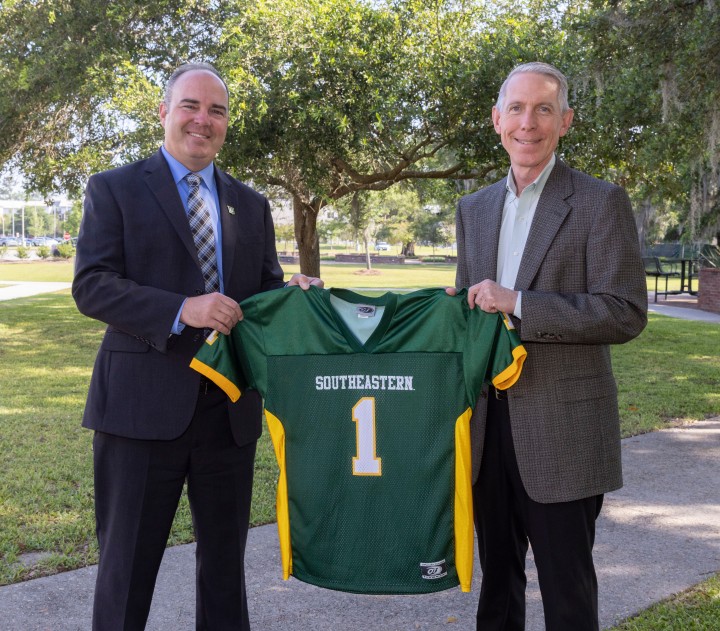
His time at Southeastern and the relationships he built with his fellow players and students as a whole have stayed with him through his life. “I still talk to a good many of the people I played with back when I was at Southeastern. It was a close-knit group of players, and we all still stay in contact.”

Billy was first drafted into the NFL by the Cleveland Browns in 1967, the same year he graduated from Southeastern. The goal he had set for himself when he was only nine years old was now accomplished. He continued to play for the Browns for eight seasons, becoming their Defensive Player of the Year in 1971, the year after he had scored that game-winning touchdown. After his time with the Browns, Billy played for the San Diego Chargers for a season and then the Kansas City Chiefs for his last two seasons as a professional football player. Throughout his professional career, he played in almost 150 games.

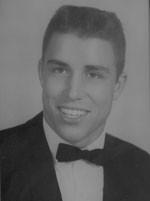
Billy Andrews

Even with all of those accomplishments, the thing that had the biggest impact on his life while playing in the NFL
was something else. “I worked hard and played myself into becoming a great player, and when I intercepted the ball in the Monday Night Football game it was like, this is it, but in my heart I was empty. I was an empty man though I had accomplished the high dream. But then I realized what God had done; he had worked in my heart.”

After he retired from playing football in the NFL, he returned to Clinton, Louisiana, to work his family’s dairy farm—an entirely new challenge for which he found himself unprepared but quickly adapted.

After everything he has done and accomplished, Billy’s love for Southeastern, football, and his God sticks with him. To this day, Billy still occasionally helps coach football at his old high school and continues to stay active with Southeastern Football.

Expanding Opportunities for Student Success: The New College of Honors and Excellence

For the first time in decades, Southeastern has established a new college to further broaden students’ pathways to success.

BY ALEIGH SANDERS

Southeastern has a new college. Approved by the University of Louisiana System and Louisiana Board of Regents in March 2023, the new College of Honors and Excellence houses the University Honors Program and the Center for Student Excellence.

Provost and Vice President for Academic Affairs Tena Golding cited several elements that contributed to and advanced the installation of this sixth college at Southeastern. “Several factors have prompted the decision, including the continued growth of the Honors Program, the success of Center for Student Excellence initiatives, the recommendations surfacing in the work of the Strategic Enrollment Management Task Force on specialized recruiting and retention efforts, and the unexpected departure of Chief Student Success Officer Lorett Swank,” Golding explained.

In announcing the potential installation of the new college, Golding emphasized the significance of the College of Honors and Excellence.

“Creation of the College of Honors and Excellence provides a banner to showcase Southeastern’s core values of excellence and caring, increases recognition of the Center for Student Excellence efforts, enhances the prestige of our Honors Program, extends successful initiatives and resources to more students, and will help attract and retain highly qualified and diverse students,” she said.

A longtime faculty member, Interim Dean of the College of Honors and Excellence Claire Procopio began teaching at Southeastern in 2005 and was instated as the undergraduate coordinator of the Department of Communication and Media Studies in 2008. She maintained the role until 2016, when she was appointed as the Honors Program director.

Procopio’s dedicated efforts to teaching and aiding students have been an asset to the University. These efforts were recognized by the University in 2017 with the President’s Award for Excellence in Teaching.

In fact, the Honors Program has recently excelled under Procopio’s leadership. Enrollment reached a record high in 2022-2023, with a 41 percent increase in the size of the Honors Program.

“Students in our college have the opportunity to take small classes around a theme, interact with an academic advisor focused on their success, participate in living-learning communities that build connections, conduct research, enjoy mentoring, and emerge as leaders on campus and beyond,” said Procopio. She also stated, “I am incredibly proud of the students who join our college and their impressive achievements.”

The future of the College of Honors and Excellence is bright, and it will continue to positively impact the University community for years to come.

For more information regarding the College of Honors and Excellence, email CHE@southeastern.edu.

A New Era of Leadership: President William S. Wainwright

BY SHERI GIBSON

On April 27, 2023, within the neutral-colored stadium-like chamber of a state office building in downtown Baton Rouge, the next chapter in Southeastern’s epic story began. Dr. William S. Wainwright was officially named the University’s next president—the 15th in its long 98-year history.

William Wainwright

“When I found out that I was going to be the next president of Southeastern, my first reaction was gratitude,” said Wainwright. “Gratitude to the search committee and to the Southeastern family for heavily vetting their next president. To have been selected is a true honor, and it’s one that I take very seriously. It’s an incredible responsibility. It’s one that I wake up and go to bed with top of mind every day.”

This changing of the guard began in January 2023 when Southeastern’s 14th president, Dr. John L. Crain, announced his retirement after leading the institution for the past 15 years and being a member of the faculty and staff for a total of 37 years. To find the right person to next take the helm and help guide the University into the future, the University of Louisiana System, under which Southeastern is a member, quickly began an extensive presidential search process.

After an open application period, followed by selection of qualified applicants then a first round of interviews, four semifinalists were selected. These candidates, including Wainwright, visited campus for public forums, as well as closed interviews. From there, the final two were selected, moving on to one last round of interviews and then awaiting a decision on that breezy, sunny April day. And as fate would have it, it was Wainwright’s name that would reverberate through the room. The Board of Supervisors of the University of Louisiana System had officially named him Southeastern’s 15th president.

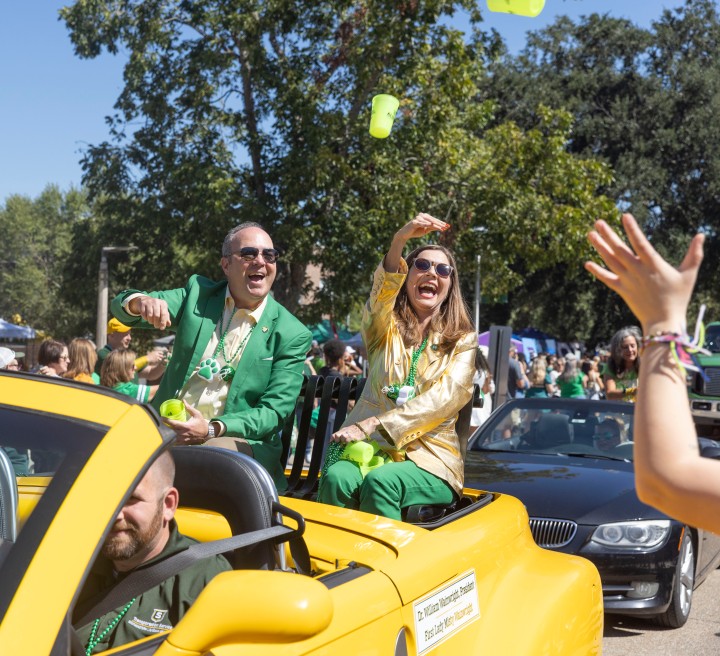
a060123_0005

“Southeastern has been a pivotal part of our family since our children were little,” Wainwright explained when asked why he wanted to be part of the Southeastern family. “We’ve had opportunities to engage in Southeastern through STEM summer camps and through having our children attend athletic events, but also as a prior college leader over the Northshore’s community college, many of the faculty and staff who’ve built [NTCC] are graduates of Southeastern. So, I’ve had firsthand knowledge of the success of Southeastern’s graduates.

“When the opportunity came about for me to consider applying for president, it was really the only opportunity that my wife and my family and I felt would have been best for us at this time. I’m excited to dive into the mission, and the last few months with our Southeastern family, since my start on June 5, have been incredible. I couldn’t ask for more.”

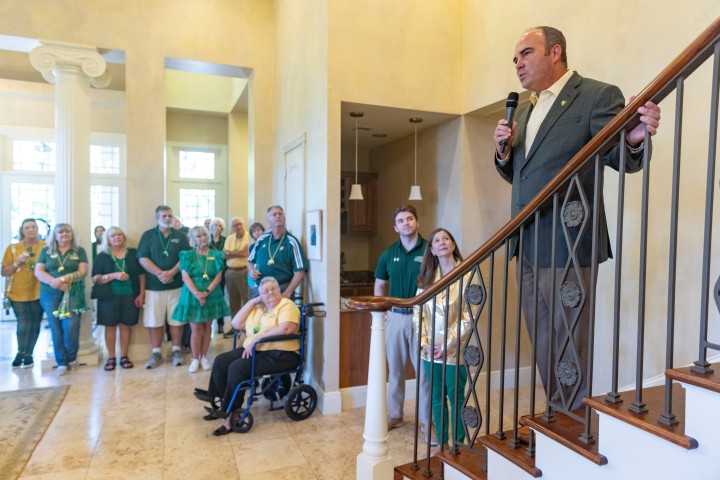
a101423_0596

Wainwright is indeed uniquely qualified for the post. Prior to his time at Southeastern, he had accrued over 24 years of progressive leadership experience in higher education. Most recently, he served for 12 years as chancellor of Northshore Technical Community College (NTCC). During his tenure at NTCC, he helped lead exponential growth and success for the institution, expanding campuses and tripling enrollment, causing NTCC to become one of the fastest-growing community colleges in the nation.

“Serving as chancellor of Northshore Technical Community College has certainly prepared me for the role [of president] at Southeastern, as many of our Northshore students were on a transfer path to the University. By virtue of alignment of transfer pathways into the critical demand programs at Southeastern, [at NTCC] we’ve been able to walk the journey with our students and collaborate with many of the faculty and staff at Southeastern.”

Prior to NTCC, his positions have included faculty member, dean, grant facilitator, vice president of business development and training, and chancellor, as well as interim chancellor at Delgado Community College.

Additionally, Wainwright has received national and global recognition. He has served as a Salzburg Global Leadership Fellow and as a Harvard Institute for Educational Management Fellow. In Jeddah, Saudi Arabia, he applied his expertise to help community colleges seeking accreditation and was a self-study trainer for Jeddah Community College. He also led innovative, multi-college study abroad initiatives to Costa Rica, Amsterdam, and Dubai.

Scholarly contributions have also been abundant and include presentations pertaining to higher education institutions’ strategies and successes, which were given across the state, nation, and globe.

His formal education encompasses a bachelor of science in criminal justice from the University of Southwestern Louisiana, a master of education in adult and continuing education from Northwestern State University, and a doctorate of philosophy in higher education administration from the University of New Orleans.

In addition to being the recipient of numerous awards and honors, Wainwright has also been deeply involved in professional and community organizations, including having served on the boards of Workforce Investment Area 20; Washington Economic Development Foundation; Northshore Charter School Inc.; GNO, Inc; Northshore Business Council; St. Tammany West Chamber of Commerce; Franciscan Missionaries of Our Lady Health System; and, most recently, United Way of Southeast Louisiana. He is additionally the president of St. Tammany Corporation; former president of COMBASE, Conference of Louisiana Colleges and Universities, and Board of Family Promise of St. Tammany; and has served as chair of the Louisiana Community and Technical College System Finance and Administration Committee, Louisiana Community and Technical College System Advancement, Public Affairs, and Legislative Affairs Committee, and Louisiana Community and Technical College System Finance Committee. Most recently, he was selected as a member for the Committee of 100 for Economic Development, Inc., Louisiana’s business roundtable promoting public policy that makes Louisiana more competitive in retaining existing business and industry and attracting more innovative businesses to Louisiana.

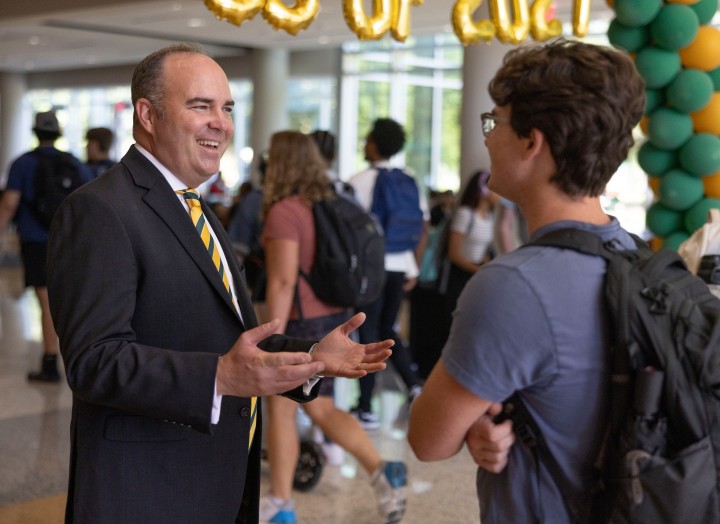
a101423_0168

The importance of education to Wainwright, who grew up in the then small rural community of Broussard, Louisiana, is clear—and it’s something for which he gives a lot of credit to his family. “My father graduated high school and went on to work in the oil and gas industry,” he said. “And the reason education is so important to me is because my mother stopped out of high school and at a later age went on to earn her GED. And if she would not have earned her GED, I certainly would not have achieved the level of education that I’ve had today.”

Wainwright’s first dream path was quite different than the one he ended up choosing, though with interesting overlap.

“I wanted to be a meteorologist,” he said. “I was fascinated by the weather. Still today I’m fascinated by the weather. And it is not uncommon that in my job as president, I’m watching the weather and making sure that we’re taking proper precautions for the safety and health of our students.”

In college, his second passion, criminal justice, took hold, and Wainwright majored in the subject as part of his initial pursuit of a career in law.

But the plans one envisions as a child and young adult often diverge down a different road as experience, inner reflection, and opportunities unfold. And for Wainwright, it was a love for and belief in higher education that eventually won out—creating an unmistakable and well-worn path he has now unwaveringly traveled for decades.

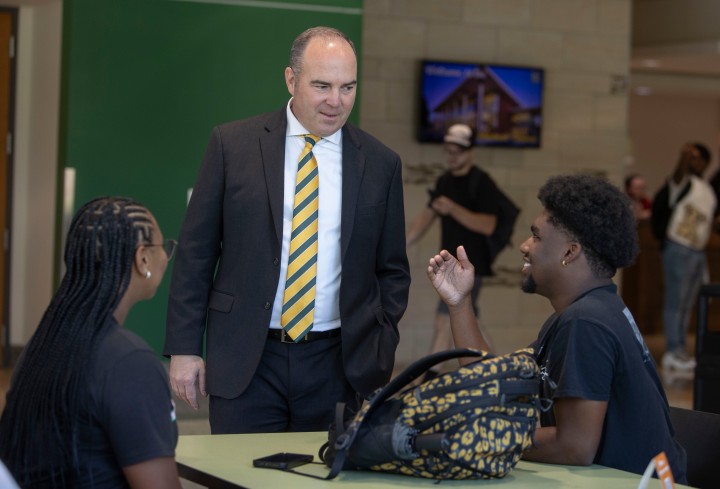
“My best days are when I’m able to engage with our students. I’m able to see the impact of our faculty on our students, whether it’s through their success in the classroom, their success after graduation in the community, or their success as they rise through the ranks in business and industry,” said Wainwright.

a081623_0650

Settled into his new position and home on campus for a few months now, he’s already well into leading the University forward, drawing on personal experience, current research and market trends, partnerships, and an understanding of where we’ve come from to determine our path forward.

“I always like to look at lessons learned through looking at where we began,” Wainwright explained. “Southeastern Louisiana University was founded as a junior college, and at the time that was critically important to build a future for this region. And quickly, the University emerged from junior college status to four-year university, and then you began to see incorporations like the lab school and other significant infrastructure developments that were critically important.

“One of the lessons learned from this is that progress takes time. It takes intentionality. It takes strategic focus and vision. And so, as we enter the next 100 years, I look forward to leading our university and implementing a bold vision and strategic plan for our future that will carry us to the next 100 years.”

a071223_0179

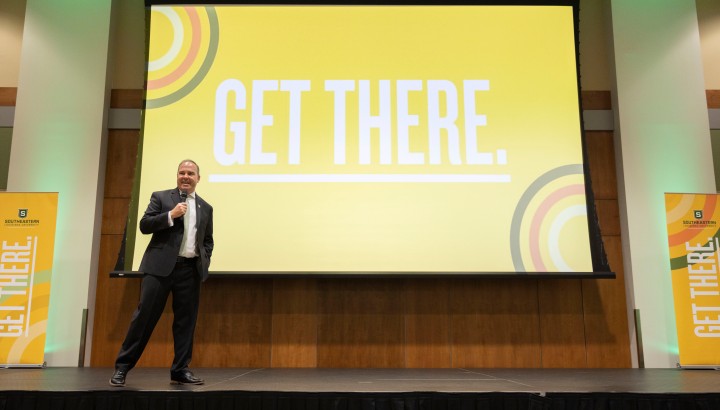
To this end, on August 11, 2023, at Southeastern’s annual Convocation, a long-established tradition of all University employees coming back together before the start of a fresh academic year, Wainwright announced a shared vision and shared responsibility for Southeastern. This came from conversations about Southeastern’s strengths; listening to students, faculty, and staff; learning from regional leaders; and much more with the intent of serving as a guide and a roadmap to Southeastern’s future.

This plan purports that “In 2025, Southeastern will celebrate 100 years of excellence in higher education. In 2125, Southeastern will be a global leader in higher education innovation by design and dedication to mission.” Additionally, four pillars were established to help guide the way: 1. The Student Experience; 2. Faculty and Staff Investment; 3. Competitive Edge; and 4. Educational, Economic, and Cultural Development.

“I have a bold vision for the future of Southeastern for us to be the leading university in the University of Louisiana System and in the state of Louisiana,” Wainwright said. “And we do that through research. We do that through continued analysis of markets and ensuring that the programs we’re providing are relevant and important to our regional economy, that we can build successful communities and, most importantly, prepare families for success in our region. That’s critically important to ensure that our students have the foundation that’s necessary for them to be successful.”

a081623_0863

“I do not believe in challenges; I believe in opportunities,” he added. “And if you look across the spectrum of all of higher education, there are enrollment concerns. However, Southeastern is bucking the national trends with a recent 2.9 percent enrollment growth. The real opportunity for Southeastern is truly knowing our students, understanding our markets, and also positioning Southeastern to be a global player in higher education.”

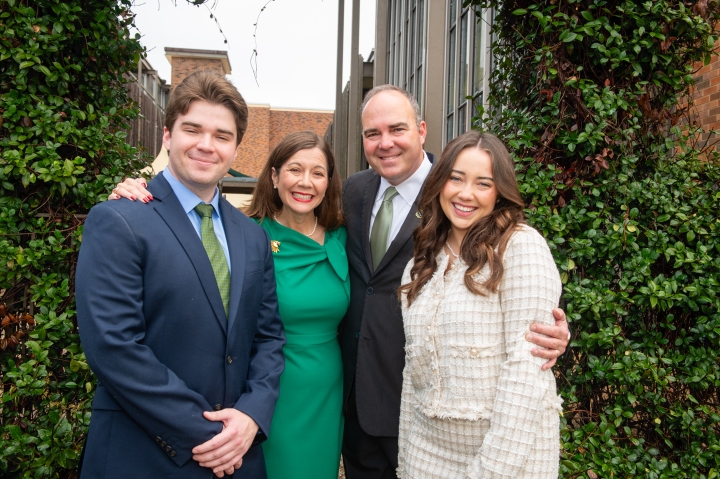
Wainwright credits his wife and children for his success in higher education. His wife Misty is an accomplished licensed mental health therapist who has championed women’s mental health and helped thousands on the Northshore. He counts his son Zachary and daughter Ella Grace as he and Misty’s greatest accomplishment. “Our children challenge us, keep us relevant, and inspire us in countless ways,” he said.

SLU-2607

Students Honored with Top Society of Professional Journalists Awards

Southeastern students at the Southeastern Channel won four Mark of Excellence Awards, including two first-place honors, at the Society of Professional Journalists’ annual Region 12 conference. The Mark of Excellence Awards honor the best of collegiate journalism from a calendar year.

The Society of Professional Journalists (SPJ) Region 12 comprises all universities in Louisiana, Mississippi, Arkansas, and Tennessee.

Mark of Excellence Awards were judged by SPJ industry professionals who were directed to choose entries they felt were the best in student journalism. If no entry rose to the level of excellence, no award was given.

The Southeastern Channel’s first-place winners included Jermaine Kelly of Shreveport, who won first place in “Television Sports Videography” for the second year in a row for his videography of the 2022 Riverbell Classic football game between Southeastern and Nicholls State, and the staff of the student newscast, Northshore News, in the “Best All-Around College Television Newscast” category, for its May 25, 2022 episode of Northshore News.

Second-place winners, or finalists, were Kelly in the “Television Sports Reporting” category for his same Riverbell Classic football story and Tristyn Turner of Denham Springs, for “Television Sports Videography” for videography in his 2022 Southeastern vs. Southern University soccer match story. The winning Southeastern Channel sports stories both aired in the student sportscast, The Big Game.

It marks the seventh time in 15 years that Northshore News has won a first-place Mark of Excellence Award as the best student TV newscast in the region. Northshore News won second place in the other eight years.

This year’s winning episode was co-anchored by Ross Chauvin of Houma and Alexis Genovese of Husser.

“It’s an honor to win first place from such a prestigious organization,” Genovese said. “This episode is so special to me because I’m both anchoring and reporting in it. I’m so grateful for this award and everyone who helped me along the way.”

Genovese was also honored last year with a first-place Mark of Excellence Award for “Broadcast News Feature Videography” in her Northshore News story on Southeastern’s vertebrate museum.

“I’m truly grateful for the Southeastern Channel for teaching me everything I know and allowing me to have real-world experiences while still being in college,” Genovese said.

This year’s first-place episode featured a story by Chauvin on a Ponchatoula Strawberry Festival shooting, while reporter Carson Fryou of Ponchatoula filed a report on how Southeastern students should prepare for an active shooter in light of recent shootings on the Northshore.

Genovese reported on the Northshore’s blood supply crisis, while Turner produced a story on new school lunch waivers for students in Tangipahoa Parish.

Tanner Fooshee of Jackson, La., reported on the renewal of the Tangipahoa Parish fire protection tax. Kelly produced a package on changes to qualify for TOPS financial aid, while Trinity Brown of Baton Rouge contributed a story about a special Mardi Gras parade for dogs in Walker.

In its 21 years of existence, the Southeastern Channel has won over 500 national, international and regional awards, including 24 awards from the Emmys and first place in the nation 12 times from College Broadcasters, Inc.

The Southeastern Channel can be seen on Spectrum Cable 199 in Tangipahoa, Livingston, St. Tammany and St. Helena parishes and on mounthermonTV.com for viewers in Washington Parish. In addition, the live 24-7 broadcast can be seen on Roku, Apple TV, Amazon Fire, and the channel’s website at thesoutheasternchannel.com, which also offers programs via video on demand. The Southeastern Channel is available on Facebook, Twitter, Instagram and YouTube.

Header Image: Alexis Genovese

President Wainwright Presented with Challenge Coin

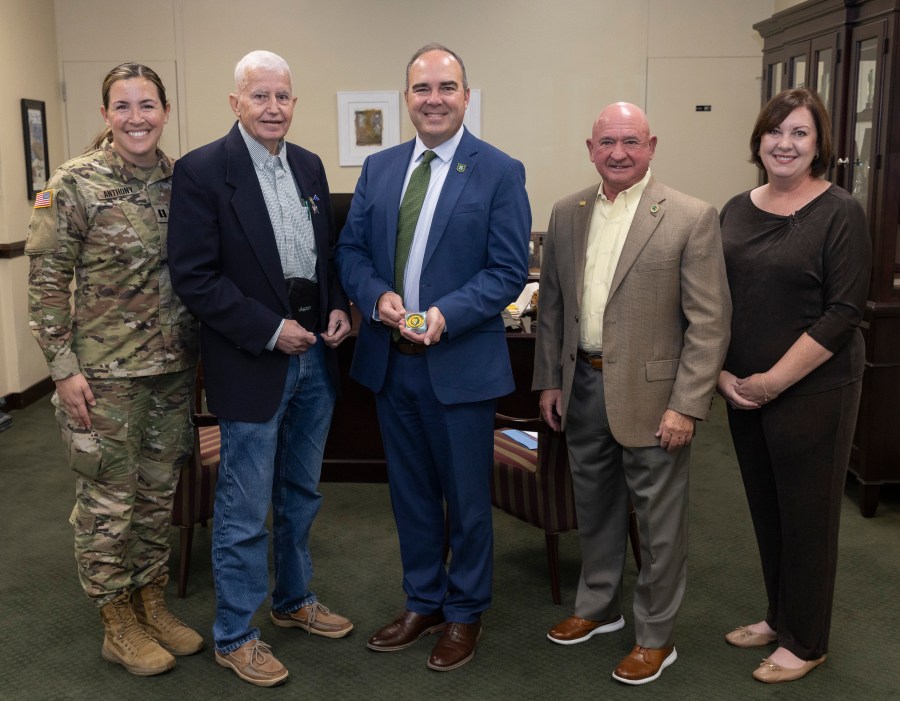
Southeastern President William S. Wainwright recently accepted a special Southeastern Challenge Coin from LaVetCorps Navigator and retired Captain Steve Worth and Alumni Association President-Elect and retired Air Force pilot Mike DuBois.

According to Worth, some believe that the challenge coin tradition started in Vietnam, where an Army Infantry-run bar tried to keep non-combat soldiers away by forcing outsiders to buy drinks for the whole bar by “coining” them. This tradition, now known as a coin check, continues today and is called a challenge coin.

Challenge coins have been an American Military tradition for centuries. They were meant to instill unit pride, improve spirit de corps and reward hard work and excellence, Worth explained. Over the years this tradition has expanded to non-military organizations, such as Southeastern.

“The most well-known story dates back to WWI, as the United States stated to build up its Army Air Services in which many young men wanted to volunteer. One of these young men was a wealthy lieutenant who wanted to encourage his soldiers and thank them for all of their hard work,” Worth said. “He had a coin size bronze medallion made for his soldiers. The young
lieutenant wore his coin in a small leather pouch around his neck and encouraged his soldiers to do likewise.”

Worth said during the war the lieutenant was shot down and captured by the Germans. As a prisoner of war all documents were taken from him, so if he escaped, his identity would be in question.

“The Germans did not take his coin because they didn’t know the significance of it. The young lieutenant did escape and made his way back toward the friendly line and ran upon a French garrison,” Worth continued. “The French thought he was a German spy and planned to execute him until he revealed the small bronze coin with his unit on it. One of the French
soldiers recognized the unit crest and he was saved from execution.”

a111323_0399

Above image: Southeastern President William S. Wainwright, center, accepts a special Southeastern Challenge Coin from Steve Worth and Mike DuBois recently. On hand for the occasion are, from left, Southeastern Director of Military and Veterans Success Emily Anthony, Worth, Wainwright, Dubois, and Chief Enrollment Management Officer Kay Maurin.