Interview with Head Coach Frank Scelfo

Southeastern named Frank Scelfo the 16th head football coach in program history on January 30, 2018. Southeastern Magazine sat down with the 59-year-old Abbeville, Louisiana, native heading into his first season patrolling the lion sidelines to find out more about the man and his plans for SLU.

042118_0192

Q:
Your background as a student-athlete was as a baseball player (Scelfo starred on the diamond at ULM from 1978-81 and was named the school’s Athlete of the Year as a senior). How did you make the transition from being a baseball guy to a football guy?

A:
My dad coached football and baseball, so every fall I was at football practice with him as long as I can remember. That’s just what we did. We played football in the fall, basketball in the winter, and baseball in the spring. When I graduated high school, I signed a football scholarship with ULM (then Northeast Louisiana) with coach John David Crow and was planning on playing both football and baseball.

I decided to focus on baseball, because I thought I might have a chance to play at the next level. Even though I didn’t play football, my passion for the game never waned. Although I wasn’t on the team, Coach Crow allowed me to work with his staff as a student assistant. My first job was at Prairie View Academy in Bastrop and I was the football and baseball coach. I love both sports, but my opportunities came in football, so that’s the way I went.

Q:
How did your dad being a coach influence you as you were growing up?

A:
Everything I am came from my parents. I was one of eight kids, and all eight of us graduated college. They were doing something right to go eight for eight. We learned so many lessons growing up that we didn’t even realize we were even learning. I don’t coach for a living; a coach is just what I am. Even when I was watching my sons playing as they grew up, it’s hard to just watch as a fan. I’m always analyzing what I’m watching from a coach’s perspective, and I think I get that from my dad.

After a game that he won, my dad would always still see the issues his teams had. It took me becoming a coach myself to truly understand. Even when you win, there’s always room for improvement. On the flip side, he was never devastated by the losses. He knew there was always another chance to be better the next day.

042118_0518

Q:
Is there a moment during your career that you would consider your first big break?

A:
No. My dad told me when I first started, “Make every job your last one.” If other opportunities come and you want to take them, that’s fine. But if you treat the job you’re doing today like it’s your last, you’ll be sure to make it the best job you can. I just wanted to do the best I could at wherever I was at the time. I just want to coach.”

Q:
Besides your father, who were some of the coaches who influenced you during your career?

A:
Everyone I’ve worked with has had an impact on me. Frank Monica taught me a lot when I was coaching under him at Jesuit High School. Dickey Meeks at Chapel Hill High School along with Buddy Teevens, Tommy Bowden, and my brother Chris at Tulane were all people who taught me things that I use to this day.

I learned from Derek Dooley at Louisiana Tech and Mike Stoops at Arizona, and those are two guys who draw on a wealth of knowledge from a lot of different people. Gus Bradley at Jacksonville was a great influence. I took a lot of things from all of those guys.

Q:
How proud are you of the influence you’ve had on coaches and players you’ve worked with over the years?

A:
Making a difference in the lives of the players we coach is the most important aspect of coaching. If you’re just in for the numbers on the scoreboard or on a paycheck, you’re not going to be a coach very long. If we teach our players to do the right things, which they can carry with them for the rest of their lives, positive results are going to come on the field. I’ve talked to a lot of my old players, and it’s amazing the things that impacted them that I didn’t even realize would have an effect.”

Q:
Why Southeastern?

A:
This is home for me, and it’s great to come home after coaching all over the county. I developed an affinity for Southeastern when I used to come work the Manning Passing Academy and when we came here for training camp when I was at Tulane. The campus, the city, and the area are just all beautiful. My wife and I love the people here.

I’ve always looked at Southeastern and said, “That would be a great job.” I’ve always loved Hammond. When I interviewed for the job, it was exciting to see the growth throughout the University and the city. This was an easy call to come to Southeastern.

Q:
Where do you want to take the Lion Football program?

A:
Football-wise, I want to consistently be a force on the Football Championship Subdivision (FCS) level. Academically, we have to do a better job as a football program of stressing the importance for our student-athletes to get a college degree. We want our players to be able to contribute to society in a positive manner. And then hopefully down the line, they’ll think so highly of their time at Southeastern that they’re willing to give back to the program so we can continue to give student-athletes opportunities.

Everything we’re doing now is built for the long term. We want to set ourselves up for long-term success.

Q:
The three pillars of the Southeastern Athletics mission statement are excellence in competition, in the classroom, and in the community. Your program has adopted Child Advocacy Services’ Court-Appointed Special Advocates (CASA) as a charity this season. How important is being involved with CASA to you and your players?

A:
It gives the members of our program the realization of how much they can impact others’ lives. It’s a mutually beneficial relationship. Our players can be influenced by the kids they mentor, and that experience will be a great life lesson for our student-athletes. We can also show these kids that someone cares about them and they too have a chance to reach their goals.

We’re also hoping that more of our fans will consider being CASA volunteers. If we do our job, we’ll have a huge influence on the city of Hammond and Tangipahoa Parish through our partnership with CASA.
Supply Chain Management Program Among Top in the Nation

Southeastern Louisiana University’s Supply Chain Management Program has been recognized among the top in the nation for 2019 by Study.com, a website that helps students research potential schools, degrees, and careers.

The website recognized 23 colleges and universities on the list. According to Study.com, the schools were selected based on unique features that give students an edge in the job market. The listed colleges and universities offer real-life training, simulations of actual supply chains, or hands-on projects, and many of them provide flexible course schedules or the convenience of online study, the website said.

“Our faculty, business partners, and alumni take an active interest in helping students find jobs in their majors,” said Dean of the College of Business Antoinette Phillips. “Supply Chain Management students have opportunities for real world experiences that make them job-ready, and able to contribute to their employers’ success from day one.”

As the only Louisiana school on the list, Southeastern was selected based on career and educational resources, faculty, job placement, and more. The complete list can be accessed here.

The website cited Southeastern’s close ties with the Institute for Supply Management, a not-for-profit professional organization for supply chain management, as one of the reasons for being selected. It also stated that students enrolled in the supply chain management program are engaged in practical learning as well as classroom education, and that the school’s Department of Marketing and Supply Chain Management supports purchasing and logistics functions of regional retailers, wholesalers, and distributors.

Additionally, Southeastern’s program offers a variety of internships for its students, including those at Cal-Maine Foods, Marathon Petroleum, Wal-Mart Logistics, Coca-Cola, and The State of Louisiana’s Office of Procurement. Students who graduate from the program have gone on to work for employers such as Lock-Heed Martin, Pool Corp., Smitty’s Supply, Cisco, and more.

For more information on Southeastern’s Supply Chain Management Program, click here.

Continuing a Tradition of Emmy Award-Winning Students

For the sixth straight year, students at the Southeastern Channel, Southeastern Louisiana University’s educational access station, have been honored with college division Student Production Awards given by the Emmy Awards’ Suncoast Region of the National Academy of Television Arts and Sciences.

John Sartori of Mandeville was a winner in the Talent category, while Justin Redman of Slidell, Ben Delbert of Covington and Jonathan Calhoun of Baton Rouge were winners for their production in the Commercial category.

Sartori won for his on-camera composite of Southeastern Channel work that included anchoring and reporting for the national award-winning Big Game sportscast, hosting and producing the Lion Tracks coaches’ talk show, and play-by-play announcing of live Southeastern game broadcasts.

“If you are a student interested in broadcast journalism, there is no better place for you in this country than in Hammond, Louisiana, at the Southeastern Channel,” Sartori said. “I have been given opportunities that I could have only dreamed of before entering college.”

Justin Redman, Ben Delbert, and Jonathan Calhoun won for their 15-second, stop-motion animation commercial The Cajun Spoon: Two Meals, One Spoon, produced for the Cajun Spoon seasoning brand and dry dinner mix company of Baton Rouge.

“This award is extremely prestigious because it belongs to a division of arguably the biggest and most esteemed award ceremonies for television productions,” Delbert said. “To win such an award essentially places your own work in the same field as many other professional productions.”

Delbert edited the spot, while it was produced and directed by Calhoun with Redman providing camera work and voice-over narration.

The commercial was produced in the Communication 424: Television Advertising Production course in the electronic media concentration of the Department of Languages and Communication. In the class production, students at the Southeastern Channel produced 15-, 30-, and 60-second television commercials for a real-world business client, like the Cajun Spoon, through collaboration with advanced marketing class students who developed the advertising campaign under marketing professor Teri Root. In recent years, the collaborative course has also produced commercials and marketing campaigns for Hammond businesses North Cypress Fitness and Gnarly Barley Brewing Company.

The Cajun Spoon wanted its commercial to emphasize themes of community involvement and engagement to position the product as more than a simple dinner option, Settoon said. The company wanted to illustrate its “two meals, one spoon” initiative, where one box of mix is donated to a food pantry per each box purchased.

“The thought was to make sure the audience would gravitate to the general idea that the product brought the family together, as well as the community,” Calhoun said. “So it’s a blessing to receive the award and know that the main message was well received.”

According to Communication 424 course instructor and Southeastern Channel Operations Manager Steve Zaffuto, the award-winning 15-second commercial utilized a more stylized approach of stop-motion animation of closeups of hands passing around bowls of prepared meals in contrast to the 30- and 60-second versions that featured live action scenes of a family eating a meal together.

“The decision to utilize a stop-motion approach via a series of still frames, rather than full-motion footage, draws attention to both the product and general concept of ‘sharing’ that is vital to the campaign’s central message,” Zaffuto said.

The Southeastern Channel also won four Honorable Mentions in the Emmy competition. Sartori, as play-by-play announcer, along with color analyst Wesley Boone of Alexandria and director Freddie Rosario of Hahnville, won honorable mention recognition in the Sports–Live Event category for the Southeastern Channel’s live basketball broadcast of the December 14, 2017, Lions game with Southern University of New Orleans.

In addition, Rosario won honorable mention for Director of the Lions-SUNO basketball broadcast, while Boone was honored as Director of his short film, Intersect. Amanda Kitch of Covington won honorable mention in the Photographer category for her news videography composite.

The students and their productions were honored in the Emmy Suncoast Region, comprised of television stations and production companies in Florida, Alabama, Georgia, Louisiana, and Puerto Rico. Students at the Southeastern Channel have now been named Emmy winners 17 times with 62 nominations.

“Being recognized by the Emmys is the highest honor you can receive in television,” said Southeastern Channel General Manager Rick Settoon. “Since so few are given, we’re absolutely thrilled that John, Justin, Ben and Jonathan are deservedly joining such elite company with this highest reward for their talent, creativity, and hard work.”

The Southeastern Channel has now won over 400 national, international and regional awards in the past 15 years.

The channel can be seen on Charter Spectrum Cable Channel 199 in Tangipahoa, Livingston, St. Helena, and St. Tammany parishes. The live 24/7 webcast and video on demand can be seen at www.thesoutheasternchannel.com.

Help Spread the Holiday Cheer with Southeastern’s Toy Drive

Southeastern’s Department of Health and Human Sciences and College of Business, along with the Association of Latin American Students and the Louisiana Child Welfare Training Academy, are sponsoring a toy drive for children in the foster care system from infant to 17 years of age.

Donations will be accepted at the Louisiana Child Welfare Training Academy, located on Southeastern’s campus in White Hall, room 28-131, and in the College of Business in Garrett Hall, room 75, through December 7. Drop off times are 7:30 a.m. to 5 p.m. Monday through Thursday and 7:30 a.m. to 12:30 p.m. on Friday.

Gabriela Pacheco, training / grants coordinator at the Louisiana Child Welfare Training Academy, said there are 822 children in foster care in the local region.

“We want to make a difference this Christmas and bring joy,” said Pacheco. “Please help us collect new, unwrapped toys to bring Christmas to children in the foster care system and give them a toy for a smile.”

Suggested gifts, Pacheco added, include dolls; bikes; musical toys; gift cards; hand-held computer games; perfumed body lotions or soaps; scooters; jewelry and craft kits; video games; diaries; My Little Ponies; drawing and sketching kits; or any hand held toys, such as rubix cubes, match box cars, trucks, and trains.

For more information, contact Pacheco at gabriela.pacheco@southeastern.edu.

Night Out: Dance Performance Project 2 on November 19

Southeastern’s Department of Music and Performing Arts’ dance company, Dance Performance Project 2, will present A Few of Her Favorite Things: A Dedication to Mary Lou Champagne on November 19 at 7:30 p.m. in Vonnie Borden Theatre.

Director of Dance Keith “Skip” Costa said Southeastern’s resident student improvisational dance company will present an exclusive dance and movement improvisation concert that includes 15 performers with four solos, one duet, and four group dances.

“Mary Lou and William Champagne are both alumni of Southeastern who fell in love while in college. Mary Lou loved dancing and continued to dance after college,” Costa explained.

Over time, Champagne opened her own dance studio in Pearl River, Louisiana, and was very successful in dance education in her area, Costa said.

“Mary Lou’s love for dance is the reason the Champagne family established a scholarship about 10 years ago. She passed away in the summer of 2017 at the age of 88,” Costa explained. “As of today, the Mary Lou Champagne Scholarship has been awarded each semester to a total of 13 dance majors / dance minors to help continue their dance education at Southeastern.”

“Moods change from joyful to religious to personal, which are all based on the themes selected from the list, submitted by her husband and family, of some of Mary Lou Champagne’s favorite things she enjoyed in life,” Costa said. “Music was selected to enhance the dances from the styles of music that she loved, including Dean Martin, Perry Como, and Frank Sinatra, among others. Several scholarship recipients will perform solos and a duet.”

Dancers performing in the concert include Alaura Cervini, Metairie; Ashley Covington, Brianna Denmark, Brooke Harris, Trevor Jenkins, and Alexis May, all of Denham Springs; John Duplantier, Covington; Brooke Himel, Plaquemine; Brooklyn Jackson, Kattie Kelly, and Destiny White, all of New Orleans; Hayley Jordan, Baton Rouge; Gabrielle Levet, Mandeville; and Emma Pinion, Loranger.

Tickets to the concert are $10, with $8 reduced admission available for students, seniors, and children, and will be available 30 minutes prior to the performance in the Vonnie Borden Theatre lobby.

For more information, contact Costa at Keith.Costa@southeastern.edu.

Southeastern Alumni Create the First Digital Driver’s License

The driver’s license has been an indispensable part of many Americans’ lives for decades. But while its components have evolved over time and between states, at its core it has essentially remained the same—a physical piece of identification. Now, well over 100 years after the first personal driver’s license was issued on a simple, small piece of paper, the State of Louisiana and one Southeastern alumni-led company have begun ushering in the second phase of the driver’s license by pioneering the arguably inevitable digital future of personal identification.

In 1903, the year that the Wright Brothers took to the sky at Kitty Hawk and only five years before Henry Ford’s iconic Model T was unleashed on the world, Massachusetts and Missouri began issuing the first required non-commercial automobile driving licenses. Americans were on the move, and state regulations had begun trying to keep up.

Over the next 51 years, possessing a driver’s license became a requirement in every state for those getting behind the wheel. Louisiana adopted this policy in 1946. Photographs were added to non-commercial driver’s licenses for the first time in the US one year later, and by the mid-1980s the incorporation of anti-counterfeit devices on state IDs was
becoming standard.

But these advancements have now fallen behind where we are today: a world where a continually increasing majority of people turn to tiny, illuminated screens to discover current news, learn, be entertained, keep up with their mail, and connect with others. Love it or hate it, using mobile technology for all the information you need while on the go, and then some, is the new norm.

Two years ago, the State of Louisiana addressed this need to meet citizens where they are by passing House Bill 481, a legislation championed by Representative Ted James. Louisiana had officially become the first state in the nation to legislatively approve acceptance of a digital driver’s license, leading the way for the next chapter in the story of the American driver’s license.

But then there was a new challenge—actually creating it. After thoroughly assessing proposals from various companies, Louisiana chose the well-developed, creative approach offered by Southeastern alumnus Calvin Fabre and his company Envoc. Fabre, along with his all Southeastern alumni Envoc team of six developers and a group of 10 state employees, met the challenge by creating a user-friendly and secure app for both iOS and android devices—an app that also meets a myriad of legal requirements for acceptance by State Police and other agencies. They named it LA Wallet.

Achieving this, though, was certainly not without obstacles. “The most challenging part of the project is always a commitment to ongoing privacy and diligence,” said Fabre. The user’s safety and security were indeed of primary concern when developing the app, which is not only secure but also contains anti-forgery precautions and carries a no-touch policy.

“State Police asked for a no-touch solution,” said Fabre. “This means that when showing your digital ID to an officer or anyone else, you will never have to allow them to touch your phone, let alone hand it over.”

To combat fraud and prove that it is a valid license, there are two simple methods the driver can utilize. The first one is to hit the refresh button, which connects the app with the Office of Motor Vehicles, resending the information to the device and proving that the license is still valid. The second method is interactive with the user. When a user presses the rendering of their driver’s license in the app, the seal for the State of
Louisiana pops up—effectively demonstrating that the license is real and not a screenshot.

The image of the license itself is not a direct capture of a physical driver’s license either. Information is pulled directly from the Office of Motor Vehicles and reassembled to create a high-resolution digital rendering. As Fabre explained, the result is “a unique image generated by our servers, that only our servers can create. And it is a unique image that leverages all of the anti-forgery, anti-tamper-proof techniques that the state has developed.”

While the image on the “front” of the license will still be familiar to people though, the “back” looks somewhat different. This screen contains additional information such as endorsements. To further aid the no-touch policy, the bearer’s license number appears in a large font on this side for better readability at a distance.

The beauty with which all of these new technological and identity challenges were overcome is perhaps only overshadowed by the truly collaborative effort involved. According to Fabre, “Public Safety, State Police, state attorneys, and technology all got in one room and all worked together to find something that’s going to best serve the citizens, and they were genuinely wanting to serve the citizens. It’s a great application of many disciplines that don’t normally get together. That’s diversity.”

And this product of Louisiana’s insightful vision, Envoc’s technological innovation, and the harmonious collaboration between state and private—between various backgrounds and specialties with one common purpose—has now truly made history. In early July, the final app store approvals were granted and the product officially launched to the public.

Its prospects extend even further—far beyond acceptance by State Police, and most likely beyond Louisiana. According to Act 625, all parish and municipality police officers in Louisiana are also legally authorized to take LA Wallet for identification purposes, and the establishment of state-wide acceptance procedures and training is currently underway.

Envoc has additionally worked closely with the Louisiana Office of Alcohol and Tobacco Control and has met their requirements by completing requested modifications to the app. This summer, the digital license officially became a part of the Office of Alcohol and Tobacco Control’s responsible vendor program. With this agency’s approval obtained, LA Wallet is now valid for the purchase of alcohol and other restricted products sold at Louisiana retailers, including bars, restaurants, and stores. However, since the app is quite new and businesses are still implementing it into their procedures, for now it’s a good idea to also carry along your old driver’s license before heading to your local watering hole or picking up a six-pack.

From library cards to school IDs, this new technology has a potentially bright future aside from the driver’s license as well—with further applications that Fabre is passionate about one day bringing to life. “Think of the possibilities of allowing a college to have an extension of the digital driver’s license on their phone,” he said.

All of this has not gone unnoticed by other states, either. One undisclosed northern state has already reached out to Envoc, expressing interest in following the path now being blazed in Louisiana. As the download numbers keep going up, an increase in other states looking to Louisiana will likely closely follow.

And there’s plenty of reason it should. Fabre said that while we may not have always received national coverage on it, “Louisiana is very forward thinking in this and other areas related to serving its citizens through technology. We are the Silicon Bayou.”

Anyone with a current Louisiana driver’s license can now download the app for both Android and iPhone. The app can immediately be used for identification with Louisiana State Police, with the other uses to evolve in the very near future. The app itself is free, but an in-app purchase is required to initially activate and then to renew the license when it expires, similar to paying for a new physical driver’s license.

While you shouldn’t plan on tossing out your current Louisiana ID just yet, it’s quite possible that time may soon come. The first paper driver’s license was created to keep up with people more on the move as a result of the day’s increasing acceptance of and reliance on industrial technology. Americans today are still on the move, perhaps more than ever; but we have also collectively embraced a whole new concept of being mobile—and a whole new era of technology. Louisiana, along with Envoc’s Southeastern alumni-led team, has now crossed the threshold of being the first state to fully join its citizens in this digital era. The next chapter in the story of the American driver’s license has begun, and Louisiana citizens can now be among the first to help it unfold.

Health Education and Promotion Program Named First in the State

Southeastern’s Health Education and Promotion Program has been ranked as the best program in the state by universities.com. Each school’s ranking is based on a compilation of data from government sources, student surveys, college graduate interviews, and editorial reviews.

The purpose of the Health Education and Promotion program is to prepare students to work in the field of public health. Students in the program have an opportunity to work with nationally known faculty, participate in student research, and travel to professional conferences. Graduates of the program receive the prerequisite knowledge and skills necessary to sit for the Certified Health Education Specialist (CHES) exam.

“I am very proud of the accomplishments of the faculty and students in this degree program,” said Ann Carruth, dean of the College of Nursing and Health Sciences. “This unique program teaches methods needed to help people make healthy behavior changes by addressing knowledge, attitudes, skills, and beliefs in various settings. Being ranked number one demonstrates our commitment to excellence and meeting the needs of our community.”

Forging New Opportunities at Career Fair 2018

During their time at Southeastern, students meet life-long friends, learn to become independent, deepen their knowledge of the world around them, gain inspiration from new ideas, and decide on the path that they would like to follow.  When students and alumni are ready to begin moving forward on this path, or simply see where other roads could lead, Southeastern’s Career Fair is the answer.

On Thursday, September 20 this annual event once again took place, with hundreds of hopeful students and graduates flooding into the Pennington Student Activity Center, eager to embark on their career journeys. Resumes in hand and donning their most polished, professional attire, one-by-one they confidently approached some of the 380 representatives (nearly a third of whom were fellow alumni) from the 168 organizations that were present.

Recognizing the well-rounded quality of a Southeastern education, many of the employers on site were interested in networking with and hiring Southeastern students of any major. “Students were engaging and very enthusiastic; they asked lots of good questions, even when the job field was not in their major,” noted one employer. About 70 percent of the organizations there were open to students and alumni of any major—elevating the career prospects of attendees.

Attendees were also not limited by a certain type of position. In addition to 158 employers looking to fill full-time, post-graduation level positions, 65 of the organizations hoped to find interns and 70 sought part-time employees.

The advantage of attending also didn’t stop at in-person networking. Upon entering, the first thing that many students flocked to was a set-up offering professionally photographed LinkedIn headshots free of charge—tapping in to the growing necessity of social media networking for broadening career prospects. Through this new Career Fair offering, over 185 Southeastern students were able to build a more polished social media presence by having their headshot professionally taken.

The day was a major success for both employers and attendees, with countless lasting, impactful connections formed between the two. Students and alumni were also able to leave better prepared to follow their chosen path—or start on a freshly discovered one. As one student commented, “I have been given a large amount of opportunities today to help me in the future.”

90 Years of the Columbia Theatre: Bringing the Arts to Life in Downtown Hammond

On September 1, 2018, Southeastern’s Columbia Theatre turned 90. Generation after generation have been able to enter Columbia’s doors to escape into another world—a world of music, movies, theatre, art, and beauty. And with both Southeastern’s Fanfare festival and the annual theatre season once again in full swing, the opportunity for everyone in the region to experience the arts through this jewel in Hammond’s downtown is as timely as ever.

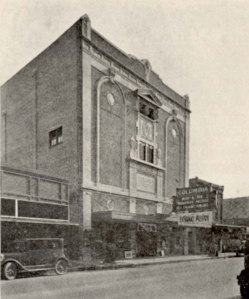
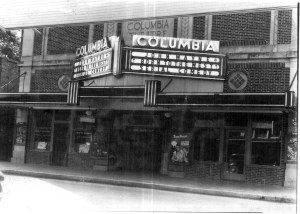
Hammond residents and visitors flocked to the Columbia Theatre for its first event and celebration in 1928. After a silent movie accompanied by a live organ and tenor performance, attendees moved outside for a dance party in the middle of Thomas Street. Over the next two decades, the theatre served as a center of entertainment for the region, providing an escape for people facing the uncertainty and harsh realities of the depression and war years—if only for a couple of hours.

c. 1930_2
Columbia Theatre c. 1930
c. 1937
Columbia Theatre c. 1937

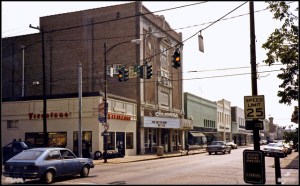
By the 1960s, however, people had begun neglecting downtown areas in favor of local malls, and movie theatre attendance was suffering with the rise of home television. The Columbia was in need of major repairs, and while some were made its revival was not able to fully come to fruition. By the 1980s the theatre lay vacant, its days of venerated grandness only a memory.

c. 1986
Columbia Theatre c. 1986

But as fate would have it, the Columbia Theatre’s story was far from over. In the early 1990s Marguerite Walter, director of the Hammond Downtown Development District, and Harriet Vogt, director of Southeastern’s Fanfare, began working to save the
theatre. Under advice from a representative of the League of Historic American Theaters, who pointed out the need to act quickly with the roof in danger of collapsing at any moment, Walter and Vogt registered the theatre as a nonprofit 501 (c) (3) and secured funding for the most pressing repairs.

In 1994, First Guaranty Bank, who owned the building, agreed to donate it to the Hammond Downtown Development District (DDD) for restoration as a theatre. Plans were made for Southeastern to take ownership and manage the theatre’s operation after the improvements were made. The DDD, City of Hammond, and Southeastern worked together to secure funds to revitalize the theatre. The adjacent former JC Penney building was also purchased and a portion of the old Firestone Tire building was received through a donation, further expanding the Columbia’s footprint in downtown Hammond.

c. 2001_2
Columbia Theatre c. 2001

Upon completion of the restoration, Southeastern received ownership of the Columbia Theatre in the spring of 2001. The Columbia was once again filled with the happy chatter of theatre-goers and the reverberation of quality performances. With Southeastern now having the Columbia Theatre as a resource in the heart of downtown Hammond, the University began using it for some of its popular Fanfare programming as well—directly bringing this festival for all even deeper into the surrounding community.

Fanfare had begun a decade and a half earlier, in October of 1986. It was launched by a group of Southeastern faculty members, among them the current executive director of the Columbia Theatre, Roy Blackwood, to celebrate the arts, humanities, and sciences while heightening cultural awareness and making the arts more accessible for everyone within the region. The festival became so successful that it eventually encompassed the entire month of October.

Early appearances included those of internationally-renowned playwright Edward Albee, poet Maya Angelou, and singer Louise Mandrell, as well as popular performers from within the community. This tradition of pulling in talents in a variety of fields, from both near and far, has continued. Fanfare patrons can experience over 50 events that span theatrical productions, films, lectures, workshops, concerts, dance performances, and art exhibitions.

But as fun and exciting as Fanfare may be, it is certainly not the only reason for people to pay a visit to the Columbia Theatre today. When Fanfare’s month-long celebration of the arts draws to a close at the end of October, the party is still just getting started.

Fanfare serves as the opening act of the theatre’s annual performance season. From newer works and youth-oriented programs to beloved hits such as The Nutcracker, visitors of all ages and tastes can take in a favorite classic as well as experience something completely new to them.

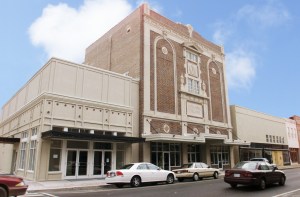
While much has changed in the world since visitors first filled the Columbia’s seats, when the house lights dim this season, it’s still easy to see how patrons must have felt 90 years ago when taking in that very first performance. The beauty of the Columbia Theatre proudly lives on—in not just its renovated physical structure and accoutrements but in the timeless, personally enriching experience that the arts can bestow.

modern
Columbia Theatre today

Leading the Way in Geothermal Energy with New Housing Options

New Residence Halls First in the Nation with Geothermal Energy

For over 500 Southeastern students, the 2018-2019 school year began by moving in to one of the two new, state-of-the-art residence halls. Ascension Hall and Twelve Oaks Hall, located adjacent to the former Zachary Taylor Hall, feature private and shared rooms, classrooms, meeting and common areas, and dining and retail venues. But while the roomy, contemporary spaces may be what awe most people who enter these additions, what’s below the surface is perhaps even more exciting.

Ascension and Twelve Oaks Halls have a hybrid geothermal system. With this type of system, pumps move heat from the ground to the building when the weather outside is chilly. When cooling is needed, the process is reversed. The result is a sustainable, environmentally-friendly, and economical solution to heating and cooling.

An initiative of Southeastern Sustainability, the system is the first of its kind for any university or state building in Louisiana. The new buildings, which draw from 220 geothermal wells, are also the second largest site in the country to use a system like this.

In additional to environmental benefits, the system will significantly cut down on heating and cooling costs. It is projected to save over 50 percent on energy expenses as compared to a traditional system and build.

And students will get to feel the effects of this new technology in more ways than one; the system will also serve as a learning laboratory for real world experiences for Southeastern students in various disciplines.

The new residence halls were featured on a recent WWL-TV news story.  Click here to view.