Exciting New Changes Coming to Campus Dining

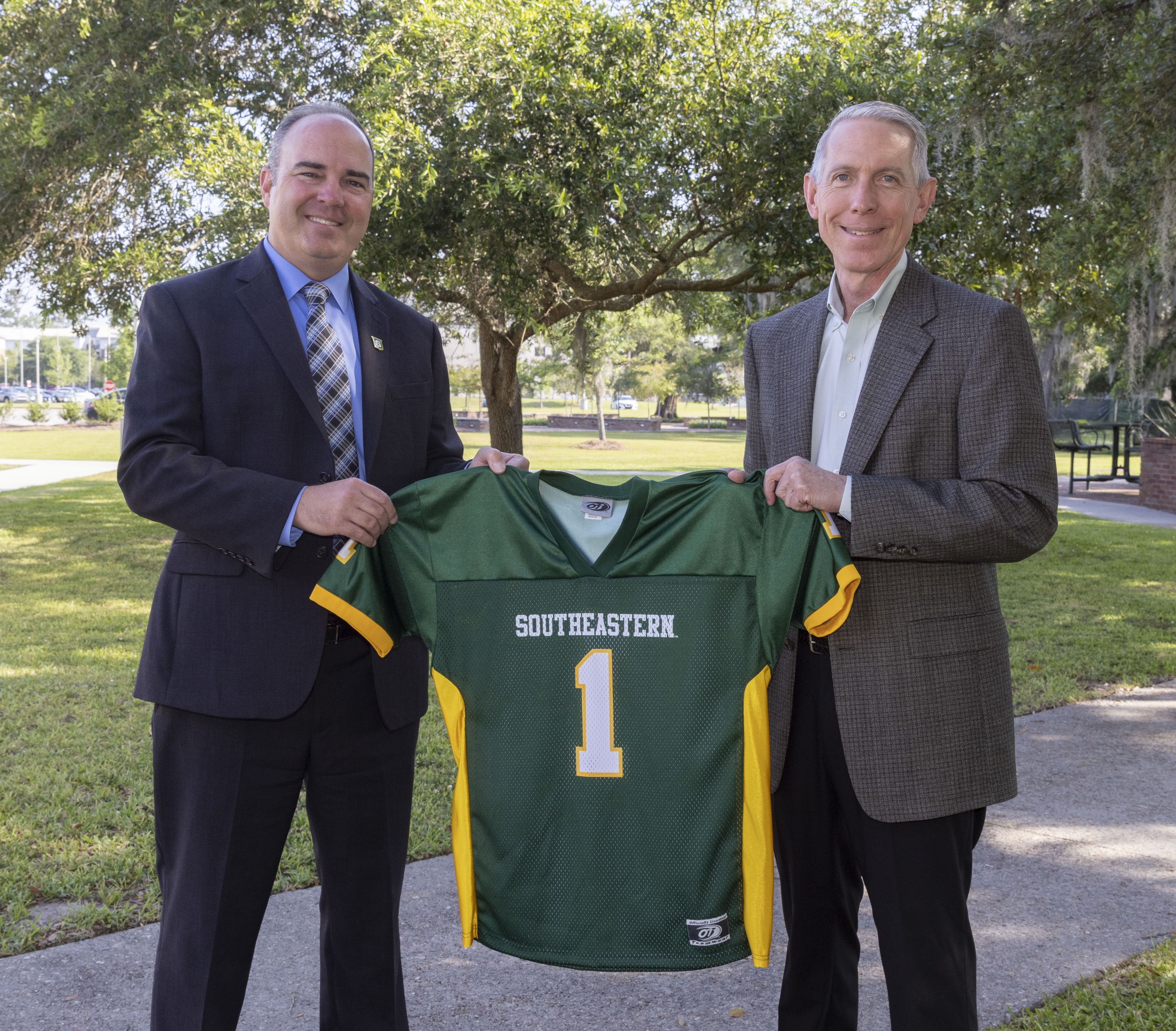
After completing an extensive process, Aramark Educational Services, LLC has been awarded a contract for the management and operation of all dining and catering services for Southeastern. Aramark was chosen from among several other food service providers, and the new agreement will extend a long-existing business partnership between Aramark and Southeastern.

“We are excited about the plans Aramark has committed to in this new food services agreement. Their focus on student choice, nutrition and service will bring about significant upgrades to the student experience on campus,” said Southeastern President William Wainwright.

Aramark has committed to upgrading or expanding physical spaces at most dining options, bringing in fresh new dining brands, supporting student meal plan scholarships, and partnering with campus entities to benefit student retention. As an added new service, this fall Aramark will also introduce robot delivery service, allowing delivery from campus dining retail locations.

“With all of the new efforts that will be put forth in this partnership with Aramark, we are moving Southeastern forward in being focused on creating the best student experience possible,” said Assistant Vice President for Operations and Auxiliary Services Connie Davis.

In addition to bringing robot food delivery to campus this fall, Starbucks will reopen in a larger space that will also provide walk-up window service. Changes to physical spaces and services will be seen throughout the 2023/24 academic year, including a renovation of the Mane Dish during the summer of 2024.

“Our partnership with Southeastern has been a source of pride for Aramark over the past years as we worked together to focus on providing students with award-winning food options,” said District Manager for Aramark Educational Services, LLC Martin Balisteri. “The enhancements planned over the next few semesters will make students’ choices and experiences even better.”

New Accelerated Nursing Degree Program in Partnership with St. Tammany Health System

In an effort to address the critical need for nurses in St. Tammany Parish, St. Tammany Health System and Southeastern Louisiana University’s School of Nursing are partnering to establish an Accelerated Bachelor of Science in Nursing degree program tailored specifically for Northshore residents. The Northshore-based program will be housed in two places – primarily at the St. Tammany Academic Center, strategically located near St. Tammany Health System’s flagship St. Tammany Parish Hospital in Covington, with additional classes at Southeastern Louisiana University.

The program is open to students with non-nursing bachelor degrees, allowing them to earn a BSN in just 18 months. Beyond hands-on learning opportunities, the ABSN degree offers extensive preparation for the National Council Licensure Examination.

“Through this academic partnership with Southeastern, we hope to broaden the opportunities for individuals – especially our Northshore neighbors – who want to explore a nursing career path through building on the degrees they have already earned,” said President and CEO of St. Tammany Health System Joan Coffman. “We see it as opening a new door for another valuable workforce population, and we hope potential students see it this way as well.”

“We want to expand access to nursing education in St. Tammany, with the goal of increasing the number of nurses in our community to meet the growing demand for qualified, caring nurses in healthcare today,” added Senior Vice President and Chief Nursing Officer of St. Tammany Health System Kerry Milton. “This partnership builds on what we already have – nursing colleagues who set the standard for nursing care in the region. We look forward to welcoming future colleagues who want to join our spectacular team.”

Bronwyn Doyle, the health system’s assistant vice president of workforce strategy, underscored the program’s commitment to nurturing local talent by providing ABSN students with early opportunities to apply for academic scholarships and nursing positions within the health system, explaining that program graduates would be given priority consideration.

Dean of the College of Nursing and Health Sciences at Southeastern Ann Carruth stresses the importance of preparing students for today’s competitive job market.

“By forging meaningful connections with healthcare institutions, we can bridge the gap between evidence and practice, ensuring students receive an exceptional education and valuable clinical experience,” she said.

As part of the partnership, St. Tammany Health System will offer nursing students critical clinical training at St. Tammany Parish Hospital, eliminating a common barrier nursing programs encounter when seeking experience for students.

Interim Department Head of Southeastern’s School of Nursing Lindsay Domiano agrees.

“Through this partnership, we hope to cultivate a shared vision of compassionate, patient-centered care, where nurses play a vital role in improving health outcomes and advancing the overall quality of healthcare delivery in our communities,” she said.

Students interested in the program must apply through Southeastern admissions. Once admitted, students should then complete a nursing program application by the deadline of Sept. 1, 2023. For programs starting in August, the deadline is Feb. 1. Scholarships from St. Tammany Health System are available.

Southeastern plans to offer the program’s first courses at the Academic Center in Covington beginning in January 2024. For more information, click here.

Ensuring a Greener Tomorrow

Southeastern is providing independent, scientific monitoring of Lake Maurepas during Air Products’ Clean Energy Complex work.

BY TONYA LOWENTRITT

a030823_0157With the ever-increasing rise of greenhouse gas emissions, the risks to the health of our planet—and all who call it home—are colossal.

“Southeastern will be monitoring all facets of this project involving the lake to ensure up-to-date data and information are available. We will make all the data we record available to the public to ensure everyone’s right to know any findings,” said Dan McCarthy, dean of the College of Science and Technology.

The goal behind the project is to store CO2 in pockets beneath the lake, rather than releasing it into the atmosphere to help combat global warming and climate change. A natural gas that allows sunlight to reach the Earth, CO2 also prevents some of the sun’s heat from radiating back. Varying fossil fuels generate different amounts of CO2 emissions. Carbon capture and storage can reduce emissions by more than 80-90 percent, making it an extremely effective way of stopping carbon dioxide from entering the atmosphere.

Researchers believe that carbon capture is one of the most effective ways to reduce greenhouse emissions. In fact, carbon capture can achieve 14 percent of the global greenhouse gas emissions reductions needed by 2050 to achieve net zero. It is also generally viewed as the only practical way to achieve deep decarbonization in the industrial sector.

a030823_0072

“We realized from the outset that we needed comprehensive and independent monitoring of Lake Maurepas and said so publicly early in our work on this clean energy project,” said Louisiana Clean Energy Project Manager at Air Products Andrew Connolly. “We are pleased to have Southeastern serve in this important role. Their scientists have been studying this ecosystem for decades and, with the Turtle Cove Environmental Research Station, they are singularly and best qualified to conduct this monitoring study.”

The scientists from Southeastern will be monitoring the marine life populations (fishes, crabs, shrimp) as well as the plant life in the surrounding wetlands, and they will also be on watch and studying any variations in water quality. All findings will be uploaded to a publicly accessible website that will be housed through Southeastern once monitoring efforts are fully underway.

a030823_0206

Gaining a Piece of the Past

Southeastern recently received a collection of rare documents that brings to life an important part of the area’s history—from nearly two and a half centuries ago.

BY TONYA LOWENTRITT

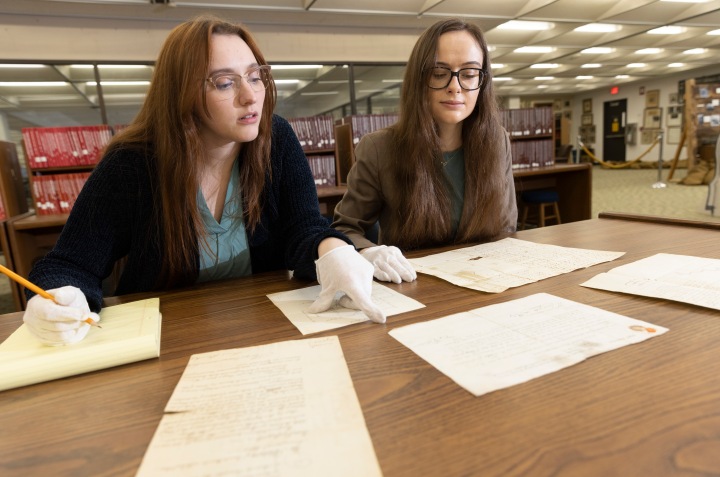
Last year an impressive and extraordinarily rare batch of documents, previously part of the Thomas W. Streeter Collection, went up for auction. Leon Ford Endowed Chair and Director of the Center for Southeast Louisiana Studies at Southeastern Sam Hyde said he was contacted by one of the center’s biggest benefactors who notified him about the documents.

“Ann Reilly Jones describes herself as first and foremost a hunter,” Hyde said. “And fortunately for us, one of the things she hunts for are rare documents pertaining to this region.”

In the competitive bidding process, Jones invested $13,000 to purchase some impressive documents to add to the center’s holdings. One of the documents included was the first printed document ever in the Gulf South—a British land grant to a former soldier who fought in the French and Indian War. Also included were British grants of land in the present-day Southeastern area to loyalists who were fleeing persecution during the American Revolution in Carolina.

“The documents are all British land grants along the Natalbany and Amite rivers, mostly to soldiers who served in the French and Indian War,” Hyde explained. “The grants, issued in 1777 and 1778, as the American Revolution raged, also included some to British loyalists who were being persecuted by the Americans during the revolution and who fled to British controlled West Florida, a territory that chose not to join in the revolution. All of the documents include maps, replete with identified ‘witness trees’ that were used to delineate the dimensions of the grant, and some include the seal of West Florida.”

Louisiana’s Florida Parishes remain the only place in North America where every major European power that intruded into the continent held governmental authority. The native peoples did not issue land grants and the initial French explorers of the region issued very few. It was the British who first began issuing substantive numbers of land grants.

After processing in the center, the pristine documents were included in an exhibition for the Louisiana in Continuity and Change Symposium that highlighted historical challenges confronting the Bayou State through the course of Louisiana’s development.

“We basically told our student workers to create an exhibition that conforms to the mission of the symposium and cut them loose,” Hyde recalled. “With the exception of a little editing, they did it all themselves.”

a020223_0037

The exhibition included rare documents, artifacts, and photos that highlight critical issues confronting Louisiana from the colonial period to the present.

“The most rewarding part of constructing the exhibition was witnessing our ideas come to life,” said Center for Southeast Louisiana Studies Graduate Research Assistant Brooklyn Sherrod. “Yet it was not a simple task.”

“One of the biggest challenges was narrowing our focus,” added student worker Max Hopcraft. “There are so many colorful stories included in the holdings of the center that we struggled to select which were the most crucial to our state.”

The exhibition, along with a forthcoming book highlighting the proceedings, revealed the purpose of the symposium, which was designed to draw attention to issues that have diminished the quality of life in Louisiana, while also suggesting means to overcome such challenges.

edwards_continuity_in_change
Governor John Bel Edwards, center, attended a symposium at Southeastern called Louisiana in Continuity and Change: Challenges Past and Present Confronting the Bayou State. During his visit, he toured a newly created exhibit in the Center for Southeast Louisiana Studies that highlights the themes of the symposium. Pictured with Edwards, from left, are Southeastern students that helped create the exhibit: Max Hopcraft, Lauren Guillory, Brooklyn Sherrod, and Ashley Tarleton.

Providing a New Online MBA Degree

Southeastern now offers the Master of Business Administration – MITech (Managing Innovation and Technology) degree, a new 100 percent online degree offered through a partnership between the College of Business and the College of Science and Technology.

Dean of the College of Business Tara’ Lopez said the faculty from both colleges brought together their expertise to build a program that prepares its students to be at the forefront of innovation.

“This program addresses a critical skills gap among organizational leaders today,” she said. “Modern leaders must not only have business and interpersonal skills, but they must also have technology literacy to successfully help their companies navigate the future.”

In addition to traditional MBA courses in accounting, marketing, management, finance, economics and statistics, students will take courses such as cybersecurity policy and infrastructure and managing the software project life cycle.

The courses are taught by the same faculty who teach in the University’s other programs, which means they share Southeastern’s values of excellence and caring, Lopez explained.

“Students can expect smaller class sizes than many online MBA programs and a highly engaged faculty,” she said. “Coursework can be completed in as little as one year, and courses are offered in an accelerated eight-week format with multiple start times—August, October, January, March and June—to make it convenient for students to start without having to wait on traditional semesters.”

The program will equip students with the skills to add value to their organization’s digital transformation strategy, Lopez added.

For more information about the program, email mba@southeastern.edu, call 985-549-2146, or visit the MBA program’s webpage.

Registration is available here.

Bringing Home the Emmys

Students at the Southeastern Channel have been honored with a college division Student Production Award given by the Emmy Awards’ Suncoast Region of the National Academy of Television Arts and Sciences.

John Austin Williams of Denham Springs, Ross Chauvin of Houma and Jenna-Francis Duvic of Loranger received the Student Production Award in the Commercial category.

In addition to the winning commercial, the Southeastern Channel had three other Student Production Award nominations. They were in the Fiction: Short Film, Editor, and Newscast categories.

The students and their productions were honored in the Emmy Suncoast Region, comprised of television stations and production companies in Florida, Alabama, Georgia, Louisiana, and Puerto Rico. Students at the Southeastern Channel have now been named Emmy winners 23 times with 73 nominations.

“Being recognized by the Emmys is the highest honor you can receive in television,” said Southeastern Channel General Manager Rick Settoon. “These student awards are measured against the Emmy standard of excellence. If no productions in a category achieve that standard, then no award is given. Since so few are given, we’re absolutely thrilled that John, Ross and Jenna are joining such elite company.”

“I feel honored and grateful to be a student Emmy winner,” said Duvic. “I am proud I helped create something meaningful enough to be honored by the Emmys. It shows that hard work really does pay off.”

The winning commercial was produced for the Salad Station, the salad restaurant chain that offers fresh local produce daily. The Salad Station opened its first restaurant in downtown Hammond in 2012 and in the past 10 years has grown to 30 locations throughout the South, including seven on the Northshore.

The commercial titled The Salad Station: Lettuce Bring Fresh to You, focuses on catering services provided by the restaurant. It was produced by Duvic, while Williams was the cinematographer and Chauvin the video editor. The production was a class assignment for Comm 424: Television Advertising Production, taught by Southeastern Channel Operations Manager Steve Zaffuto.

“Working and collaborating with a team for a project like this was a great experience in preparing me for work in the real world,” Williams said. “After graduating I quickly adapted to the workforce, as I had already experienced much of what it would be like while still in college. In the television and film industry, working with a team is the nature of the business. I got a good taste of what to expect after graduation… right here at Southeastern.”

In the college Newscast category, the June 28, 2021, episode of the Southeastern Channel newscast Northshore News was nominated. Lauren Hawkins of Ponchatoula produced and co-anchored the show with Trinity Brown of Baton Rouge. Reporters contributing stories to the newscast were Hawkins, Taylor Nettle of Lacombe, Jordan Kliebert of Mandeville, Anaclaire McKneely of Amite, Kaylor Yates of Baton Rouge, and Joliette Vincent of Luling.

In the Fiction: Long Form category, Williams’s short film, Pit Stop, was nominated. The 15-minute suspense film follows Lydia, a young lady played by Nettle, who finds herself lost in a desolate location trying to meet up with her friends. After being captured and held hostage by an apocalyptic conspiracy theorist, played by Jordan Alfred of Lacombe, Lydia must find her escape.

Williams produced, directed, shot, edited and co-wrote the film with Nettle. For his editing of the film, Williams was nominated in the Editor category for the Emmy Student Production Award. He produced Pit Stop for his senior portfolio project in Comm 498 taught by James O’Connor, head of the Department of Communication and Media Studies.

Winning in the Commercial category marked the third time that Williams has been honored for a Student Production Award by the Suncoast Emmys, the most by any Southeastern student. In previous years he won for Director with his short film The Overthinker and for News Feature with July 4th in Baton Rouge, on the student newscast Northshore News.

Williams has worked as a marketing producer for WGMB-TV Ch. 44/WVLA-TV Ch. 33 in Baton Rouge and a cinematographer-editor for Anntoine Marketing and Design in Hammond since graduating, and now as a cinematographer-editor for Louisiana Public Broadcasting in Baton Rouge.

“The Southeastern Channel was the best collegiate experience I could’ve asked for as an introduction to the film and television industry,” Williams said. “I got hands-on experience with state-of-the-art technology, brilliant professors and instructors, and well-designed, detailed courses. Anyone interested in television and film-related professions should check out The Southeastern Channel.”

“The Southeastern Channel has prepared me for a career in television and film,” Duvic said. “I learned many things about directing, editing, producing, writing, and more from them.”

In its 20 years of existence, the Southeastern Channel has won over 500 national, international and regional awards. The channel can be seen on Spectrum Cable 199 in Tangipahoa, Livingston, St. Tammany and St. Helena parishes and on mounthermonTV.com for viewers in Washington Parish. In addition, the live 24-7 broadcast can be seen on Roku, Apple TV, Amazon Fire, the Spectrum App, and the channel’s website at thesoutheasternchannel.com, which also offers programs via video on demand. The Southeastern Channel is available on Facebook, Twitter, Instagram and YouTube.

Above image: Three Southeastern students were recently honored by the Suncoast Emmys of the National Academy of Television Arts and Sciences with an Emmy Student Production Award for a television commercial they produced for the Salad Station. The winners were (from left) John Williams of Denham Springs, cinematographer; Jenna-Francis Duvic of Loranger, producer; and Ross Chauvin of Houma, video editor.

Nationally Recognized Contemporary Dance Program

Southeastern’s Contemporary Dance Program received national recognition at the American College Dance Association with faculty choreography selected for the prestigious ACDA’s 50th Anniversary Gala.

This was a very special year since it was ACDA’s 50 anniversary conference. Southeastern’s Contemporary Dance Program has been in attendance at this conference for over 30 years.

There were 21 universities attending the conference from Texas, New Mexico, Illinois, and Louisiana showcasing 39 dances that were choreographed by faculty, students, and guest artists.

Each university performed one faculty work (Keith Costa) and one student work (Trinity Brown) in a concert formal, which was adjudicated in front of a panel of established dance professionals in the field from all over the country. The panel gave feedback and selected the top 12 dances for the prestigious gala. Southeastern also showed one student work (Elizabeth Birkel) in the informal concert as well.

Costa’s faculty choreography “Mercy and Grace” was selected for ACDA’s 50th Anniversary Gala and was performed by Birkel and Brown. Costa also taught a masterclass at the conference.

“I was so humbled by the honor, especially seeing that several of the other universities had two dances in the gala which put Southeastern within the top seven universities selected,” said Costa. “Another thing to note is that a lot of the other universities offer a BA, BFA, MA, or MFA in Dance. We only have a dance minor or concentration within the general studies degree, yet our students performed so professionally and beautifully.”

For more information on Southeastern’s Contemporary Dance Program, contact kcosta@southeastern.edu

unnamed (1)

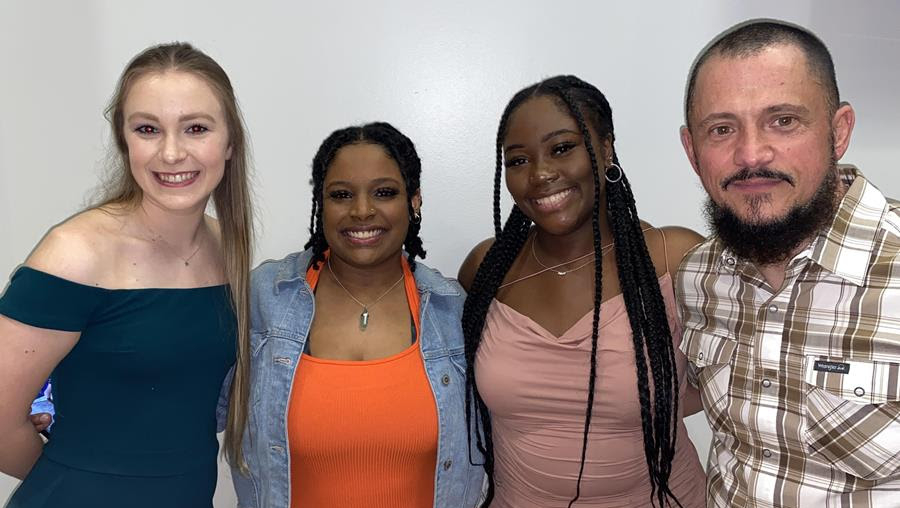
Above: Elizabeth Birkel (General Studies-Dance Concentration major from Destrehan, LA), Trinity Brown (General Studies-Dance Concentration major from New Orleans, LA), Kairah Senegal (Dance and Contemporary Choreography minor from Lafayette, LA), and Keith Skip Costa (Director of Dance at Southeastern). All attended the ACDA, American College Dance Association, South Central Region Conference in March 2023 hosted by Sam Houston State University.  

Creating More Than $1 Billion in Economic Impact

Southeastern’s economic impact across the region is more than $1 billion annually, according to a new study conducted by Lightcast, a company that provides colleges and universities with labor market data that help create better outcomes for students, businesses, and communities.

Lightcast measured the economic impacts created by Southeastern on the business community and the benefits the University generates in return for the investments made by its key stakeholder groups—students, taxpayers, and society. The results reflect employee, student, and financial data from Southeastern for fiscal year 2021-22, industry and employment data from the U.S. Bureau of Labor Statistics and U.S. Census Bureau, outputs of Lightcast’s Multi-Regional Social Accounting Matrix model, and a variety of studies and surveys relating education to social behavior.

The study showed that the University’s impact supports more than 15,500 jobs, and spending by the University’s more than 13,000 students accounted for an approximate $19.6 million impact. In addition, the study analyzed non-economic factors such as cultural, education, and business-related outreach projects.

“This report on the economic and community impacts of Southeastern highlights our multi-faceted role in serving the people who live throughout our region,” said Southeastern President John L. Crain.

For Southeastern, spending includes a $144.2 million impact of University operating expenditures, $2.3 million from construction projects, $2.2 million in research spending, $29.6 million in spin-off company impact from the Southeastern Business Center and its collaboration with entrepreneurs and small business, $2.5 million in visitor spending, $1 million volunteerism impact, and an alumni impact of $815.3 million.

In terms of investment analysis from the student perspective, Southeastern served 16,478 students who paid for tuition, fees, books and supplies. They also took out loans and will incur interest on those loans, as well as forfeited earnings they could have made instead of attending school. The total investment made by Southeastern’s students was $144.6 million, equal to $74.9 million in out-of-pocket expenses and $69.7 million in forgone time and money.

In return for their investment, Southeastern students will receive a stream of higher future earnings that will continue to grow throughout their working lives. The average Southeastern graduate will see annual earnings that are $22,500 higher than a person with a high school diploma or equivalent working in Louisiana. The study found that over a working lifetime, the benefits of the bachelor’s degree over a high school diploma will amount to an undiscounted value of $1 million in higher earnings per graduate.

The students’ benefit-cost ratio is 5.3. For every dollar students invest in Southeastern in the form of out-of-pocket expenses and forgone time and money, they receive a cumulative value of $5.30 in higher future earnings. Annually, the students’ investment in Southeastern has an average annual internal rate of return of 15.6 percent, which is greater than the U.S. stock market’s 30-year average rate of return of 10.5 percent.

The study found, from the taxpayer perspective, that Southeastern generates more in tax revenue than it takes. The benefits to taxpayers consist primarily of taxes that the state and local government collect from the added revenue created in the state.

Education is statistically correlated with a variety of improved lifestyle changes. The educations that Southeastern students receive generate savings in three main categories—healthcare, justice system, and income assistance. Altogether, the present value of the benefits associated with an education from Southeastern generates $15.2 million in savings to state and local taxpayers.

Total taxpayer benefits amount to $88.6 million, the present value sum of the added taxes and public sector savings. Louisiana taxpayers provided $29.5 million, equal to the amount of state and local government funding Southeastern received. The benefits and costs yield a benefit-cost ratio of 3.0. For every dollar of public money invested in Southeastern, taxpayers received a cumulative present value of $3 over the course of the student’s working lives. The average annual internal rate of return for taxpayers is 7.6 percent, which compares favorably to other long-term investments in the public and private sectors.

From the social perspective, the study found that society as a whole in Louisiana benefits from the presence of Southeastern in two major ways. Primarily, society benefits from an increased economic base in the state. This is attributed to added income from students’ increased lifetime earnings (added student income) and increased business output (added business income), which raise economic prosperity in Louisiana.

Altogether, the social benefits of Southeastern equal a present value of $2.8 billion. The benefits include $1.9 billion in added student income; $600.5 million in added business income; $164.2 million in added income from University activities; and $169.8 million in social savings related to health, crime, and income assistance in Louisiana. People in Louisiana invested a present value total of $260.4 million in Southeastern, which includes all University and student costs.

The benefit-cost ratio for society is 10.9, equal to the $2.8 billion in benefits divided by the $260.4 million in costs. In other words, for every dollar invested in Southeastern, people in Louisiana will receive a cumulative value of $10.90 in benefits.

As one of the area’s largest employers, Southeastern’s economic contributions are obviously very visible, Crain said.

“Beyond that,” he said, “are the fundamental contributions Southeastern makes to develop an educated citizenry, a workforce prepared for today’s knowledge-based economy, and numerous cultural, creative, and other resources that contribute to our quality of life and the wellbeing of our region. No price tag can be placed on these contributions.”

Explore the full report online at southeastern.edu/impact.

Achieving the Highest Level of Tutoring Certification

The Tinsley Learning Center (TLC) achieved Level III certification last week from the College Reading and Learning Association. Level III is the highest level of tutoring center certification available.

The new certification was years in the making under the leadership of TLC Assistant Director Marie Bernard.

“Level III certification ensures our tutors are adhering to the highest standards and most effective methods of learning support available,” Bernard said. “It allows the TLC to train the tutors and peer educators who support our students to the highest standards of skill.”

“Southeastern’s TLC has built a training system as part of the certification that ensures our tutors and peer educators are not only using the best practices and learning strategies available to support student learning, but they are learning transferable skills of their own,” said Interim Dean of the College of Honors and Excellence Claire Procopio. “I am very proud of this achievement. I know it represents a lot of hard work by our TLC leadership and tutors alike.”