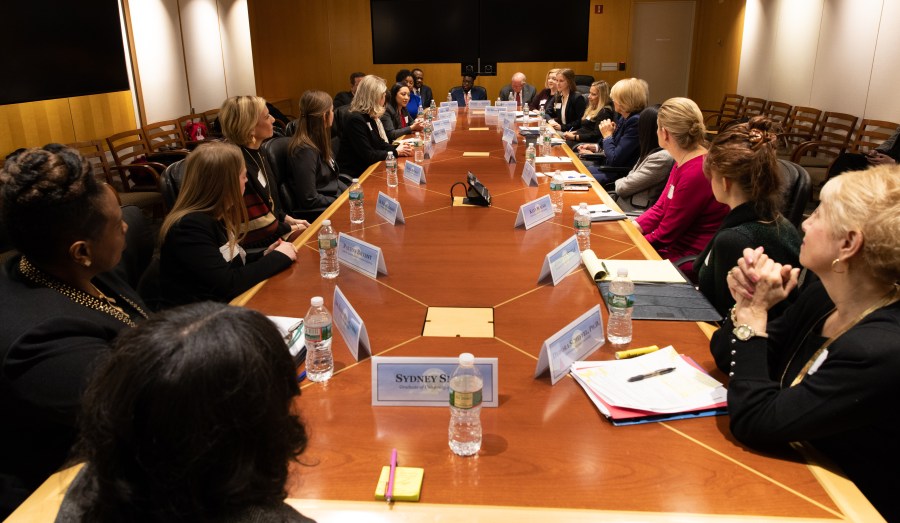
Southeastern Athletics: Building a Holistic Experience

Over the course of the past five years, Southeastern’s Department of Athletics has experienced success across the board.

When current Athletics Director Jay Artigues was named to the position, he hoped to chart a path toward a very strong future. Almost immediately, with input from the department’s head coaches, a fresh mission statement was crafted that embodied the new vision for athletics at Southeastern: Committed to excellence in the classroom, in the community, and in competition. “We wanted to clearly establish what it means to be a part of the athletics program here at Southeastern. Whether you are staff, a coach, or an athlete, we all should be working toward the same goals, and I think we have achieved that focus,” said Artigues.

By targeting these three key areas outlined in the new mission statement, Southeastern has excelled in each. This success is visible both on campus and in the community. The impact has been stellar and has brought a holistic approach to the program and the anticipated results for student-athletes.

“I commend our coaches for committing to our mission…it starts in recruiting student-athletes that are committed to excellence in all three areas,” Artigues said. “The mission statement is posted in every athletic building on campus. I wanted our student-athletes and coaches to see it every day everywhere they went.”

Excellence In The Classroom
In the classroom, student-athletes are thriving. In the spring of 2017, Southeastern recorded its highest GPA in department history. The department continues to break records academically and foresees improving the overall GPA over the course of the next three semesters. This past fall semester, student-athletes achieved a 3.16 overall GPA with more than 50 percent recording an individual 3.0 GPA or higher.

“While we are about winning athletic competition, we are also about forming student-athletes for a strong and productive future. Our overall academic progress has been fantastic and I could not be more proud. This ensures that whatever these students may go on to do, they can do it with excellence after they have graduated from Southeastern,” said Artigues.
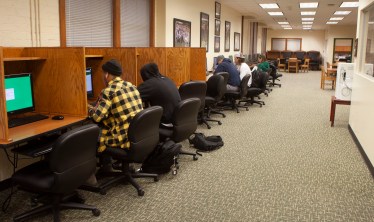
Academic Center

Excellence in the Community
Part of any education is not just the book learning that prepares one for a career, but it is the life education that teaches one to be a great person. With a specific focus on giving back to the community, Southeastern Athletics ensures that every student-athlete engages in service to the community each year. “We hope that this helps form the overall person that they will become,” said Artigues.

Southeastern now averages 15 hours of community service per student-athlete each year. The department routinely accumulates more than 5,000 combined hours of service
annually. With record-setting numbers, Southeastern earned the Southland Conference Community Service Award in 2017.
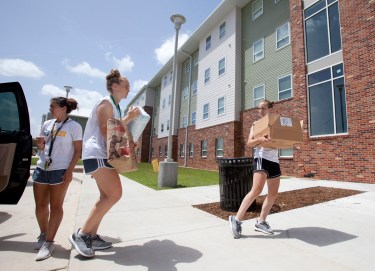
move-in mania

Excellence in Competition
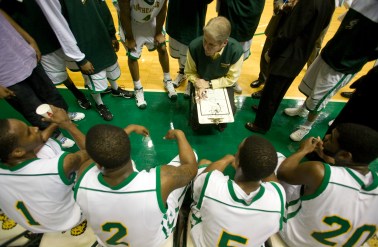
Student-athletes are excelling on the field, court, and track. Since the fall of 2013, Southeastern has claimed a pair of Southland Conference football titles, indoor and outdoor championships in men’s track and field, a baseball regular season title and a Southland tournament championship, a men’s basketball regular season title, and a women’s soccer tournament championship.

At the NCAA level, track and field athlete Alex Young earned a national title in the men’s indoor weight throw during the spring of 2016. Since then, the baseball, football, and softball teams have all churned out program records for most wins in a single season.

Excellence on the field requires a great deal of focus. In addition to strong recruiting and coaching, facilities play a huge part. Having good facilities that support the students are an important part of the recruiting process. Creating physical improvements throughout the department is a focal point for Artigues.
a012109_377

Excellent Infrastructure and Support
“I think it’s important to show every year that you’re making some sort of major improvement, one thing every single year,” Artigues said. “If we do that in every sport, you look up five years later and we’ve accomplished a lot. Tip your hat to the coaches and administration; everyone has pitched in and done a great job.”

Behind-the-scenes upgrades to the Dick & Glory Sharp Academic Center and the Doc Goodwin Athletic Training Room, along with the Naquin Strength & Conditioning Center, benefit all Southeastern student-athletes, cheerleaders, and members of the national champion Lionette dance squad.

Improvements have been made across nearly all facilities including Strawberry Stadium, the University Center, North Oak Park, the North Campus Athletics building, the Tennis
Complex, Track and Field Complex, and Alumni Field. The academic center, located on the west side of historic Strawberry Stadium, has received additional computer stations, study rooms, informational signage, flooring, and furniture. An NCAA grant helped provide for additional academic counselors.

“We’re developing a holistic student-athlete,” said Artigues. “The academic center has paid dividends by recently generating the highest GPA in department history. It is no coincidence. We’ve committed to excellence in that area, providing the resources we need to be successful academically.”

Renovations have also allowed for the new North Oaks Nutrition Center to launch. The nutrition center is only one piece of an entire nutritional program for the Lions and Lady Lions, developed by North Oaks Dietetic Internship Director Leslie Ballard and Southeastern Assistant Athletic Director for Sports Medicine Brandon Albin. The program is designed to not only provide sustenance through the nutrition center, but
also to better educate all Southeastern student-athletes on the best dietary practices.
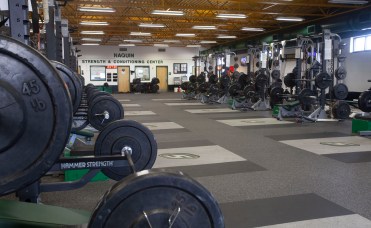
Naquin center a013119_076

“It’s important we also give the nutritional resources to be successful,” Artigues said. “They get their three meals a day, but it’s also important they have the proper nutritional information.”

“Our goal with this program is for the student-athletes to see better performance, fewer injuries, faster recovery, and overall better health,” Ballard said.

Over the past five years, the numerous facility upgrades were made possible by an increase in fundraising, sponsorship, and concession dollars, identifying internal funds and cost efficiencies, routine maintenance, and a variety of grant monies. Concession revenues have doubled since bringing the operations in-house, and developing a partnership with Peak Sports Management to handle sales has led corporate sponsorships revenues to quadruple.

Through a focus on classroom, community, and competition excellence, Southeastern athletics is reaping the benefits of success.
By Kemmler Chapple

Home of the Largest Literary Rally in Louisiana

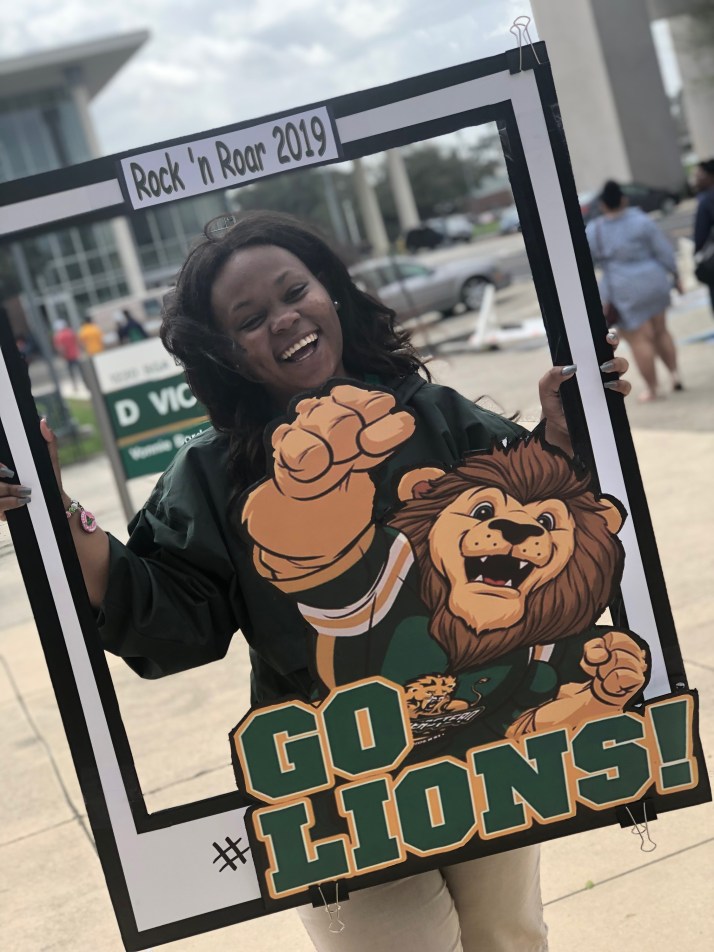
More than 3,481 students from 84 different high schools converged on Southeastern Louisiana University on February 23, 2019, for the Southeast Louisiana District Literary Rally and Rock ‘n Roar, the university’s annual campus-community festival. Southeastern currently has the largest regional literary rally in the state.

The Louisiana High School Rally, an academic competition held throughout the state since 1909 with the regional competition held at Southeastern for over 40 years, is an academic competition in which high school students compete by taking exams on a variety of subjects. The Southeast Louisiana District Literary Rally at Southeastern featured 48 different tests on subjects ranging from agriculture to calculus.

Southeast Louisiana District Literary Rally participants came from public and private high schools in East Baton Rouge, East Feliciana, Iberville, Jefferson, Livingston, Orleans, St. Charles, St. Helena, St. John the Baptist, St. Tammany, Tangipahoa, Washington, and West Feliciana parishes.

Students who earned qualifying scores on their tests advance to compete at the State Literary Rally at LSU in Baton Rouge in April. At the Southeast Louisiana District Literary Rally held at Southeastern, over 825 students qualified to attend the State Rally, and 370 students qualified for the Freshman Scholastic Achievement Award, which comes with a Southeastern scholarship if the student chooses to attend the university within one year after graduating from high school.

When they finished their tests, students were able to gather information from hands-on academic displays and financial aid and career booths at Rock n’ Roar.

Now in its 23rd year, Rock n’ Roar provided a day of family fun for both the Literary Rally visitors and the community, said Southeastern Director of Recreational Sports and Wellness and Rock n’ Roar Chairman Seth Thomas.

“Rock ‘n Roar is an event with something for everyone, and a great way to invite the community, campus, and regional high school students to have fun while visiting and learning about Southeastern,” said Thomas. “We appreciate the efforts of students, faculty, and staff to share Southeastern’s offerings with future Lions.

rockroarframe

Southeastern Has Been Named a 2019 Military Friendly School

For the seventh consecutive year, Southeastern Louisiana University has been named a 2019 Military Friendly School.

Viqtory Media, publisher of “G.I. Jobs,” states the listing honors the top colleges, universities and trade schools that are doing the most to embrace the nation’s military service members, veterans, and spouses as students and to ensure their success on campus.

“This listing demonstrates Southeastern’s ongoing commitment to our veterans and their educational success,” said President John L. Crain. “It is an honor to be named and to know that we are among the top institutions helping those individuals who have made great sacrifices in service to our state and nation.”

Southeastern enrolls over 400 veteran and active duty military. The university maintains a Veterans Upward Bound program; has an Office of Veterans Affairs that assists students in obtaining benefits and with other issues; provides academic and other counseling services; offers scholarships specifically for military students and veterans; and maintains a wide range of online and distance learning programs that provide students with flexibility in scheduling.

Southeastern’s ROTC program, which is a sub-unit of the Southern University Army ROTC program, returned to Hammond in 2016 after more than a 20-year hiatus, and continues to grow. Approximately 60 students now participate in the program.

A recent addition to campus is the Southeastern Student Veterans & Military Interest Association, a group open to veterans, reservists, spouses, dependents, and ROTC participants attending both Southeastern and Northshore Technical Community College. The association was founded to help the school administration better understand and meet the needs of veterans, offer advice from experienced to incoming veterans, help civilians better understand the military experience, and provide opportunities for veterans to meet one another and connect.

Additionally, starting in August, Southeastern will serve as a resource center for thousands of Louisiana veterans in an effort to help active-duty military service men and women successfully transition to college through a new program called LaVetCorps. The program will open 30 resource centers on campuses statewide to increase a student veteran’s access to state and federal benefits.

Institutions competed for inclusion on the Military Friendly Schools list based on such categories as military support on campus, graduation and employment outcomes, and career and job counseling services. The firm Ernst and Young independently tested the data provided by schools.

The 2019 list of Military Friendly Schools shows the commitment of those institutions in providing a supportive environment for military students, the company said in announcing the list.

“Post-secondary institutions earning the 2019 Military Friendly School award have exceptionally strong programs for transitioning service members and spouses,” said Daniel Nichols, chief product officer of Viqtory Media. “Our Military Friendly Schools are truly aligning their military programs and services with employers to help students translate military experience, skills, and training into successful careers after graduation.”

Viqtory Media is a service-disabled, veteran-owned small business founded in 2001. In addition to “G.I. Jobs,” the company also publishes the magazine Military Spouse.

New Residence Halls First in the Nation with Geothermal Energy, and a Monumental Step in Making Southeastern More Green

Southeastern’s newest student housing is one of the university’s latest and largest sustainability initiatives garnering national attention, and yet it is also only one part of a grand plan to create a more eco-friendly campus.

For over 500 Southeastern students, the 2018-2019 school year began by moving in to one of the two new, state-of-the-art residence halls. Ascension Hall and Twelve Oaks Hall,
located adjacent to the former Zachary Taylor Hall, feature private and shared rooms, classrooms, meeting and common areas, and dining and retail venues. But while the roomy, contemporary spaces may be what awe most people who enter these additions, what’s below the surface is perhaps even more exciting.

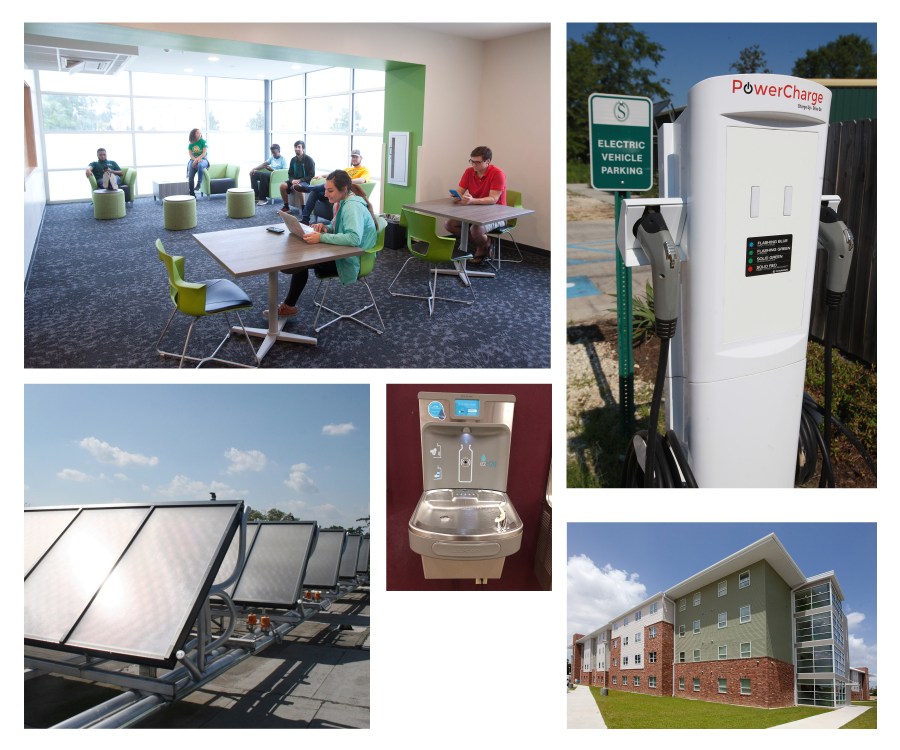
Ascension and Twelve Oaks halls have a hybrid geothermal system. With this type of system, pumps move heat from the ground to the building when the weather outside is chilly. When cooling is needed, the process is reversed. The result is a sustainable, environmentally-friendly, and economical solution to heating and cooling.

An initiative of Southeastern Sustainability, the system is the first of its kind for any university or state building in Louisiana. The new buildings, which draw from 220 geothermal wells, are also the second largest site in the country to use a system
like this.

In addition to environmental benefits, the system significantly reduces heating and cooling costs. It is projected to save over 50 percent on energy expenses as compared to a
traditional system and build.

And students now get to feel the effects of this new technology in more ways than one; the system also serves as a learning laboratory for real-world experiences for
Southeastern students in various disciplines.

This ambitious construction project is the latest in a long line of efficiencies executed on campus with the lofty goal of becoming 30 percent “off the grid” by 2025. Other current
efforts include the use of wind turbines, incorporation of photovoltaic panels, and harnessing of solar thermal energy at several sites across campus.

With student organizations such as Reconnect and the Student Government Association leading the way, students are helping promote the use of refillable water bottles, the
retrofit of water fountains into modern refillable water bottle fountains across campus, new additions of recycling bins across campus, and adoption of community garden plots on the grounds at the Sustainability Center.

What started out as a committee tasked with addressing litter concerns has evolved into a committee that is now a driving force behind making Southeastern more green.
“This is a perfect example of what makes Southeastern so special,” said President John Crain. “I convened a group to combat litter. They not only addressed that issue, but then
began exploring ways to expand involvement and nurture a culture of conservatism across campus. Southeastern’s students, faculty, and staff always go above and beyond. This is but one instance.”

For more information about Southeastern’s ongoing green efforts, go to southeastern.edu/sustainability or visit the university’s Sustainability Center and see the efforts in action.

GreenImages

Teaching and Learning Student Receives Scholarship

Above image: From left are scholarship recipient Tabitha McDowell and LAECA Scholarship Chair Mary Louise Jones.

Southeastern student Tabitha McDowell of the Department of Teaching and Learning was awarded a scholarship at the Louisiana Early Childhood Education Association Annual Conference held in Alexandria recently.

McDowell’s award is the result of hard work in academics and her service to Louisiana’s young children and their families, as evidenced by her leadership and participation in Southeastern’s campus organization titled Student-led Louisiana Early Childhood Association (SLAECA).

Through SLAECA, McDowell took a leadership role in the Child Abuse Prevention Awareness campaign, the Once Upon a Time in the Park Family Literacy Festival, and a campus presentation titled “The Next Best Thing to Being There,” where she and her peers recapped their learning experiences at the state conference.

One of Only Twelve US Universities to Offer International Baccalaureate Certification Program

Southeastern’s College of Education houses an innovative and unique program that helps enable educators to teach within the International Baccalaureate (IB) curriculum at the elementary, middle, and high school levels. After successful completion of courses leading to the IB Educator Certificate in Teaching and Learning, candidates may apply for their level of certification through the International Baccalaureate Organization (IBO) in Geneva, Switzerland. Only 45 universities in the world and 12 in the United States offer this.

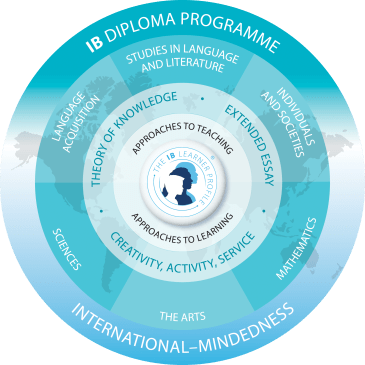
The IB program started in 1968 after World War II. Diplomats were moving their families from country to country and realized that moving their children caused them issues with schooling. They wanted a universal but also rigorous curriculum so that when students moved from school to school, they didn’t fall behind or lose credits. The IB program helps students master skills within a core group of 10 principles:
• Inquirer
• Open-Minded
• Knowledgeable
• Caring
• Thinker
• Risk Taker
• Communicator
• Balanced
• Principled
• Reflective

“The International Baccalaureate program is designed not only to get students to college, but also through college,” said Cherissa Vitter, assistant professor in the College of Education. “All students at schools offering the IB program benefit from the learning strategies upon which the program is built. They actually learn how to learn. When students learn how to learn, they are in control of their own education.”

vitter
Cherissa Vitter

LAUNCHING HAMMOND
Vitter came to Hammond on a mission—to implement IB programs for this part of the state. Challenged with a community expectation that Hammond High School would become a regional destination school, she went to work right away and helped launch a new way of thinking in her role as IB coordinator.

Various elements of the community (business, education, and community at large) worked together to think differently and create a new school with no boundaries to student learning. The business community realized building good schools would be good for the region and the regional economy. This required a heavy investment in the Hammond schools both financially and cognitively. Vitter says that it was worth the effort. The word was out—Hammond schools now host the only IB continuum in the state of Louisiana, offering a world–class education to every student ages 3-19.

“The community was anxious to make improvements at Hammond High,” Vitter said. “We wanted to respond to those community needs. And the students at Hammond High felt valued and heard. We had to train this mindset from within. Everyone at Hammond High would be trained in the program, and big changes were coming.”

Greg Drude, Hammond real estate agent and recent inductee to Southeastern’s Educator Honor Roll, was instrumental in helping to bring IB to Hammond High. “I had spoken with several community leaders, especially through the Greater Hammond Chamber of Commerce, and people were moving out of the area,” Drude said. “Good schools promote people coming in. We tested a program at Hammond Eastside Elementary Magnet School that produced high scores and results, and when that happened, we knew it was time to grow opportunities for children in the area.”

In just a few years, Hammond High Magnet School fully implemented the IB program and catapulted to national recognition, boasting students who experience school differently, capitalize on their own talents, and reflect on the learning process. “It’s a strenuous program,” Drude said. “Kids are challenged in IB, and they have the work ethic to succeed. There is trickle down success for everyone at the school.”

dp-model-en

SOUTHEASTERN JUMPS IN
As the Hammond schools improved, Southeastern Louisiana University administration was paying attention and quickly saw the value in the program. The university soon committed to developing courses that would lead to IB certification for educators.

“It’s an investment by the university to do this,” said Kate Kuhn, professional services manager, IBEC, International Baccalaureate Organization. “When the number of IB World Schools expands, there will also be an increasing need for educators who have a deep understanding of how to teach in an IB context.”

Southeastern now has the curriculum in place to help train teachers to become IB educators. The graduate program offers multiple tracks leading to the IB Educator Certificate in Teaching and Learning. Vitter says the certification opportunities are yielding global attention.

Dean of the College of Education at Southeastern Dr. Paula Calderon said, “Southeastern’s teacher education program is well respected throughout the state and nation, and I was
proud to relay that during a recent presentation to the Board of Elementary and Secondary Education. With the IB educator certifications, we have an added opportunity for student success with graduates who will be using IB best practices whether they end up teaching in IB schools or not.”

Calderon noted that this additional certification allows teachers to work in IB schools all over the world, and it also invigorates those who are teaching at schools that do not adopt this programming. “Teachers who go through IB certification learn how to readapt on their feet, adjusting strategies during their lessons when they recognize specific needs of students,” she said.

At Southeastern, Vitter is working to continue growing opportunities for would-be teachers and those wishing to continue their education. To become an IB educator, teachers must attend IB training to keep that consistency in the program on the global scale. “We offer five tracks at Southeastern, and IB has awarded 15 certificates to Southeastern students so far,” Vitter said. “We have university students from all over the world who now have Southeastern on their resumes. It’s quite an honor.”

Additionally, Southeastern also has been instrumental in ensuring that the high school students who receive the IB diploma have an easier admissions process going on to
college. Vitter credits Southeastern’s Assistant Vice President for Academic Programs Dr. Jeff Temple for helping to develop the admissions process for these students, an initiative that has now been heralded by the International Baccalaureate organization and adopted at many universities.

IMG_1235
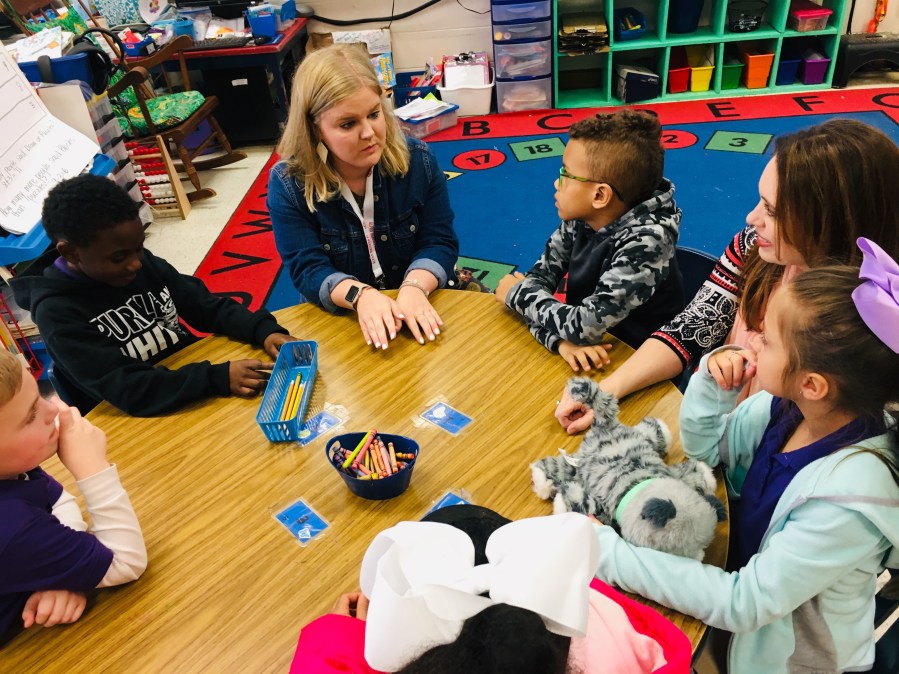
Lyndsey DeVaney, a member of Southeastern’s inaugural International Baccalaureate
Educator Certificate class, gains hands-on experience while participating in the program.

RESULTS
High schools that adopt IB programming don’t just do so for a few of their students; the entire school benefits. All teachers must gain certification and training, and this touches every student enrolled. “Hammond High is not a regular high school with a select group of students who go through IB,” Vitter said. “Everyone there benefits, from the students to administration.”

Since launching, the results have been very positive. Students and teachers have been recognized nationally; over 90 percent of those who finish the IB program become college graduates; the schools have now been recognized in the region for their academic strength; and as a note of success, recent planning meetings for IB’s 2019 global conference in New Orleans have been held at Hammond High, putting it on a global stage and recognizing its achievements.

Calderon says offering IB educator certification at Southeastern demonstrates forward thinking. “As we become more mobile and our teachers begin moving to other parts of the country and the world, they take this certification with them,” she said. “Our Southeastern graduates with this certification won’t have to seek other credentials because this certification is recognized worldwide. We can also be a resource as IB programs continue to grow in our area. If local schools want to become IB schools, Southeastern can provide training. This is a benefit not only for our university, but also
for schools and students throughout the region.”

Southeastern again finds itself at the heart of innovation that spurs positive regional impact.

ib.slu.logo


Southern Storytelling: Tim Gautreaux’s “Signals”

Southeastern Professor Emeritus / Writer-in-Residence Tim Gautreaux’s latest offering, Signals: New and Selected Stories, collects twelve new short stories alongside nine others from his previous two collections, Same Place, Same Things and Welding with Children, resulting in a nice sample of the author’s rich and unique oeuvre of Southern storytelling. It is a great starting place for newly introduced readers and a fine summation for old fans of Gautreaux’s work.

pubshot2Tim Gautreaux

Like most of his fiction, the bulk of these stories deals with failed relationships, the trials of old age, matters of faith and morality, and the blue-collar Cajun culture of Southwestern Louisiana. They are stories that are peopled with lonely and sometimes bitter men and women who live to fix things, but who also work to take them apart. Gautreaux is able to warmly infuse humor and wit so that his stories are never down-and-out depressing, thus comfortably eschewing the modern inclination toward nihilism and gimmicky structure and plot.

It is clear after reading these stories that Gautreaux, like one of his characters, would find “it hard to believe that anything on earth was empty,” thus reinforcing the idea of how important telling stories—sending out “signals”—is to the world and for posterity.  These stories are further able to provide a sort of moral guidepost without ever being overly didactic or preachy.

But much like Mark Twain, Gautreaux is at his best when he uses figurative language to convey not only humor, but a resounding message as well. In “Radio Magic,” for example, when the protagonist Cliff takes up painting in order to try to become “famous,” Gautreaux comments on his character’s failed attempts at painting nudes, saying they “looked like white cattle that had grazed too long on a nuclear test site.”

The deeper message of this story, though, is one that also resonates in a very unified and satisfying way throughout the entire collection, and that is the myriad ways in which we attempt to communicate with one another; and “how the sounds we make never really stop, and [how] all of us are famous but just don’t know it yet.”

The author here is able to weave this theme of communication throughout the majority of his stories. It is the idea of “signals” and the messages one sends out to the world, often never knowing who’s retrieving those messages—or if anyone’s retrieving them at all. In “The Furnace Man’s Lament,” for example, Gautreaux’s narrator poses the question: “Where does someone who’s totally disconnected go to connect?”

In perhaps the most satisfying story of the lot, the answer to that question is an online marketplace where disgruntled customers go to review products they don’t like. This is a surprisingly different tale for Gautreaux called “The Review,” in which an aspiring novelist tracks down the person who gave his first novel a one-star review on Amazon.com. Usually stories that are about writing and writers are hard to pull off without them feeling insular or trite, but Gautreaux brings the reader to near-tears with the surprising revelation in this one.

Gautreaux is also a writer who very clearly “like[s] symbols, [sees] the meanings in objects.” A radio, a mysterious sewing machine, an antique toy collection, a pair of old pilot’s wings, each offering a window into their owners’ souls. Yet as one character laments, “It’s all crap if you don’t know anything about it.”

But Gautreaux does know about these things, and he knows them well. And his job here seems to be to tell the reader about them, about the “importance of objects.” For “it [is] all about connections.” Both literal and figurative. And that’s just what these stories do. They serve as conduits for the reader to connect with Gautreaux’s often down-and-out characters, folks about whom the author writes with compassion, clarity, and warmth.

Signals is a collection that reaches beyond the South, stretching Gautreaux’s “own little postage stamp of native soil” to include stories that span the geography of North America—from Minnesota, New Mexico, New York, Canada, Texas, Indiana, Ohio, and West Virginia—in order for him to communicate the vital necessity for art, for conversation, for preserving one’s history through the things one collects and then leaves behind, the earthly work one undertakes. This collection of stories becomes, for its readers, “the voice of one crying out in the wilderness,” and it serves as a beacon of light and hope, a reminder of the importance of the finely honed and well-crafted tale.

By David Armand
This review, in modified form, was originally published in the New York Journal of Books.

Golf, Philosophy, and Mary Seacole: Black History Month Lecture Series Tees Off February 12

The Department of History and Political Science at Southeastern Louisiana University will hold a lecture series in February in honor of Black History Month. All the lectures are free and open to the public.

Scheduled for Feb. 12, at 11 a.m., the first lecture titled “Obstruction: African American Golfers and Southern Resistance in the Twilight of Jim Crow” will be given by Chad Duffaut in the Student Union Theatre.

“One of the most underappreciated narratives of the Civil Rights movement involves the sport of golf and the fight for equal access to proper facilities,” said Department Head of History and Political Science Bill Robison. “To African American golfers, this fight represented an opportunity to take the next step in changing a broken system and erasing the cruel and unjust life of Jim Crow.”

Next on the schedule is a lecture by Peter Gratton on Feb. 20 titled “African Philosophy: Past and Future.” Scheduled at 11 a.m., the lecture will take place in Pottle Music Auditorium.

“For too long Africans were thought not to have cultural beliefs or even simply ‘tribal religions,’” said Robison. “This talk demonstrates quickly just how false (and racist) this view is. First, Dr. Gratton quickly reviews the major trends in African philosophy, then discusses where the future of this set of philosophical traditions appears to be heading.”

The final lecture in the series is scheduled for Feb. 26, at 11 a.m., in the Student Union Theatre. Samantha Cavell will deliver a lecture titled “Mary Seacole: Breaking all Boundaries in the Victorian Age.”

“For more than a century the story of Mary Seacole, a Jamaican nurse who aided thousands of British soldiers on the front lines of the Crimean War, was lost in the long shadows cast by her rival, Florence Nightingale,” Robinson explained. “But Mary Seacole’s remarkable journey from traditional healer and specialist in tropical medicine to beloved ‘mother’ of the troops at Sevastopol stands as tribute to her steadfast belief in herself and her mission, and her iron will to overcome all obstacles, especially those of gender, race, and cultural bigotry.”

For additional information about Southeastern’s Black History Month lecture series, contact Robison at 985.549.2413 or wrobison@southeastern.edu.

Endless Innovation: New High-Tech Computer Lab Now Open

Above Image: Cutting the ribbon are, from left, Southeastern President John L. Crain and Envoc CEO Calvin Fabre

Students at Southeastern Louisiana University will soon benefit from a high-tech computer lab thanks to a generous donation from Envoc, a web and mobile software design, development, and application-hosting firm based in Baton Rouge, with a second location in Hammond.

Pending University of Louisiana System Board approval, the new space will be named the Envoc Innovation Lab. It is located in the newly constructed Computer Science and Technology Building on Southeastern’s campus.

After years of integrated teaching and mentorship in college classrooms, Envoc is investing in a more permanent involvement by funding development of the new lab, said Envoc CEO Calvin Fabre. Officially opened Jan. 29, the new lab will provide a work-like environment on campus that is an extension of Envoc’s company culture and mission to create a better reality.

“Many of our Envoceans at our Hammond office are Southeastern graduates, as am I, and we like to stay involved and create learning opportunities for future developers,” said Fabre. “We personally help develop the computer science curriculum at Southeastern, and some of our Envoceans even facilitate project classes, offering students an opportunity to work side-by-side with thriving professionals on innovative projects. The Innovation Lab enhances that experience on campus.”

Southeastern Assistant Professor of Computer Science and Undergraduate Coordinator of Computer Science and Industrial Technology John Burris worked closely with Envoc to organize the lab’s conception and opening.

“Students are highly motivated by the opportunity to experience a real-world work environment, so the vision for the Innovation Lab was to immerse students in the environment of a software agency and encourage professionalism and innovation,” said Burris.

Designed to mirror Envoc’s offices and provide students with a variety of stations to work alone or with a group, the new lab contains a lounge area, two rows of modern workstations, two futuristic privacy chairs, and a section where students can virtually sit in on Envoc’s developer meetings.

“The innovation center is the result of education and software institutions coming together to invest in young developers,” said Professor of Computer Science Ghassan Alkadi. “The lab will provide an environment for computer science majors to receive professional mentorship, work on client-based projects, and gain knowledge beyond what can be self-taught or learned in a textbook.”

For more information, contact the Department of Computer Science at 985.549.5740.

Advocates for Quality Teacher Preparation

Dean and Alumna Participate in Washington DC Roundtable Discussion

Above Image: 2018 College of Education Student Teacher of the Year Payton Bryant, US Secretary of Education Betsy DeVos, College of Education Dean Paula Summers Calderon

Southeastern Louisiana University College of Education Dean Paula Summers Calderon was recently invited to Washington DC by US Secretary of Education Betsy DeVos to participate in a roundtable discussion about preparing classroom teachers. Southeastern is one of only seven school-university partners in the nation and the only one in Louisiana originally selected for the education coalition University-School Partnerships for the Renewal of Education Preparation (US PREP).

“US PREP is a well-connected program advocating for rigorous university-based teacher education programs. In addition to advocating, US PREP provides clinical coaches who come to the university to train our methods instructors, host mentor teachers, and university site coordinators in best practices in teacher education,” Calderon explained. “As a new dean, I made the decision to continue the US PREP partnership, and the College of Education is delighted to be an inaugural and continuing member of the US PREP Coalition.”

Attending the meeting with Calderon was Southeastern alumna and 2018 College of Education Student Teacher of the Year Payton Bryant. Bryant currently teaches at Luling Elementary in St. Charles Parish.

“When Dr. Calderon asked me to attend the roundtable discussion in Washington DC to speak to Secretary DeVos, I was beyond excited for a chance to tell my story of what high quality teacher preparation can do,” Bryant said. “My ultimate goal was to implore Secretary DeVos to make my experience commonplace for new teachers in order to prepare them adequately and retain them for years to come.”

During the discussion, Bryant added, the participants explained their teacher education programs and the far-reaching impact of those programs on the students.

“I mainly discussed how pre-service teachers need a chance to fail with a mentor teacher there to guide them, because we do not have this chance when we begin in our own classroom,” Bryant explained. “I was fortunate to have a mentor teacher who held me to the highest of standards, gave me feedback each day, and never settled for anything less than my best. She never told me what to do but questioned me and made me figure out things for myself. This opportunity does not exist now that I am inside of my own classroom, which is why every single teacher candidate needs it.”

01172019---DeVos group at table

During the meeting at the Department of Education, US PREP highlighted how it is addressing challenges that contribute to a national shortage of educators. Coalition deans and program graduates shared innovative features of the initiative and emphasized the importance of high-quality training for pre-service teachers.

“In some states, the standards are low for preparation programs, making it easy to become a teacher through low-quality programs,” said US PREP Executive Director Sarah Beal. “These teachers often teach in our highest need areas, and when they are not well-prepared, it can result in perpetuating inequities in our school systems as well as de-professionalizing the teaching profession overall.”

“Many policymakers are critical of colleges of education and have given up on us,” Beal added. “We were pleased to showcase the hard work that has been done by the partner universities in US PREP, and that it is possible to make innovative improvements and thoroughly prepare candidates to be ready to teach on day one. We are very grateful to Secretary DeVos and her staff for taking the time to listen.”

Among the features of US PREP are close partnerships between universities and schools, embedded university faculty in school districts, and intensive clinical experiences featuring a yearlong teaching experience and robust performance assessments. US PREP also supports their member providers with developing high-quality teacher preparation pathways that are affordable and accessible to prospective teachers.

US PREP is adding eight more partners, including in New York City and California. In all, the US PREP coalition will prepare over 5,000 new teachers each year.