The College of Science and Technology is expanding high school STEM student development and outreach efforts through the LOFSA LA GEAR UP program.
Dr. Mohammad Saadeh, department head of Industrial Engineering and Technology and Dr. Wendy Conarro, assistant director of Math Science Upward Bound, submitted and were awarded a four-year grant in partnership with LA GEAR UP to increase underrepresented students’ success in STEM.
A federally funded national initiative, LA GEAR UP (Louisiana Gaining Early Awareness and Readiness for Undergraduate Programs) is supported by the U.S. Department of Education, which gives grants to states or institutions of higher learning to create partnerships with high-poverty middle or high schools.
This is the third GEAR UP grant awarded to the State of Louisiana. Louisiana was awarded a seven-year grant for $24.5 million in 2016.
In partnership with 16 school districts, LA GEAR UP aims to increase the number of low-income students who are prepared to enter and succeed in post-secondary education.
The Southeastern Science & Technology Interactive Learning Experience (STILE) program will connect 2019-2020 9th- and 10th-grade high school students with faculty and undergraduates through hands-on labs, in-school STEM days, summer camps, and other events. Each student will be provided with a pathway and mentoring to a STEM career that fits their STEM interests to fill the many high-paying, high-demand jobs that are currently going unfilled in Louisiana. Advanced students will be connected with internship opportunities and early college credits. The cohort model will support students with opportunities to grow and develop a post-secondary plan of action. Those students matriculating into Southeastern will be connected to and provided with support for retention in their chosen STEM degree programs.
This past summer, 47 rising 9th and 10th graders attended 1-2 weeks of the Southeastern STILE Summer Camp. Students developed friendships with each other, undergraduate students, and faculty as they progressed through eight experiential learning modules based on the Industrial and Engineering Technology degree programs. They toured the campus, had opportunities to explore campus in small groups, and recreated in the gym and pool.
This school year, LGU students will participate in Science Fair labs and a Science Olympiad Team to learn Next Generation Science Standards STEM practices and content to increase their awareness and preparation for post-secondary programs. In-school STEM Days will connect faculty and undergraduate students to high school teachers and students to increase STEM learning and career interest and to build STEM teacher capacity. In-school workshops will delve into life after college so students will see what their lives will be like as a STEM professional. Schools will also attend the Fall Science & Technology Open House for tours, demonstrations, financial aid, and admissions information.
Funding is for 2019-2020 and anticipated to be renewed annually until 2022-2023. The funding includes creating a new position for a director of the program.
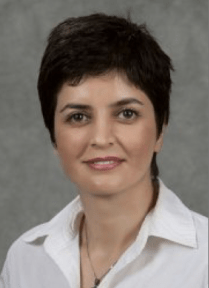
Department of Chemistry and Physics Assistant Professor Fereshteh Emami has earned a prestigious grant from the National Institutes of Health (NIH).
Professor Emami’s grant, in the amount of $346,576 for a period of three years, is entitled
Dr. Fereshteh Emami
“Mathematical Modeling of a Self-Assembled Probe for Non Intercalator Type Real-Time Monitoring of PCR.” A significant portion of the grant funding will provide financial support for undergraduate and graduate students to perform research in Professor Emami’s laboratory.
Increased use of PCR technology for clinical and diagnostic research has focused attention on the need for real-time monitoring of a target DNA sequence amplification, thereby avoiding time-consuming post-PCR analysis. On the other hand, the critical barriers of the presence intercalator, electrochemical real-time detection methods, and nanopore-based technology are (1) the inhibition of PCR, (2) preferential binding to GC-rich sequences, (3) effects on melting curve analysis, (4) signal disturbance by other salts in the PCR buffer, (5) low signal resolution, (6) insufficient detection limit, (7) instability of the lipid bilayer, (8) tedious fabrication procedure of a thin ~nm pore in a solid-state substrate, and (9) utilizing expensive and bulky amplifiers.
To overcome these limitations, the proposed project by Professor Emami will use mathematical modeling of a self-assembly sensor to ascertain a highly sensitive detection scheme, which indirectly probes DNA polymerization in homogeneous solution and is interference-free. The application will also provide a useful model for identification of unknown influences on ribonucleotides detection processes, advanced understanding of self-assembled supramolecular host-guest thermodynamics, and testable hypotheses to developing novel biosensing strategies.
The broad-reaching impacts of this proposed project will affect students in chemistry, computer science, and biology departments interested in monitoring analytes of medical importance.
The work proposed here has been designed and structured in collaboration with Profs. Weiss and Alexandrova at UCLA to provide research opportunities to several students over the three-year life of the grant. The results from this study will be presented at conferences and authored for publication. Collaboration and training are key aspects of this project and are particularly important at a PUI institution like Southeastern. This study will train a new generation of scientists in a variety of scientific disciplines including biomaterials, and cell biology.
This award not only will provide research-enriched learning opportunities to graduate and undergraduate students at Southeastern but will likely have a major impact on the students’ career aspirations and goals.
Assistant Professor of Biological Sciences April Wright taught a one-day workshop for researchers at the annual Geological Society of America meetings in Phoenix, Arizona, this past September.
The workshop, entitled “Quantitative Methods in Phylogenetic Paleobiology,” is one of many that Wright has taught over the years to other notable experts.
While there, she additionally presented a talk on “Co-estimation of Phylogeny, Divergence Time, and Macroevolutionary Parameters in Formicidae.” A symposium volume with a contributed paper on the topic is forthcoming.
GSA is a global professional society with a membership of more than 20,000 individuals in more than 100 countries, with a mission of advancing geoscience research and discovery, service to society, stewardship of Earth, and the geosciences profession.
On Tuesday, September 17, Southeastern hosted global and national leaders from DXC Technology and Amazon Web Services for a cloud-computing symposium.
The symposium, which was free and open to the public, was sponsored by Southeastern’s College of Science and Technology and Workforce Talent Initiative, as well as the Louisiana Department of Economic Development FastStart Program.
Guest speakers included Vice President and Global Sales Leader for AWS Integration Practice at DXC Technology Todd Carey; Director and General Manager for the New Orleans Digital Transformation Center Terrell Boynton; and Director of AWS Certification and Education Programs Kevin E. Kelly representing Amazon Web Services.
“This panel of experts discussed the explosive growth of cloud computing, the impact on businesses and everyone’s daily lives, and the next generation of skill sets that faculty, students, technology professionals and everyday end-users will need,” said WTI Program Coordinator Paul Forbes. “This was a tremendous opportunity for the general public and for all Southeastern students from every academic discipline to gain insights into future technologies.”
A networking reception immediately followed the symposium.
At the Alumni Awards Evening on Friday, October 11, friend of the College of Education Dr. Patsy Causey was honored for her continued support of Southeastern with the Loyal Lion Award.
Causey established the Dr. Patsy M. Causey Alternate Certification Scholarship, the first of its kind in the College of Education. The scholarship provides financial assistance to a Southeastern student who holds a bachelor’s or master’s degree from an accredited institution and is seeking to qualify for state teacher certification.
Causey also served Southeastern as an employee for approximately three decades, holding the positions of director of women’s housing, dean of women, dean of student life, dean of the College of Basic Studies, and vice president for student affairs.
Exhibiting exemplary dedication to Southeastern over the years, Causey has additionally been recognized for her work with the Golden Lions, retirees who remain active with the university; as a founding member of PRIDE (Positive Role-models Involved in the Development of Excellence), a mentoring organization for the Lady Lions basketball team; with the Director’s Diamond Award in 2011, which is presented to an individual who has been of great assistance to the Alumni Association; with the 2018 Lion for Life for Women’s Basketball award; and for many more contributions to both Southeastern and the community.
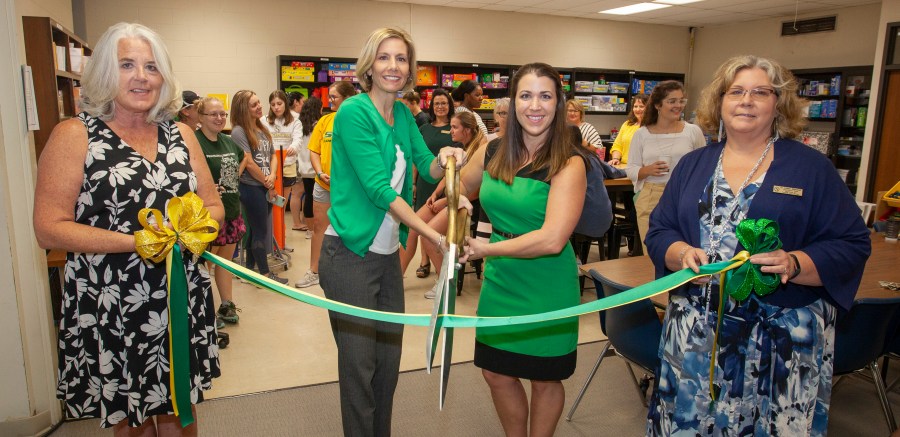
On Tuesday, October 1, the College of Education held a grand reopening of the Teacher Development Center (TDC).
The space was updated to better meet the needs of all teacher education students. Students are now able to access supplies, materials, and Praxis study aids across all content and grade level areas of focus.
Left to Right: Lisa Kea, administrative assistant in the Department of Teaching & Learning; Paula Summers Calderon; dean of the College of Education; Jordan Ahrend, director of Clinical Practice & Professional Development; and Colleen Klein-Ezell, department head of the Department of Teaching & Learning
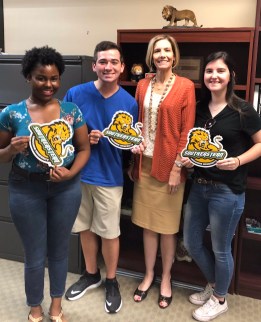
Southeastern College of Education students have started one of only two chapters of Educators Rising Collegiate in Louisiana.
Left to Right: Mignonne Leachman, Braxton Michel, Dr. Paula Summers Calderon, and Macie Husband
The three students who embarked on starting the chapter are Mignonne Leachman, Braxton Michel, and Macie Husband. All freshmen, they represent different majors and departments within the college.
Both undergraduate and graduate students majoring in education or desiring to be an advocate for children, teachers, and schools are welcome to join the organization, which is already gaining interest and increasing in membership.
The new chapter has been accepted by the national organization (Phi Delta Kappa International), and is currently in the process of becoming recognized as a student organization on campus. Dean Paula Summers Calderon will serve as the group’s faculty/staff advisor.
According to Educators Rising Collegiate, “Throughout the year students will participate in a variety of activities designed to engage them in deeper discussions around hot-button topics in education, spur them to think about actions they can take at the local level, and prepare them for a classroom of their own.”
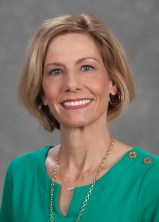
Southeastern College of Education Dean Paula Summers Calderon was recently selected by Deans for Impact for a 2019 Impact Academy fellowship, a yearlong program for leaders of educator-preparation programs. A resident of Baton Rouge, Calderon, the only dean chosen from Louisiana, was one of 19 fellows selected nationwide.
“The 19 fellows in the cohort hail from 12 states ranging from Alaska down to New Mexico, Mississippi up to Massachusetts, and collectively prepare more than 7,600 teachers each year,” said Deans for Impact Senior Program Director John Roberts. “We’re excited to work alongside the fellows this year as they learn from one another and lead improvements in their own programs.”
Deans for Impact is an organization committed to transforming educator preparation so all teachers graduate ready for the classroom on day one, Roberts explained. The Impact Academy combines intensive in-person learning experiences with ongoing coaching and mentorship from veteran members of Deans for Impact, creating a network of fellows focused on improving how their programs prepare future teachers.
“Our mission is to improve student-learning outcomes by changing the way this country prepares teachers,” he said. “Our members are united behind a shared vision for a transformed educator-preparation system that graduates teachers prepared to measurably improve student learning.”
Through the academy, Calderon will connect with other educator preparation leaders who are committed to preparing effective teachers, learn the skills and strategies to solve complicated problems, and build the foundation to lead transformative change. Her fellowship began in July, when the fellows held their first meeting in Austin, Tex.
Dr. Nan Adams, professor of educational leadership, and her leadership policy class attended the joint Louisiana State Board of Elementary and Secondary Education (BESE) and Board of Regents (BoR) meeting in Baton Rouge this past June.
This trip provided students with the opportunity to attend either the BESE or BoR meeting depending on their career interests. Students with a focus on school leadership attended the meeting for BESE, the administrative body for all Louisiana public elementary and secondary schools, while those with a focus on higher education administration attended the meeting for BoR, whose mission is to serve “as the state’s leading force for talent development through quality, affordable post-secondary education for all.”
Through this opportunity, the student attendees were able to gain a better understanding and first-hand experience of the working of these two important educational governing bodies.
Louisiana is a state known for many great things—amazing food being one of them. Unfortunately, a prevalence of sedentary lifestyles is another. This inactivity can lead to significant consequences. Through studying the effects of activity on children while working with and encouraging local youth, Southeastern researchers are striving to help create a healthier way of life for everyone.
In United Health Foundation’s widely-publicized 2018 report, Louisiana ranked 45 out of 50 for obesity—36.2 percent for adults. Overall, when including other health factors, Louisiana was determined to be the least healthy state in the nation.
According to Pennington Biomedical Research Center, childhood obesity is an epidemic in Louisiana, with approximately one in three now falling into the obese category. Yet the problem spans beyond our state as well. The National Center for Health Statistics found in their 2015-2016 survey on the “Prevalence of Obesity Among Adults and Youth” that childhood obesity rates have more than tripled since their 1976-1980 survey.
These trends create a serious negative impact. The Mayo Clinic states that “childhood obesity is particularly troubling because the extra pounds often start children on the path to health problems that were once considered adult problems—diabetes, high blood pressure, and high cholesterol. Many obese children become obese adults, especially if one or both parents are obese. Childhood obesity can also lead to poor self-esteem and depression.”
Aside from the physical toll, obesity also creates an economic drain. United Health Foundation continues by saying that “the costs associated with obesity and obesity-related health problems are staggering. A 2017 study estimated the medical costs of obesity to be $342.2 billion (in 2013 dollars). Adults with obesity spend on average $3,429 more per person annually on medical care, compared with healthy weight adults.”
In 2015, Associate Professor of Family and Consumer Sciences Holly Kihm was awarded a Board of Regents Enhancement Grant to develop IPAL, an interactive physical activity lab for youth. IPAL was implemented to address these larger concerns and increase Southeastern student research opportunities and real-world skills in working with youth and their families to build healthy lifestyles. The children who have been participants in the program are all volunteers from the Southeastern Lab School.
Before each semester a theme and research questions are determined. In the Fall 2018 semester, physical activity intensity and enjoyment were compared between exergaming (a combination of exercising and video games) and real-life activities. “Data points were collected while the children participated in an exergame version of soccer, and the same
data points were collected while the children participated in soccer with the assistance of the SLU Women’s soccer team,” said Kihm. “Over the semester, the children had the opportunity to participate in several sports with many different SLU athletic teams.”
For Spring 2019 semester, a new project was chosen in collaboration with Assistant Professor of Kinesiology and Health Studies Ryan Green, who is also a certified athletic trainer. Kihm and Green, both endurance sports enthusiasts, were excited to work together with IPAL—bringing together their two different departments within the College of Nursing and Health Sciences to help advance the health and well-being of surrounding communities.
They decided to focus on a girls’ progressive running program, which they titled Lionettes on the Move. “Lionettes on the Move is an initiative to understand children’s behaviors and attitudes towards physical activity and nutrition in an effort to design environments that promote health and wellness,” Green explained.
The importance of and potential positive impact from this study is substantial. “Much of today’s society is designed to encourage a sedentary lifestyle (order ahead service, drive-thru windows, food / product delivery service to your door, etc),” Green said. “It is a challenge to reverse that. Decades ago you were an outlier if you were sedentary. Today, you are an outlier if you are constantly moving. We would like to help reverse that thinking.
“By scientifically understanding what obstacles there may be to children moving more and by moving more of them, we can help public and private entities design environments (physical, emotional, and psychological) for health and wellness throughout the lifespan. We must make a positive impact on the health of the next generation. It is our responsibility.”
With participants selected and Kihm and Green setting the pace, assisted by graduate assistant Emilee Hickman and research assistant Callie Lambert, the study was carried out throughout the semester and culminated with a race around the perimeter of Southeastern’s campus on May 7, 2019.
Kihm discussed the process. “At the beginning of the study, the girls participated in baseline assessments, including how much distance they could cover in 20 minutes. Based on those results, a progressive running plan was developed to help the girls reach the end of semester goal of completing the two-mile fun run. Distance was measured using activity trackers, and heart rates were collected using wrist-based heart rate monitors. Each week during the semester, the girls completed their prescribed running activity and were asked to complete additional activities throughout the week at home. The girls also learned about proper running form, stretching, and pacing with the assistance of the SLU track team. At the end of the semester, final data was collected.” This data was submitted for publication during the summer.
For the girls who participated, the benefits were not only physical but mental as well. According to both Kihm and Green, the girls’ boost in confidence was evident. “I feel the project gave the girls an extra boost of confidence in that they were capable of making a goal, working toward the goal over the course of a semester, and then meeting that goal,” Kihm said. “Most of the girls thought running the perimeter of the entire campus was not doable for them. To see each one cross the finish line was very exciting for them and for us!”
The girls’ confidence, enthusiasm, and high energy was evident when watching them take off on their big race around campus at the end of the semester-long program. The first-place winner, 8-year-old Jasmine Dejean, completed the two-mile course in only 23:36. This even beats out the average 5k running speed for a 16- to 19-year-old female by 21 seconds a mile.
Southeastern track student-athletes were buddied up with the girls for this run, motivating them throughout the course—and throughout the program prior to it. They served as mentors and spoke to the girls about the lifelong benefits of strength, flexibility, and cardiovascular wellness. “Sometimes getting this important information from a college athlete is more exciting than getting the same information from a parent or teacher,” Green noted.
“It was so nice to see our students encouraging their running partner in a positive way during the event,” said Kihm. “I really believe our girls hold our student-athletes in high regard, and I know there will be girls from the IPAL program on SLU sports teams in the future.”
Seeing the glowing look of accomplishment on not only the face of the first-place finisher but all of the participants, the true personal impact that such a program can have—in addition to its potential influence on a larger cultural shift towards better health through increased evidence and knowledge—was apparent. “The girls were able to complete the fun run with smiles on their faces! It is our hope they will continue to participate in running activities, and it will become a lifelong healthy habit,” said Kihm.
Lambert said that being a part of helping facilitate this type of personal enrichment was what she loved most about the project. “My favorite part of working in the lab is getting to witness the progress and growth of each participant. Each semester every participant shows intellectual growth regarding nutrition, proper exercise habits, and how to maintain a balanced lifestyle, along with increased physical activity levels and enjoyment while performing exercise.”
The impact of IPAL and research projects like this that use it has indeed been profound on both undergraduate and graduate Southeastern students as well. Lambert discussed her own experience, saying that “being involved in IPAL the past two years has opened my eyes to research. I never considered the possibility of conducting my own experiments or realized the true value of everything that could be accomplished and discovered in a lab setting. I now have a deeper appreciation for research and have developed a desire to investigate traits, characteristics, and variables regarding nutrition and physical activity in children that could one day impact the lives of many children.”
As a result, Lambert now has goals of earning a doctorate in physical therapy and becoming a pediatric physical therapist, eventually opening her own pediatric clinic near her hometown. She is currently in the next step on her path to achieving this by attending physical therapy school.
Southeastern students who participate in the program receive more than just hands-on experience. They receive encouragement to use their experience and research to help make a positive difference in the world. “Students need to understand that taking research and applying it to the benefit of real people is the most important part of the scholarly process,” Green said. “Though this program took place through calculated prescription so that the results would be valid, it is critical to take these results and figure out the most useful way for them to be applied to the community. Research does no good if it is kept in a research journal and the general public cannot make sense of it. I think that this study has a tremendous amount of real-world applicability.”
Dependent on IPAL grant funding and undergraduate student participation, both Kihm and Green hope to continue Lionettes on the Move every spring semester.
“With a new, impressionable group of girls involved and the success of the program, Lionettes on the Move has a chance to make significant differences in our youth,” said Green. “It is programs like this one that can make a health difference in the next generation . . . and the next . . . and the next. And that is something that will benefit us all.”
Callie Lambert (far left), Holly Kihm (second from left), Emilee Hickman (back row second from right), and Ryan Green (back row far right) with members of the SLU track team and 2019 Lionettes on the Move.



 Southeastern College of Education Dean Paula Summers Calderon was recently selected by Deans for Impact for a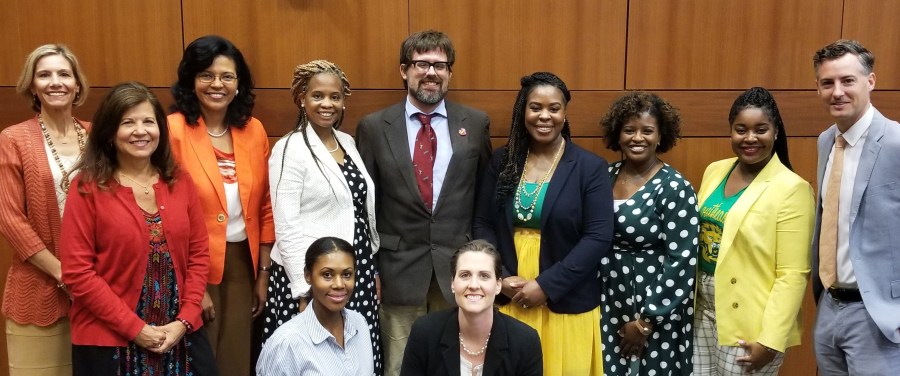
 In 2015, Associate Professor of Family and Consumer Sciences Holly Kihm was awarded a Board of Regents Enhancement Grant to develop IPAL, an interactive physical activity lab for youth. IPAL was implemented to address these larger concerns and increase Southeastern student research opportunities and real-world skills in working with youth and their families to build healthy lifestyles. The children who have been participants in the program are all volunteers from the Southeastern Lab School.

 For the girls who participated, the benefits were not only physical but mental as well. According to both Kihm and Green, the girls’ boost in confidence was evident. “I feel the project gave the girls an extra boost of confidence in that they were capable of making a goal, working toward the goal over the course of a semester, and then meeting that goal,” Kihm said. “Most of the girls thought running the perimeter of the entire campus was not doable for them. To see each one cross the finish line was very exciting for them and for us!”
 The girls’ confidence, enthusiasm, and high energy was evident when watching them take off on their big race around campus at the end of the semester-long program. The first-place winner, 8-year-old Jasmine Dejean, completed the two-mile course in only 23:36. This even beats out the average 5k running speed for a 16- to 19-year-old female by 21 seconds a mile.
 “It was so nice to see our students encouraging their running partner in a positive way during the event,” said Kihm. “I really believe our girls hold our student-athletes in high regard, and I know there will be girls from the IPAL program on SLU sports teams in the future.”
 Southeastern students who participate in the program receive more than just hands-on experience. They receive encouragement to use their experience and research to help make a positive difference in the world. “Students need to understand that taking research and applying it to the benefit of real people is the most important part of the scholarly process,” Green said. “Though this program took place through calculated prescription so that the results would be valid, it is critical to take these results and figure out the most useful way for them to be applied to the community. Research does no good if it is kept in a research journal and the general public cannot make sense of it. I think that this study has a tremendous amount of real-world applicability.”
 southeasternmonthly.blog